Iron Nest Patch 5 Deployed: Mid-Mission Save System Officially in Development
Developer Nick confirms the highly requested mid-mission save system is in the works for Iron Nest: Heavy Turret Simulator, alongside the release of Patch 5.
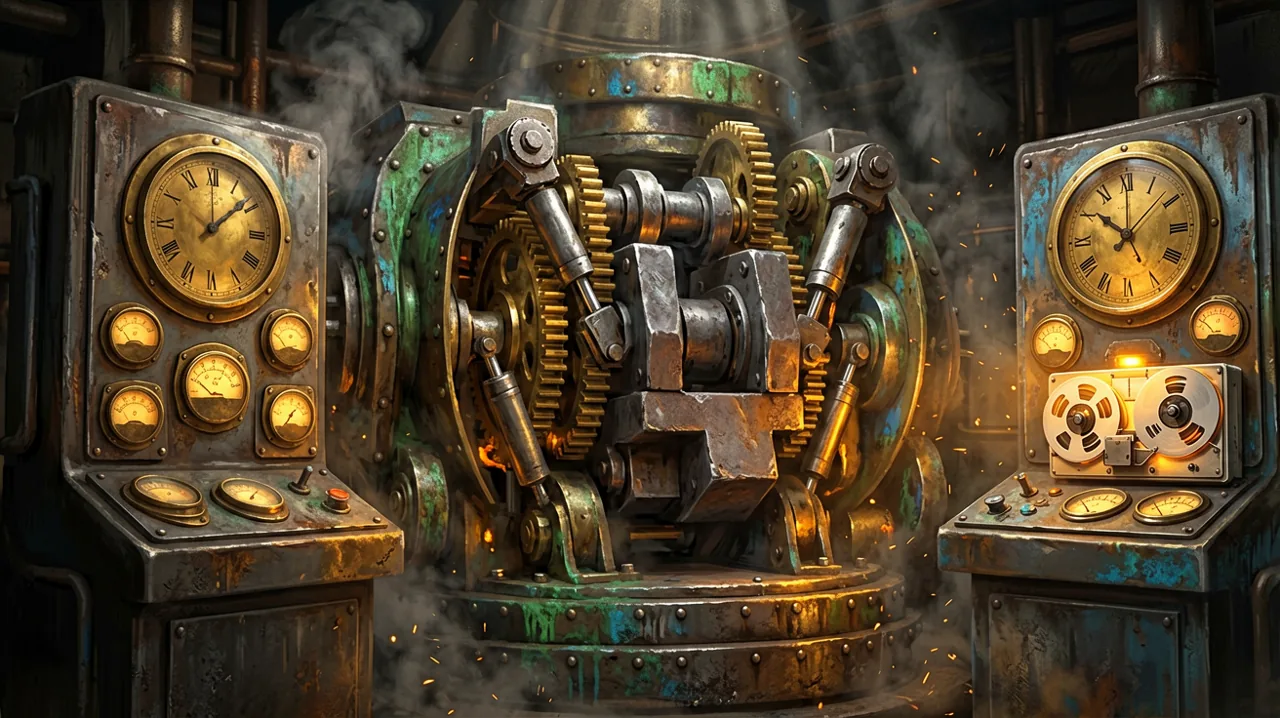
Operating a colossal, stationary artillery piece in a grim, alternate-history warzone is not a task for the impatient. Since the highly anticipated launch of Iron Nest: Heavy Turret Simulator on PC via Steam earlier this month, the community has wholeheartedly embraced the methodical, high-pressure environment of the 5,000-ton gun emplacement. The two-person development team, Nick Nieuwoudt and Dominik Latos, have been monitoring player feedback closely, deploying regular hotfixes to address technical snags. However, the most recent update published on the official Steam News hub carries a massive confirmation for the player base: a mid-mission save system is officially in development.
The Community’s Most Requested Feature
In a game where a single deployment can demand well over an hour of unbroken focus, the inability to save progress mid-battle has been a significant hurdle for operators with strict real-world schedules. Up until now, committing to a mission meant seeing it through to the bitter end, regardless of how long the target calculations or loading procedures actually took. The developers acknowledged this friction directly in their latest communication, noting that they have heard the overwhelming multitude of requests from the community. Nick is currently working on building the mid-mission save architecture.
Creating a save state in a standard action title is relatively straightforward, but Iron Nest: Heavy Turret Simulator is a deeply complex mechanical beast. Every single moving part inside the dieselpunk turret must have its exact state recorded and preserved. When an operator saves the game, the background architecture must remember the exact rotation angle of the massive brass gears, the current fluid pressure in the hydraulic loading rams, and the specific positions of the heavy elevation and azimuth dials.
Furthermore, the game tracks a massive amount of tactical data at any given moment. The precise numerical state of the ballistic calculator must be frozen exactly as the player left it. The system must account for whether the heavy iron breech block is currently locked, open, or halfway through its closing animation. It must remember exactly which type of shell is currently sitting on the loading tray—whether it is an Armor Piercing (AP) round meant for shattering heavy fortifications, a High Explosive (HE) shell for infantry suppression, or one of the specialized utility payloads.
With an expected arsenal of 30 distinct shell types reportedly making up the full tactical sandbox, tracking these variables takes significant engineering work. Because recording this massive matrix of physical and mechanical parameters is so demanding, the developers have explicitly stated that the mid-mission save feature will be a larger-scale update. It will require additional time to implement and thoroughly stress-test before it goes live. In the meantime, the team has pushed a smaller update to hold the community over and improve the daily operational routine.
Patch #5 Details: Crucial Accessibility and UI Fixes
While the heavy engineering work on the save system continues behind closed doors, Patch #5 (Version 1.0 build 1622) has been officially deployed to Steam. This update focuses on resolving three specific, highly noticeable visual and interface issues that operators have reported since day one.
First, the update addresses a frustrating interface bug where the standard Windows desktop cursor would remain visible and overlay the custom in-game UI on the main menu. While it did not directly impact the ballistic calculations during active gameplay, having a bright white desktop arrow floating over the beautifully rendered, gritty industrial aesthetic of the menu broke the careful immersion that the developers have worked so hard to cultivate. This fix ensures a seamless visual transition from the moment you boot the application. Operators checking to see how the game renders on their specific hardware can reference our system requirements page for optimal configuration guidelines.
The second major fix in Patch #5 is arguably the most important from a functional gameplay perspective: Colour Blind modes are now applying correctly across all visual elements. Prior to this patch, players relying on these accessibility filters reported that the toggles were not consistently changing the rendered colors on certain physical objects inside the turret.
In Iron Nest, accurate color perception is a matter of life and death. The interior of the turret is a chaotic mess of dim amber lighting, heavy shadows, and industrial grime. Operators rely heavily on color-coded visual cues to process crucial information quickly without second-guessing themselves. The physical dials on the mechanical computers use specific colored zones to indicate dangerous pressure levels or safe operating limits. Ammunition hoisted from the heavy racks is often distinguished by painted bands—a specific stripe might indicate an Incendiary round, while a different color denotes a Smoke canister. For operators struggling with payload identification, our dedicated ammunition guide breaks down the visual markers for every shell.
Most importantly, reading the tactical map requires the unquestionable ability to distinguish between various colored pins, coordinate grid lines, and intelligence markers. If an operator cannot tell the difference between a friendly infantry position and an advancing enemy armor column due to a failure in color perception, their resulting bombardment could trigger disastrous friendly fire. By ensuring the Colour Blind modes function exactly as intended, Nick and Dominik have opened up the heavy turret experience to a much wider audience of tacticians who demand absolute precision.
Fixing Clock Ghosting for Perfect Timing
The third fix in the Version 1.0 (1622) changelog addresses a visual artifact that was actively interfering with one of the most stressful parts of the simulation: the stopwatch dial. The patch notes state that the developers have successfully “reduced ghosting effects on the clock.”
For uninitiated recruits, this might seem like a minor graphical tweak, but veteran operators know that timing is a fundamental pillar of artillery warfare. When you finalize your first firing solution and heave the heavy firing lever, your job is not over. Operators must immediately reference the large mechanical clock mounted inside the turret to track the shell’s physical flight time.
If a dynamic intelligence report states that an enemy convoy will cross a specific bridge sector in exactly forty-five seconds, and your calculated shell trajectory dictates a flight time of eighteen seconds, you must watch that ticking hand with absolute focus to know exactly when to fire. The previous visual ghosting effect caused the rapidly moving clock hand to blur and smear across the brass dial, making it extremely difficult to read the exact second in the low-light environment. By cleaning up this visual artifact, operators can now trust their instruments with absolute confidence, relying purely on their iron nest controls and interface mastery rather than squinting at a blurry monitor.
The Intellectual Thrill of Mathematical Artillery Combat
The ongoing refinement of the game’s mechanics and interface arrives just as mainstream gaming media is beginning to articulate exactly what makes this title so uniquely compelling. A recent review published by Technetbook perfectly summarized the core appeal of the experience, stating that the simulator “shows why mathematical artillery combat is so rewarding.”
This is a profound observation that strikes directly at the heart of the game’s uncompromising design philosophy. Modern gaming is heavily saturated with fast-paced action titles that rely entirely on twitch reflexes, muscle memory, and split-second spatial reactions. Iron Nest: Heavy Turret Simulator completely subverts this traditional expectation. You do not see the enemy directly. You do not aim down the sights of a traditional rifle. Instead, you are locked inside a massive, claustrophobic iron box, staring intensely at paper maps, conversion tables, and mechanical calculators.
The combat loop in this game is entirely intellectual and mathematical. It requires the player to mentally bridge the gap between abstract numbers on a piece of paper and the devastating physical reality of a high-caliber artillery strike miles away. You must factor in the distance to the target, the elevation of the terrain, the barometric pressure, and the crosswind velocity. You must cross-reference these environmental variables against thick brass tables to find the correct elevation and azimuth angles for the massive gun barrel.
When you finally finish the grueling math, physically crank the heavy wheels to align the turret, load the massive 500-pound shell into the breech, and pull the firing mechanism, there is an unmatched sense of anticipation. The thunderous audio design shakes the virtual cabin, rattling the dials. Then, there is nothing left to do but wait in the deafening silence that follows. When the radio crackles to life a minute later with a forward spotter confirming a direct hit on the target coordinates, the resulting rush is entirely unique. It is the pure satisfaction of knowing that your meticulous mathematical calculations, performed under immense psychological pressure, resulted in a flawless strike.
The Road Ahead for the Heavy Turret
As the developers continue to chip away at the complex architecture required for the mid-mission save system, they remain highly active and visible in their official Discord channel. The recent Steam News post reiterated that the Discord server is the primary hub for the game’s open development process. Nick interacts with the community on a daily basis, discussing behind-the-scenes engineering challenges and gathering direct operational feedback from the players managing the virtual guns.
The transparent nature of this development process has built a massive foundation of goodwill within the community. Players know that their bug reports regarding dial readability or ammunition loading physics are being read and acted upon by the two-person team. The rapid deployment of Patch #5 to fix the main menu cursor, the crucial accessibility modes, and the clock ghosting is definitive proof of that commitment.
While we wait for the major mid-mission save update to arrive, operators have plenty of challenges to keep them busy on the grey, diesel-soaked battlefields. The mathematical combat remains as brutal, unforgiving, and rewarding as ever. Check your brass dials, keep your loading mechanisms well-oiled, and always double-check your wind calculations before locking the breech. We will continue to monitor the communication channels and provide full breakdowns of future technical patches as Nick and Dominik continue to refine the ultimate heavy turret experience.