IRON NEST Ammunition Guide: Choosing Shells by Mission Effect
A version-aware ammunition guide based on confirmed armor-piercing, smoke and phosgene examples, plus a reliable method for evaluating unlockable shell types.
In IRON NEST: Heavy Turret Simulator, ammunition choice is part of the mission solution. Bearing and elevation determine where a shell travels; ammunition determines what the shot is intended to do when it arrives. A perfectly plotted hit can still be the wrong action if the loaded round cannot produce the required effect.
The current official Steam description confirms several examples. Armor-piercing rounds can breach bunkers. Smoke can screen a friendly withdrawal. Phosgene gas is presented through redaction, denial and moral consequence. The store also advertises “30x ammo types and abilities,” but that wording should not be rewritten as “30 shells” without checking the released unlock list.
This guide therefore teaches selection by evidence and effect. It does not assign invented penetration numbers, blast radii, range penalties or unlock levels to every ammunition name in the site’s older codex.
Start with the objective, not the magazine
Read the directive and frontline information before choosing a shell. Identify the target and the result the mission requires. “Destroy a hardened position” and “conceal a withdrawal” can refer to the same map area while demanding completely different ammunition.
Record the required effect in plain language:
- breach or defeat a hardened target;
- obscure observation or movement;
- affect an area through a specialist agent;
- produce another result named by the current mission.
Only then compare the available shells. This order prevents the operator from choosing a familiar round first and forcing the objective to fit it.
Armor-piercing is a confirmed bunker solution
The official Steam page explicitly says armor-piercing rounds breach bunkers. That supports using AP when a directive identifies a hardened emplacement and when the released protocol recommends it.
The teleprinter frame used on our beginner guide also shows an official developer video example in which underground targets require AP shells. That is direct visual evidence of the game’s instructional language, not a universal claim that AP is best against every structure.
Do not add real-world penetration tables to the game. Official sources do not publish armor thickness, projectile mass or angle modifiers for the version 1.0 arsenal. If the released interface exposes such data, record it with a screenshot or current source rather than estimating.
Smoke is a mission tool, not a damage ranking
Steam gives a different example for smoke: screening friendly withdrawals. The goal is concealment or battlefield control rather than bunker penetration. A smoke round can therefore be the correct solution even if it causes less direct damage than another shell.
This is why “best shell” is the wrong question. Ammunition exists in relation to an objective. Smoke should be evaluated by whether it creates the required screen at the required place and time, using whatever success evidence the mission provides.
The official description does not publish universal smoke duration, radius or wind behavior. Do not invent those values. Learn the current mission’s feedback and version 1.0 interface.
Chemical ammunition carries two kinds of consequence
The store description deliberately redacts part of its phosgene-gas example and surrounds it with propaganda language. This confirms chemical ammunition as more than a neutral damage category. It is a tactical tool presented inside the game’s moral and political satire.
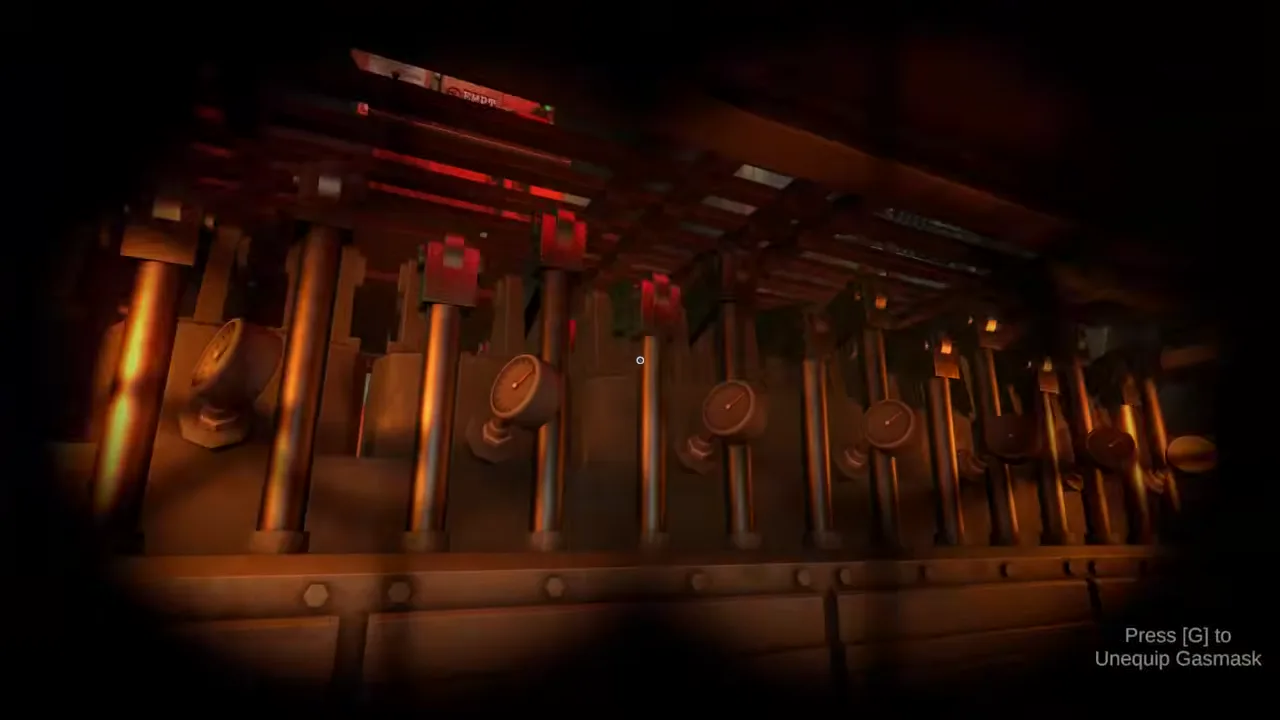
The official demo footage above shows the interior through a gas mask near rows of magazine or propellant-handling cylinders. The image supports the presence of chemical-protection imagery; it does not prove the exact contents of every cylinder or establish a full gas simulation.
When a mission offers chemical ammunition, distinguish mechanical effect from narrative consequence. A round can satisfy an immediate order while influencing reports, responsibility or the operator’s interpretation of High Command. Do not assume every effect is reducible to a damage number.
What the “30x” feature line actually says
The current Steam page lists “Unlockable 30x Ammo Types and Abilities.” Grammatically, that is a combined category. It confirms a substantial unlockable toolkit but does not tell us how many entries are shells versus abilities.
Older wiki text converted that line into “around 30 ammunition types.” This guide no longer makes that conversion. A final ammunition catalogue should be built from the released arsenal screen, mission unlocks or developer documentation, with each name and effect checked individually.
This matters for SEO as well as accuracy. A precise smaller list is more useful than a large list padded with real-world artillery types that may not exist in the game.
Treat every unverified shell family cautiously
The existing site contains pages for high-explosive, shrapnel, concrete-piercing, incendiary and illumination shells. Those names may be plausible for an artillery simulator, but plausibility is not proof of version 1.0 availability or behavior.
Until each page is checked against the released build or an official source, use it as a candidate research entry rather than a confirmed reference. Do not plan a mission around a wiki claim that lacks provenance.
The long-term arsenal audit should answer five questions for every shell: Is the name visible in version 1.0? How is it unlocked? What target or objective does the game associate with it? Does it require special charge or calculator handling? What evidence communicates success or consequence?
Shell type and ballistic calculation
The calculator footage includes a shell-type field, showing that ammunition identity belongs with the firing solution. In the May pre-release Q&A, the developer said shell weight was being considered as an additional calculator factor. He did not confirm a finished universal weight model.
The safe operating rule is procedural: after changing shell, recheck the current protocol and calculator. Do not assume the old elevation remains valid, and do not apply a guessed real-world correction. If the released interface updates values automatically, verify the new output before laying the gun.
Keep target, shell, range, charge and elevation on one line. A correct AP solution should not accidentally load smoke, and a smoke objective should not inherit an AP charge note from the previous target.
Propellant charge is not the shell
The ammunition projectile and the powder charge are related physical choices but not the same input. The official calculator asks for a number of powder charges and returns elevation. The selected shell provides the intended terminal effect.
Avoid saying “load more shell” when you mean “select more propellant.” Imprecise language causes real interface errors. Record the shell name separately from the charge number and verify both at the loading station.
The frame above may show part of the turret’s propellant or ammunition-handling system. Its exact labels are not readable enough to classify each container, so the alt text remains descriptive rather than claiming a specific shell rack.
A reliable shell-selection workflow
Use this sequence for every new directive:
- Identify the named target and required battlefield effect.
- Read any explicit ammunition instruction in the order or protocol.
- Compare only shells currently available in the released mission.
- Select the option whose documented purpose matches the objective.
- Carry shell identity into the calculator and loading notes.
- Select powder charge separately and obtain elevation.
- Verify shell and charge physically before firing.
- Read mission evidence after impact; do not judge only by explosion size.
This process scales as new ammunition unlocks because the decision starts with effect rather than memorized hierarchy.
How to evaluate a newly unlocked round
When the game adds a shell to the available arsenal, read its current description and test it where the mission or challenge provides clear feedback. Record the official name exactly. Note whether its purpose is penetration, blast, concealment, area effect, signaling or another category actually stated by the game.
Do not infer one shell’s statistics from another. Do not convert visual size into damage. Do not assume a specialist round is superior simply because it unlocks later. Progression can expand options rather than replace earlier tools.
For this wiki, add claims only after capturing direct released-build evidence or a developer statement. Separate observed behavior from tactical advice and real-world background.
Diagnosing a hit that fails the objective
If the impact reaches the correct location but the mission does not advance, confirm the target identity and shell purpose first. A penetration task may reject smoke; a screening task may not care about a destructive hit. Check whether the physical loading state matched the selected round.
If the shell misses spatially, return to map, bearing, range, charge and elevation. Do not blame ammunition effect for a trajectory error without evidence. Conversely, do not keep recalculating a shot that already hit the right place with the wrong tool.
Preserve the complete solution until the cause is known. The distinction between “wrong place” and “wrong effect” is the fastest route to a useful correction.
Bottom line
The confirmed arsenal already demonstrates the design principle: AP breaches, smoke screens, and chemical ammunition complicates both tactics and responsibility. The current store promises a wider unlockable set, but responsible documentation must verify its members one by one.
Choose ammunition by the effect the mission asks for, keep shell type separate from powder charge, and treat every change as a reason to recheck the complete firing solution. In IRON NEST, the right coordinate is only half of an accurate shot; the other half is deciding what arrives there.
Frequently asked questions
How many ammunition types are in IRON NEST?
The current Steam feature list advertises 30 unlockable ammunition types and abilities. Because that number combines ammunition and abilities in one phrase, this guide does not claim that all 30 entries are shells.
Which shell is best?
There is no source-supported universal best shell. Choose the effect required by the directive: the official description names armor-piercing for bunkers and smoke for screening friendly withdrawals, while specialist chemical ammunition carries different tactical and moral consequences.
Does changing shell require a new firing solution?
Treat any ammunition change as a reason to recheck the calculator and protocol. The developer discussed shell weight as a possible ballistic input before release, but did not establish one universal rule for every version 1.0 shell.