Iron Nest Reaches 400,000 Sales in First Week as Patch 4 Introduces Color Blind Modes and RAM Fixes
Iron Nest: Heavy Turret Simulator surpasses 400k copies sold in its launch week. Patch 1.0.1618 drops with vital RAM optimizations, color blind accessibility, and crucial mission fixes.
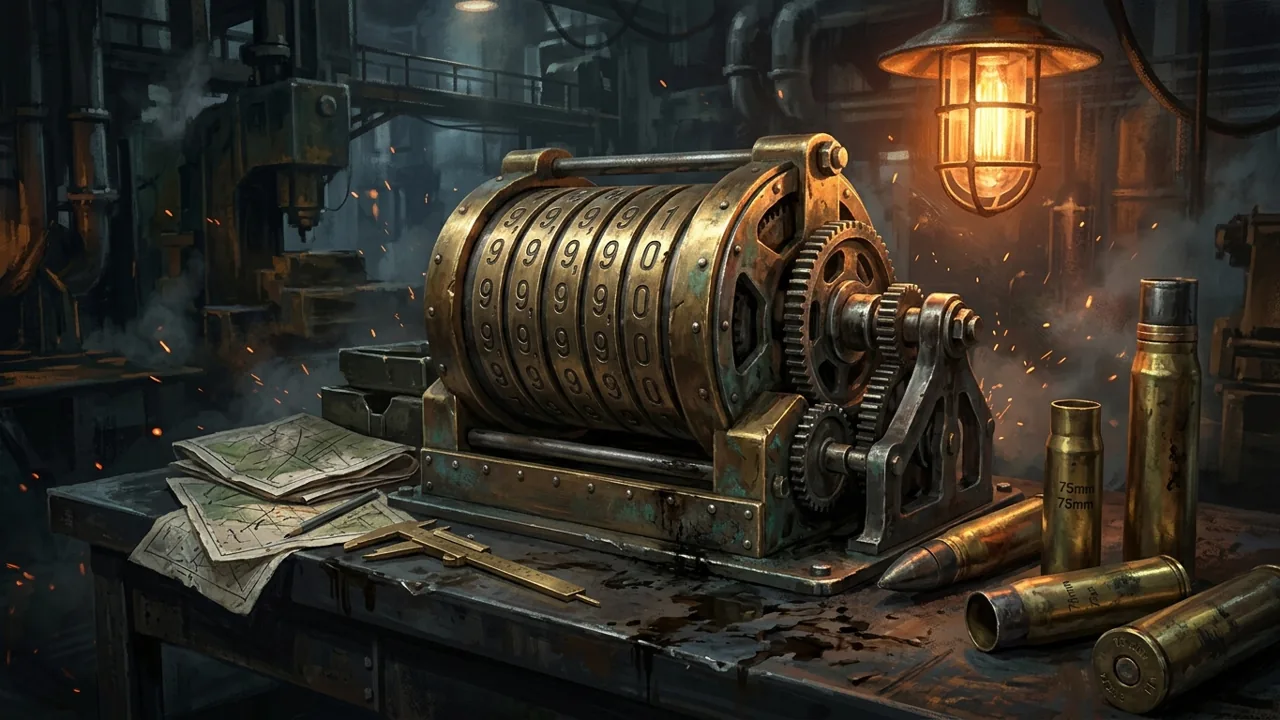
Exactly one week after its highly anticipated launch on PC and Steam, IRON NEST: Heavy Turret Simulator has reportedly crossed a massive commercial milestone. Community tracking and gaming news outlets have observed that the grim, dieselpunk artillery simulator has sold upwards of 400,000 copies in its first seven days. For an uncompromising, mechanically dense simulator developed by a two-person independent team—Nick Nieuwoudt and Dominik Latos—this level of mainstream penetration is extraordinary.
Accompanying this remarkable sales achievement is the deployment of Patch #4 (Version 1.0.1618). Released just as the game marks its one-week anniversary, this update addresses some of the most pressing performance bottlenecks and progression-halting bugs that early operators have encountered during their shifts in the bunker. It also brings highly requested accessibility features to ensure that the complex task of calculating firing solutions is manageable for a wider audience.
The 400,000 Milestone: A Victory for Tactile Simulation
When IRON NEST first appeared during the Steam Next Fest with its original playable demo, the gaming community was immediately drawn to its tactile, analog approach to warfare. Rather than clicking on enemies in a top-down view or running and gunning, operators are confined to the claustrophobic interior of a multi-thousand-ton fixed artillery piece.
The task of manually hauling armor-piercing (AP) and high-explosive (HE) shells, setting fuses, punching coordinates into mechanical ballistic computers, and bracing for the eardrum-shattering recoil resonated strongly. The 400,000 sales figure demonstrates that there is a profound hunger in the PC gaming space for games that refuse to hold the player’s hand. The success of this release week indicates that players are willing to engage with heavy machinery, learn to properly formulate their first firing solution, and master the complex interplay of windage, elevation, and propellant charges.
Patch 1.0.1618: RAM Optimization and Performance Gains
One of the most critical elements of Patch #4 is the substantial improvement to memory management. According to the developers, approximately 15% of all reported crashes since launch were directly linked to out-of-RAM issues.
IRON NEST might take place largely inside a dark, confined turret, but the physics engine working in the background is incredibly demanding. The game constantly tracks the parabolic trajectories of heavy ordnance, calculates terminal ballistics upon impact, and manages dynamic weather conditions across the grim alternative-history Spanish battlefield. Over extended sessions, especially during intense barrage scenarios where multiple illumination rounds and smoke shells are deployed simultaneously, memory bloat was causing fatal errors.
The reduction in RAM usage introduced in Version 1.0.1618 should provide a much more stable environment, especially for players pushing the lower boundaries of the system requirements. Operators relying on older rigs or handhelds like the Steam Deck should experience fewer mid-battle desktop crashes, ensuring that prolonged engagements do not end prematurely due to hardware constraints.
Expanding the Ranks: Accessibility and Customization
Hardcore simulators often struggle with accessibility, as the very nature of reading tiny dials and interpreting complex maps can be inherently exclusionary. With Patch #4, High Command has introduced several vital features designed to improve the operator experience without compromising the game’s brutal atmosphere.
Color Blind Modes
The most significant addition is the implementation of three distinct Color Blind modes. In IRON NEST, color is not just aesthetic; it is critical tactical information. Operators must routinely distinguish between different types of colored flares, read color-coded topographical lines on the tactical map, and identify the painted stripes on different artillery shells in the dim light of the bunker to avoid accidentally loading an incendiary round when a smoke screen is required.
The developers have stated that these three modes are currently in active testing, and they are actively soliciting feedback from the community to refine them further. For operators who have been struggling with the visual density of the game’s interface, these filters should make reading the tactical map significantly more reliable.
Motion Sickness and Camera Adjustments
Operating a heavy turret is a violent experience. The massive recoil of firing a 5,000-ton gun shakes the entire structure, and moving around the cramped, gear-filled interior can induce motion sickness for some players. To combat this, the update introduces customization sliders for both camera tilt (while walking) and camera shake.
Players who want the maximum immersion can leave the violent shaking intact, while those who suffer from simulation sickness can dial these sliders down to maintain a steady view of their controls and interface during sustained bombardments. Additionally, a toggle to turn world space input hints on or off has been added, allowing veteran gunners to completely clean up their HUD for maximum realism.
Critical Mission Fixes: Fire On Call and Gibraltar
For progression-focused players working their way through the campaign, Patch #4 resolves two highly frustrating mission-breaking bugs.
The “Fire On Call” Bug: In the “Fire On Call” mission, operators are tasked with providing precise artillery support for an infantry assault. The intended design requires players to wait for the assault to be officially declared by spotters before eliminating the targets. However, highly efficient gunners who preemptively calculated the enemy positions and wiped out the targets before the assault trigger was pulled were finding themselves hard-locked, unable to complete the mission. This logical oversight has now been patched, meaning that proactive gunners will no longer be punished for extreme efficiency.
The “Rock of Gibraltar” Medals: The “Rock of Gibraltar” scenario is widely considered one of the most grueling tests of endurance in the game. Prior to this patch, a bug prevented the final two medals from being awarded, no matter how flawlessly the player executed their defense. With this fix, completionists can finally earn their rightful commendations. Operators attempting this mission are advised to brush up on their challenge modes strategies, as maximizing accuracy under pressure is strictly required for gold-tier rewards.
Further Refinements and Ongoing Support
Alongside the major fixes, the developers deployed several smaller quality-of-life adjustments. The balance of the “Phantom Battery” mission has been tweaked, addressing community reports that the counter-battery fire in this scenario was overly punishing and required an unrealistic degree of luck to survive. Minor immersion-breaking issues, such as incorrect dates appearing on the scattered in-game newspapers that deliver narrative exposition, have also been corrected. Finally, an irritating bug that occasionally locked the cursor in the main menu has been resolved.
As IRON NEST: Heavy Turret Simulator moves into its second week on the market, the velocity of these updates highlights the dedication of Nick Nieuwoudt and Dominik Latos. Four patches in seven days is a grueling pace for a two-person team, demonstrating a profound commitment to polishing the core experience.
For operators who have just been drafted into the bunker, the war effort shows no signs of slowing down. Ensure your first session operator notebook is updated with the latest ballistic tables, adjust your new camera settings to your liking, and prepare for the next wave of targets. High Command will undoubtedly have more updates in the pipeline soon.