The IRON NEST First-Session Operator Notebook
A practical first-session note-taking method for IRON NEST that turns reports, map work, gun settings and aerial outcomes into useful evidence for later missions.
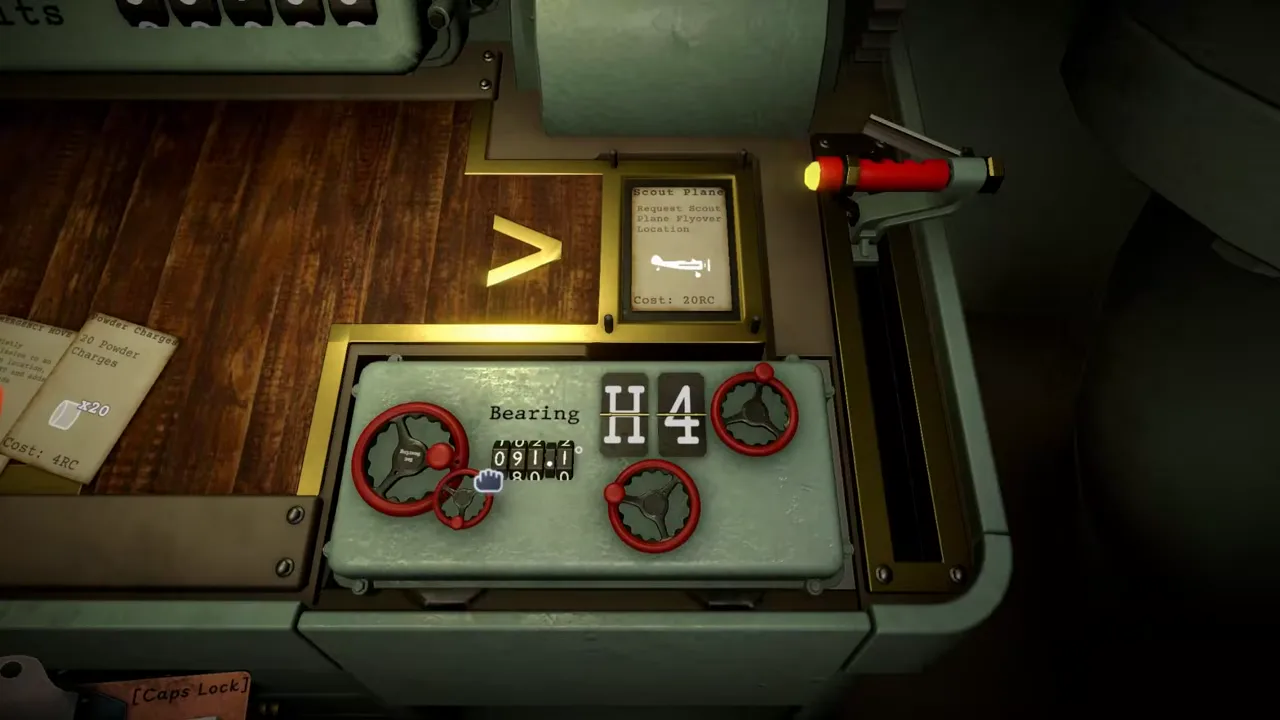
IRON NEST’s official description presents an Operator who works through several linked forms of information: reports from High Command and the frontline, an interactive map, a ballistic calculator, ammunition and gun controls, then aerial photographs after a strike. That structure rewards a modest record of what happened. A first-session notebook is not roleplay homework and it is not a demand to reproduce a real artillery log. It is a way to avoid losing the connection between a report, the settings chosen for it and the outcome that followed.
The notebook matters most during a first session because many things are unfamiliar at once. You are learning which station does what, how the current build presents a report, what a map marker represents and how physical settings fit together. Without a record, a miss can become a vague feeling that “something was wrong.” With a record, it becomes a question that can be answered: was the target mark uncertain, was the calculator solution for another state, did the selected ammunition change, or did the visible result simply require a new test?
Keep the record small enough to use
The purpose is not to transcribe every line on screen. Begin with one short card per meaningful attempt. Include the current objective in your own words, the source of the most important report, the target mark or description, the intended action, the key visible configuration and the outcome. A six-line note is more likely to be written than a full page of prose, and it is enough to recover the chain later.
For example, a card can read: objective; High Command or frontline report; target location confidence; chosen shell; charge/elevation or other visible configuration; and aerial or mission-state result. If a detail is uncertain, write “uncertain” rather than converting it into an invented number. The notebook is useful precisely because it preserves what was known and what was not.
The current Steam listing confirms the broad stages of this workflow. It does not require an external notebook, publish a universal note format or reveal every control dependency. Treat this as a player method that matches the game’s source-aware design, not as a hidden gameplay rule.
Record report provenance before interpretation
The store description calls out two teleprinters: High Command and frontline radio traffic. When a report influences a decision, note where it came from. This simple habit is valuable when two messages describe different priorities or locations. It lets you revisit the original context instead of remembering only the conclusion you drew from it.
Do not assume that one channel is always correct or that one is always more important. The official wording asks players to track who said what, which suggests that provenance is meaningful, not that a universal ranking is public. Your note can say “High Command: primary objective” and “frontline: newer location observation,” or it can say “source relationship unclear.” Either version is better evidence than a later claim that the target “was just there.”
If a report changes during the operation, start a new card or add a clear update line. Do not overwrite the old source. The original report may explain why the earlier firing solution was reasonable even if the later evidence leads somewhere else.
Treat the map mark as a claim
An interactive map is one of IRON NEST’s confirmed systems. A map mark should be recorded as a claim derived from available information, not as an unquestionable target. Note what the mark represents: a direct report, a best estimate, a corrected location, a mission instruction or a working hypothesis. If you have a screenshot, save it with a neutral name and date.
This distinction becomes important after an aerial result. If the shot lands away from the mark, you can ask whether the mark itself was wrong, whether the relationship to the turret was misread or whether a later stage diverged. If the note only says “target,” all those possibilities blend together.
Avoid inventing a coordinate convention not visible in the current game. Record the local language that helps you reproduce your own action: “north of the bridge marker,” “the report location near the road,” or “the second plotted point.” The current map interface should determine the detail available to you.
Tie calculator and gun state to the same attempt
The Steam listing explicitly includes a ballistic calculator, ammunition choice, charges, elevation and heavy turret operation. These values should be captured together. A calculator output by itself is easy to misapply after a target change. A shell choice by itself is hard to judge after the fact. Group the visible settings under one attempt label.
You do not need to document every number if the interface is busy. Start with the settings you changed or the settings most likely to matter to the next review. If the game visibly displays shell, charge, elevation and alignment, note them. If an interaction did not complete or a readiness state looked abnormal, note that separately from the intended configuration. This prevents a later issue from being blamed on “ballistics” when the action may never have reached the expected state.
The record should never replace the live interface. Before firing, compare your note with what is actually displayed. A notebook can preserve intent; only the current station can show the present state.
Write the outcome before the explanation
IRON NEST advertises aerial photographs after strikes and persistent battlefield scars. When the outcome arrives, write the visible result first. Did an impact appear near the intended area? Did the mission text visibly change? Did the aerial scene show a consequence that needs another look? Keep this part descriptive.
Then write a separate hypothesis. “Impact appears left of the planned mark” is an observation. “Bearing or map placement may need checking” is a hypothesis. This separation protects you from turning a first attempt into a universal mechanic. A single outcome may be affected by target placement, calculation inputs, shell choice, charges, elevation, orientation, readiness or the mission’s own current rules.
The next card can test one hypothesis. Keep as many other conditions stable as practical, then change one identifiable input. Even a short notebook makes this controlled process much easier than relying on memory across several tense station transitions.
Use the demo and full game with the right scope
The demo has a separate Steam listing. It is useful for testing your local setup, control comfort and whether the manual loop appeals to you. A notebook from the demo should be labeled as demo evidence. It can document what appeared in that downloaded build; it should not be used to claim that the complete release lacks a system not encountered in the trial.
The full Steam listing provides the broader public baseline for the released game. It advertises story material, procedural objectives, regions, challenge modes, medals and a combined set of ammunition types and abilities. Your first-session notes can help you learn the central workflow, but they are not a complete catalogue of the wider game. Labeling the source and build keeps the record honest.
A reusable one-card template
Use this format: Objective: what the current mission visibly asks. Source: High Command, frontline, current objective text or other visible context. Target: what the mark represents and how certain it is. Configuration: shell, charge, elevation, direction and any relevant state. Outcome: what aerial evidence or objective text visibly shows. Next check: one question for the next attempt.
This template is intentionally compact. It gives each action a beginning, a configuration and a consequence. It also makes a future question easier to report: you can describe the version, context, exact steps and visible result without reconstructing a complicated moment from memory.
The dependable first-session rule
Record enough to explain why you acted, not enough to reproduce every screen. Preserve the source of the report, the status of the map mark, the configuration you intended and the result you saw. If uncertainty remains, label it. If the plan changes, start a new entry. If the outcome surprises you, change one variable in the next test.
IRON NEST’s manual systems become less intimidating when each attempt leaves a usable trace. The notebook is not extra work outside the game; it is a small tool for seeing the work the game already asks the Operator to do.
Frequently asked questions
Do I need a real notebook to play IRON NEST?
No. A short text note, screenshot folder or in-game mental checklist can work. The goal is to preserve which evidence and settings belonged to one attempt.
What should I record first?
Record the current objective, report source, target mark, shell and key firing settings, then the visible outcome. Add detail only when it helps explain a later decision.