Analyzing the Visuals of Iron Nest: What the Latest Game Footage Reveals About Its Dieselpunk World
A close examination of the brutal dieselpunk aesthetics, diegetic UI, and colossal war machine design seen in the latest Iron Nest footage.
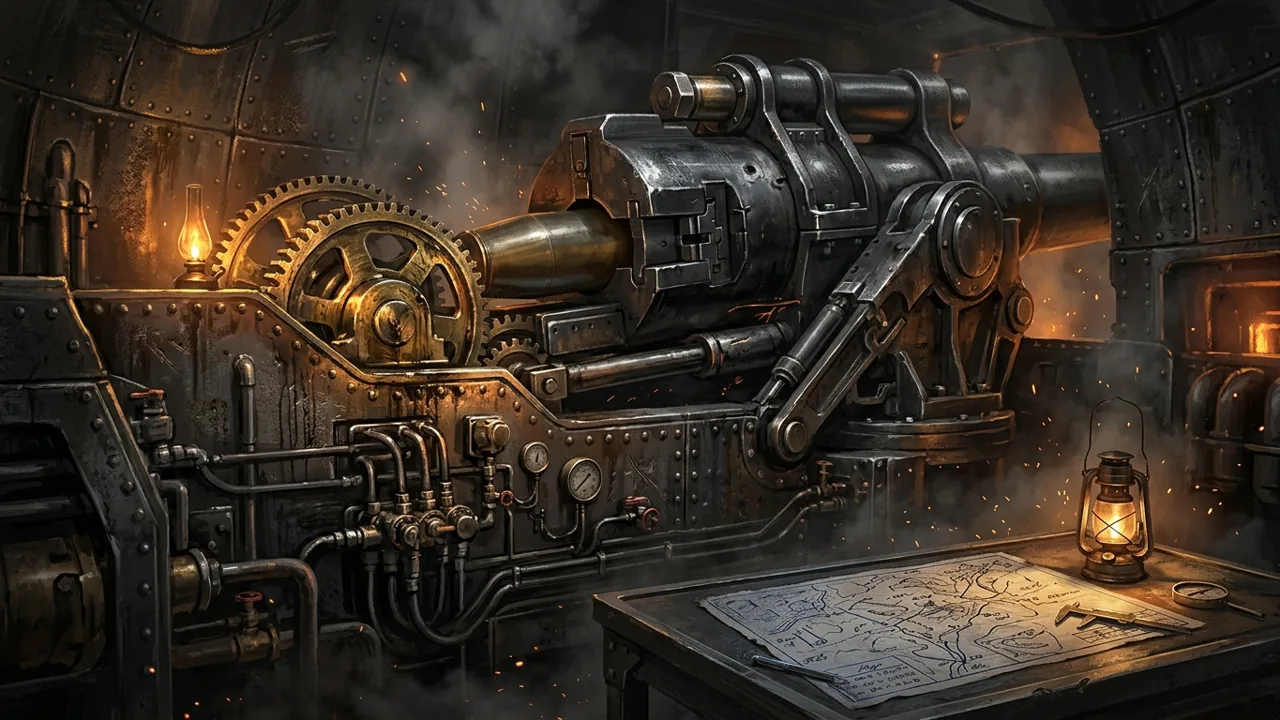
As the expected Q3 2026 release window for Iron Nest: Heavy Turret Simulator steadily approaches on Steam, mainstream gaming outlets have begun compiling the latest footage, screenshots, and visual assets for the highly anticipated title. A recent update to the game’s coverage hub on platforms like Kotaku highlights the project as a “brutal dieselpunk heavy-artillery game where you dominate the battlefield through a colossal war machine.” While long-time followers of the two-person development team—Nick Nieuwoudt and Dominik Latos—are already familiar with the core mechanics, seeing the accumulated visual media offers a stark reminder of the meticulous environmental design. Today, we are analyzing the visual language established in these recent image galleries and gameplay clips, breaking down how the aesthetic choices directly influence the hardcore simulation gameplay.
At its core, this is a title built around tactile feedback and mechanical precision. The visual representation of the artillery piece is not merely window dressing; it acts as the primary interface for the player. By examining the high-resolution screenshots circulating across news aggregators, we can piece together how the game expects us to interact with its machinery.
The Colossal War Machine: A Study in Iron and Grime
The interior of the massive fixed artillery platform serves as the player’s primary environment. The footage reveals an incredibly dense, claustrophobic space that contrasts sharply with the vast ranges you are firing upon. The metal surfaces are coated in grime, scratched paint, and leaking oil, immediately establishing a tone of prolonged, grueling conflict in this alternative history Spanish battlefield.
Every dial, lever, and hydraulic press is rendered with heavy, industrial weight. When the player engages the loading mechanism, the animations convey immense friction and mass. This is a far cry from the instantaneous weapon swapping found in arcade shooters. You are operating a multi-ton mechanism, and the visual feedback—sparks from grinding gears, the heavy thud of the breech locking—reinforces the physical toll of the process. If you want to master this machinery, understanding the spatial layout is critical. New players should consult our breakdown on preparing your first firing solution to understand how these physical controls map to actual ballistic outcomes.
Ammunition and Ordnance: Visualizing Destruction
The latest imagery provides excellent close-ups of the ammunition storage racks. According to community reports and previous developer updates, the final game is expected to feature numerous shell variations, but the core types are easily distinguishable in the footage. The racks hold massive, brass-cased projectiles that visually dominate the space.
Color coding plays a vital role here. Without floating tooltips to guide you during the heat of combat, you must rely on the painted bands on the shell tips to identify your ordnance. High Explosive (HE) rounds might sport a distinct yellow band, while Armor Piercing (AP) rounds carry a solid red identifier. We also see what appear to be smoke canisters alongside specialized illumination rounds. The sheer scale of these shells, requiring mechanical assists or heavy lifting to maneuver onto the loading tray, grounds the simulation in reality. For a deeper understanding of how to select the right tool for the job, you can review our ammunition guide to memorize these visual indicators before the full launch.
The Command Center: Reading the Tactical Map
A significant portion of the newly compiled footage focuses on the intelligence gathering and targeting process. There is no digital mini-map in this alternate-history setting. Instead, the player must interact with a physical, paper-based topographical map spread across a steel desk.
The visual execution of this map is a masterclass in diegetic interface design. The paper is stained with coffee rings and grease, featuring hand-drawn grid lines and contour markers. To find targets, you physically place brass pushpins and use measuring calipers. This requires genuine navigational skills and a solid grasp of military coordinates. You cross-reference this map with incoming intelligence reports, adjusting your firing angles accordingly. Learning to translate these two-dimensional markings into three-dimensional ballistic adjustments is the steepest learning curve in the game. Those struggling with this manual plotting system can refer to our tips on reading the tactical map for a smoother learning experience.
Optics, Rangefinders, and Firing Solutions
Once a target is plotted on the map, the visual focus shifts to the optical equipment. The periscopes and targeting sights feature authentic mil-dot reticles. The glass lenses are slightly smudged, adding a layer of authenticity to the gritty dieselpunk setting.
The footage demonstrates the process of calculating windage and elevation. The player rotates heavy brass dials, watching the physical numbers tick over on the mechanical readouts. There is a palpable sense of tension as you dial in the exact firing solution based on the telemetry gathered. The game reportedly includes a built-in mechanical ballistic calculator—a complex slide-rule device that you must operate manually. This device requires inputting distance, atmospheric conditions, and shell weight to output the correct gun elevation. For a step-by-step walkthrough of this complex machinery, our ballistic calculator guide breaks down the math behind the optics.
The Dieselpunk Battlefield Atmosphere
When you finally peer through the firing slits, the exterior world is revealed, and the art direction truly shines. The alternative-history Spanish terrain is rendered in desaturated, ash-heavy tones. We see glimpses of coastal fortifications and rugged mountain passes, often obscured by rolling fog, rain, or the thick black smoke of previous artillery barrages.
The environmental effects are not just aesthetic; they impact gameplay. Heavy fog means you must rely entirely on forward observer coordinates and map plotting, completely blinding your optical sights. The weather systems showcased in the recent demo highlight how dynamic conditions force the player to adapt their strategy constantly. You can read more about what the current build offers in our demo guide. Furthermore, the stark contrast between the cold, mechanical interior of the turret and the chaotic, organic destruction outside creates a powerful sense of isolation.
The Absence of Traditional HUD Elements
Perhaps the most important takeaway from analyzing this repository of footage is what is visually missing. The screen is remarkably clean, completely devoid of the traditional heads-up display elements that modern gamers take for granted. There is no health bar, no digital ammo counter in the corner of the screen, and no floating quest markers.
Everything you need to know is physically present within the 3D space of the turret. If you want to know how much ammunition is left, you must look at the racks. If you want to know the current elevation of the gun barrel, you must check the mechanical gauge mounted on the trunnion. This commitment to an immersive, diegetic interface forces the player to remain present in the simulation at all times. It is a bold design choice by the developers that clearly resonated with the massive audience who played the Next Fest demo. Ensuring your PC can render these detailed physical instruments at high frame rates will be crucial; check the system requirements to see if your hardware is ready for the heavy simulation.
Concluding Thoughts Ahead of Launch
The compilation of these visual assets across various news networks reinforces that Iron Nest: Heavy Turret Simulator is targeting a very specific audience. The dieselpunk aesthetics do more than just provide a cool backdrop; they inform every mechanical action the player takes. The heavy machinery demands respect, and the visual feedback is designed to reward methodical, calculated operations over twitch reflexes.
As we count down the final weeks to the expected PC launch in Q3 2026, the community continues to dissect every frame of available footage for new details. Whether it is a previously unseen dial on the ballistic computer or a new type of enemy armor spotted through the periscope, the depth of the simulation appears vast. We will continue to monitor the official channels and community discoveries, providing the most accurate intelligence for aspiring gunners.