Why Iron Nest is the Most Brilliant Battlefield Puzzle of 2026
Discover how IRON NEST: Heavy Turret Simulator transforms the grueling realities of artillery operation into a highly cerebral tactical puzzle.
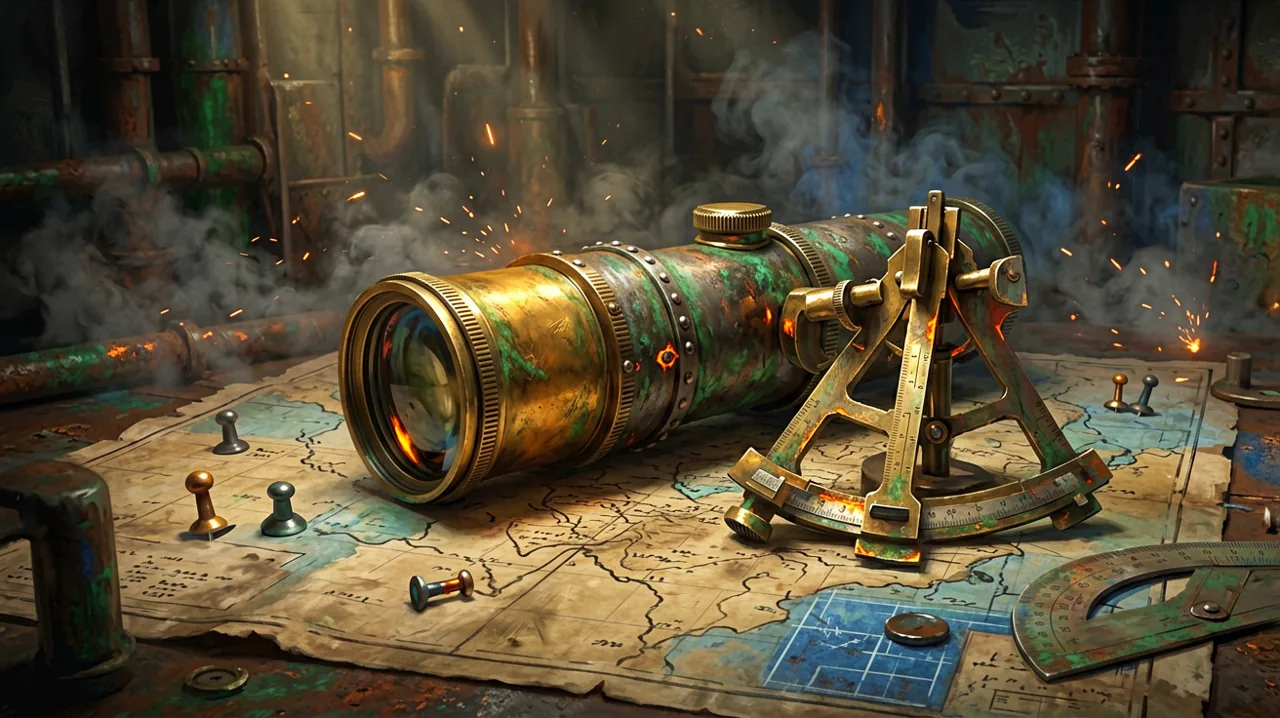
When you think of artillery in most video games, it is usually presented as a convenient killstreak reward or a generalized area-of-effect ability. You press a button, paint a red circle on the ground, and watch the distant fireworks. IRON NEST: Heavy Turret Simulator, the grueling dieselpunk masterpiece from independent developers Nick Nieuwoudt and Dominik Latos, completely dismantles that simplistic notion. As recently highlighted by an aptly titled piece from Gameindustry.com, this title transforms the operation of heavy artillery into a “brilliant battlefield puzzle.” This observation perfectly encapsulates the core gameplay loop. You are not a supersoldier running and gunning; you are a technician, a mathematician, and a laborer, entombed within a massive steel structure, trying to solve lethal equations before the enemy overtakes your position.
Beyond Point and Click: The Artillery Equation
The core of this puzzle lies in the concept of the firing solution. For those accustomed to crosshairs that automatically turn red when hovering over an enemy, the ballistic reality of this title is a profound shock to the system. You must calculate the trajectory manually, and this involves wrestling with a dizzying array of interconnected variables.
You have to account for the exact distance to the target, which you must determine using your optical rangefinder or by painstakingly deciphering grid coordinates. You must adjust for wind speed and direction, which can violently push a shell off course over long distances. You even have to consider the elevation difference between your gun emplacement and the target zone. Figuring out how to input all this data correctly using the in-game analog instruments is a major hurdle. If you are struggling with the math, we recommend consulting our ballistic calculator guide to help you grasp the fundamental principles of trajectory planning. Every shot is a math test where failure means the enemy advances another mile.
The Tactical Map: A Blueprint for Destruction
But the mathematics of destruction is only one layer of the enigma. Before you can even begin calculating a trajectory, you have to know where to shoot. This brings us to the tactical map, which serves as the primary board for this deadly puzzle.
You are completely isolated inside your heavy turret. Your only view of the wider conflict comes from a static, paper map and the frantic intelligence reports fed to you via a crackling radio or teletype. You must triangulate enemy positions based on imperfect, sometimes outdated information. A report might simply state “heavy armor moving through sector G-4, heading north.” It is up to you to anticipate their speed, plot their projected path, and determine the exact coordinate where your shell will meet their advance. Learning to interpret these vague clues is essential, and our primer on reading the tactical map offers vital strategies for tracking unseen threats across the grim Spanish alternative history landscape.
Selecting the Right Ordnance
Once you have a location and a trajectory, the puzzle shifts to resource management and material selection. Your ammunition racks are limited, and choosing the right ordnance is crucial to your success. Firing a High Explosive (HE) shell at a reinforced concrete bunker is a waste of precious gunpowder; you need the dense kinetic energy of an Armor-Piercing (AP) round to shatter the defenses.
Conversely, an AP shell will pass harmlessly through a dispersed squad of infantry, requiring an HE round to maximize the blast radius. Then there are the utility shells: deploying Smoke to obscure a friendly retreat or firing Illumination flares to light up the night sky and expose hidden targets. Selecting the correct shell type is like picking the precise key to unlock a highly volatile door. For a complete breakdown of what each shell does and when to load it, check out our ammunition guide.
The Physical Puzzle: Operating the Behemoth
Furthermore, IRON NEST turns the physical act of operating the gun into a mechanical puzzle. This is an immersive sim at its heart. Nothing happens automatically. You have to manually open the massive breech block, heave the heavy brass casing into the chamber, secure the mechanism, set the fuse delay if necessary, and manipulate heavy hydraulic levers to traverse and elevate the massive barrel.
The tactile nature of these actions means that panic is your greatest enemy. If a target is rapidly closing in on your position, the urge to rush the loading sequence is immense. But missing a step, or failing to lock the breech properly, can lead to disastrous misfires or critical time wasted. You are forced to master a specific choreography of movement within the cramped confines of the turret. If you want to streamline your workflow and avoid fatal fumbles, reviewing the controls and interface can help you commit the loading sequence to muscle memory.
Environmental Variables and Dynamic Challenges
The environmental conditions further complicate this cerebral exercise. The battlefields are not static backdrops; they are active participants in the puzzle. Dynamic weather systems dramatically alter the variables of your firing solution. A sudden downpour will reduce visibility to near zero, rendering your optical sights useless and forcing you to rely entirely on blind map coordinates and radio telemetry.
Thick fog might roll in from the coast, requiring you to carefully calculate the deployment of illumination flares just to see the silhouette of an advancing dreadnought. Air pressure and temperature also reportedly affect the trajectory physics within the simulation, meaning a shot calculated perfectly at midday might fall terribly short in the freezing dead of night. You are constantly adapting to a shifting landscape, recalculating your formulas as the environment fights back.
For those who master the standard operations, the game offers specialized scenarios that push this puzzle-solving aspect to its absolute limit. The challenge modes strip away the standard mission structure and present you with isolated, grueling tests of skill. Imagine being tasked with destroying a fast-moving armored train using only three armor-piercing shells, while a crosswind howls through a mountain pass. Or trying to provide suppressing fire for allied troops navigating a dense minefield, where a miscalculation of ten meters could result in devastating friendly fire. These challenges require a level of precision and forethought that borders on the obsessive, turning the game into a high-stakes logic puzzle.
Pacing and Patience: The Rhythm of War
The beauty of treating heavy artillery as a puzzle is the immense satisfaction that comes from solving it. In a traditional shooter, securing a kill provides a momentary burst of adrenaline. In this simulator, destroying a target is the culmination of minutes of painstaking preparation.
You receive the intel, you plot the coordinates, you calculate the wind and elevation, you load the correct shell, you adjust the heavy brass dials, and finally, you pull the firing lanyard. The deafening roar of the cannon is followed by an agonizing silence as the shell arcs through the sky. When the radio crackles to life confirming a direct hit on the enemy convoy, the feeling of accomplishment is unparalleled. You didn’t just point and shoot; you orchestrated a complex symphony of mechanics and mathematics.
Ultimately, IRON NEST: Heavy Turret Simulator respects the player’s intelligence. It refuses to hold your hand or simplify its mechanics for mass appeal. It demands patience, focus, and a willingness to learn complex systems. By framing the brutal reality of heavy artillery through the lens of a meticulous puzzle, the developers have crafted an experience that is deeply rewarding for those willing to put in the work. It is a stark reminder that in this particular theater of war, the sharpest weapon you possess is not the five-thousand-ton cannon, but the mind operating it.
Sources
- Gameindustry.com via Google News: https://news.google.com/rss/articles/CBMiuAFBVV95cUxQQ2loTTVKTzVIZFI1bkI4SWRMUENhWThkYUhUNm9vY0JNMWtmOS1NZ18wY3pDZFlhRWJVRGRmMFNZWmREZXJzSjYtMGtOellXNnhONTlDNVk3eGVkUnZHb3RDWVZaRFJCTGhqXzEwd1VLalZwdnk5QnN2ekQ4bG1CcXVJNTgwX3RSMjVFQzhSM1ExSjVfNF9nS25yWjZESWRkWjJHZ3ZoajNtakZsU2k1VkQxa0U1bGxo?oc=5