Iron Nest: Heavy Turret Simulator Launches Today – Your Day-One Deployment Briefing
The countdown is finally over. As Iron Nest launches globally today, prepare yourself with our ultimate day-one briefing on ballistics, ammunition, and survival.
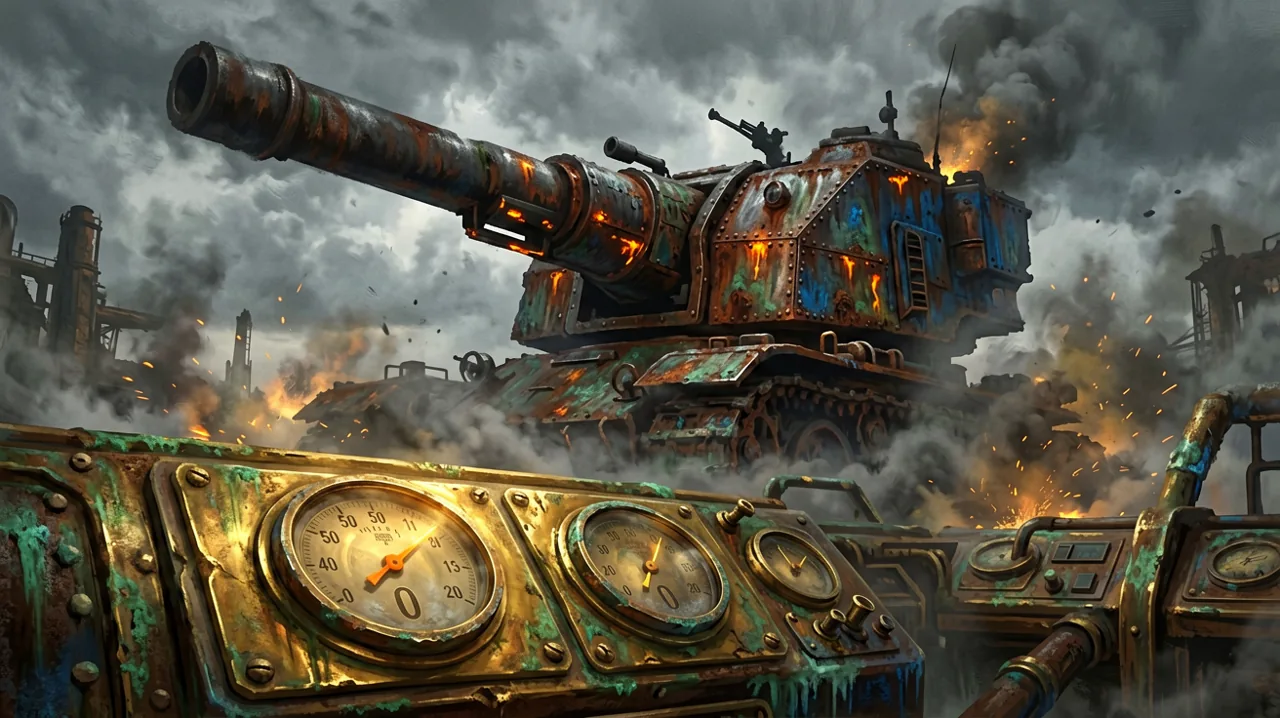
The heavy gears are grinding into motion, and the breach is finally locked. After months of anticipation, stellar Next Fest rankings, and a rapidly growing wishlist count, Iron Nest: Heavy Turret Simulator is officially launching on Steam today, August 6, 2026.
Developed by the two-person indie powerhouse of Nick Nieuwoudt and Dominik Latos, this brutally uncompromising dieselpunk simulator is about to open its steel doors to a global audience. Over the past 24 hours, the buzz surrounding the exact moment of deployment has reached a fever pitch. Major outlets like Destructoid have been running dedicated release countdown trackers, pinpointing the exact date and time the servers go live and the massive cannons can finally roar to life. Meanwhile, indie gaming communities across the globe are spotlighting the game. On French indie tracker boards like r/LeCoinIndeFR, Iron Nest is headlining today’s “5 releases to watch,” standing in stark, gritty contrast to the cozy management sims and wholesome adventure games launching alongside it.
There is nothing cozy about being sealed inside a 5,000-ton metal behemoth in a bleak, alternate-history Spanish wasteland. You are an operator chained to your station, receiving encrypted coordinates, and expected to execute high command’s orders without question.
As the countdown hits zero and thousands of players boot up the game, this day-one deployment briefing will serve as your foundational primer. Before you even touch the firing lanyard, you need to understand the beast you are trying to tame.
The Reality of the Turret: You Are Not Playing an Arcade Shooter
The most crucial mental shift required when loading into Iron Nest for the first time is abandoning the reflexes of traditional first-person shooters. You cannot simply point your crosshairs at a target and pull the trigger. The turret is a massive, sluggish, and incredibly complex piece of machinery that obeys the strict laws of physics, thermodynamics, and fluid mechanics.
Your primary weapon is a devastating piece of long-range artillery, which means you will rarely, if ever, see your targets with the naked eye. Instead, you are fighting a war on paper and dials. You will spend the vast majority of your time staring at rangefinders, manipulating brass dials, checking hydraulic pressure gauges, and confirming firing solutions before a single shell leaves the barrel. The tactile satisfaction of the game comes from the methodical, deliberate process of operating the machinery correctly under extreme psychological pressure.
If you rush the process, you will miss. Worse, you might push the turret’s internal systems past their breaking point, causing a catastrophic mechanical failure. Patience, precision, and a willingness to do the math are your greatest assets.
Cracking the Firing Solution
Every successful strike in Iron Nest begins with a firing solution. When high command radios in a set of coordinates, it is entirely on your shoulders to translate those numbers into mechanical adjustments on the gun itself.
This process requires calculating the exact trajectory of a shell that weighs as much as a small car. You must account for the raw distance to the target, the elevation difference between your emplacement and the impact zone, and the ever-changing wind speed and direction across the desolate landscape. The game provides you with analog tools—stopwatches, trajectory tables, and rangefinders—to manually plot the arc.
For operators stepping into the command seat today, we highly recommend keeping your notes organized. If you are struggling to make sense of the math during your initial deployments, you can review our ballistic calculator guide to understand how to read the environmental variables, and consult our walkthrough on plotting your first firing solution to ensure your inaugural shot actually lands where command intended.
Selecting the Right Ordnance
A firing solution is useless if you load the wrong shell into the breach. Iron Nest boasts an incredibly detailed logistics and ammunition system, demanding that you manage your limited magazine reserves efficiently. You cannot simply spam high-explosive rounds and hope for the best.
Different targets require drastically different approaches:
- Armor-Piercing (AP): Essential for cracking hardened bunkers, reinforced enemy emplacements, and heavy mechanized units pushing through the fog. AP rounds require pinpoint accuracy because their blast radius is negligible; kinetic energy does all the work.
- High-Explosive (HE): Your workhorse round for soft targets, infantry columns, and broad area denial. HE shells create massive craters and send shrapnel flying across the grey dirt.
- Smoke: Tactical deployments often require blinding the enemy rather than destroying them. Laying down a precise smoke screen can cover allied movements—even if you can’t see the allies you are protecting.
- Illumination: Night operations in the dieselpunk wasteland are terrifyingly dark. Firing illumination flares at the correct altitude above a target zone is vital for subsequent strikes or allied reconnaissance.
- Incendiary: Used for area denial and flushing out entrenched positions, blanketing a specific coordinate grid in unquenchable fire.
The physical act of loading these shells is a heavy, deliberate process. You must operate the mechanical hoists, align the shell on the loading tray, and engage the hydraulic rammer to seat the round in the breach. Every second counts, but a single mistake in the loading sequence can jam the mechanism. To memorize the color-coding and specific behavioral physics of each round type, study our comprehensive ammunition guide while the game downloads.
The Tactical Map: Your Only Window to the Outside World
Because your field of view through the turret’s reinforced slits is severely limited, the tactical map spread across your plotting table is your lifeline. This worn, paper map is where you will track enemy movements, confirm allied positions (if high command bothers to share them), and mark the exact coordinates of your intended strikes.
You will need to interpret grid references, contour lines representing the harsh topography, and encrypted intelligence reports. Placing marker pins accurately and using your compass and protractor are mandatory skills. The map is not a magical, real-time GPS; it is a static piece of paper that only updates when you receive fresh intel over the radio. If you misread the grid, your meticulously calculated artillery shell might wipe out an allied position or harmlessly crater an empty field.
Learning to trust the map—and knowing how to update it on the fly while managing the noise and chaos inside the steel bunker—is a steep learning curve. Operators should review the principles of reading the tactical map to avoid friendly fire incidents on day one.
The Burden of the Machine
Beyond shooting, Iron Nest is fundamentally a game about maintaining a decaying, massive machine. The dieselpunk aesthetic is not just for show; everything in this turret requires oil, pressure, and temperature management.
Firing the gun generates immense heat and recoil. You must monitor the hydraulic recoil buffers to ensure they aren’t leaking fluid. You have to watch the barrel temperature gauge; firing too rapidly will warp the rifling, completely destroying your accuracy or causing a catastrophic in-barrel detonation. The generator powering your lights and automated hoists requires constant attention. The atmosphere inside the turret is claustrophobic, dirty, and loud. The sound design is reportedly deafening, capturing the metallic groans, hissing steam, and concussive shockwaves of heavy artillery. You are as much a mechanic fighting the decay of your own weapon as you are a gunner fighting the enemy.
Final Pre-Deployment Checks
As Destructoid’s countdown hits zero and the Steam storefront unlocks the “Play” button, make sure your rig is ready for the burden. While the developers have optimized the game remarkably well—even securing Steam Deck verification just hours ago—the physics calculations and particle effects of the massive explosions demand a solid setup. Double-check the system requirements to ensure your frame rate remains stable when the sky lights up with incendiary fire.
The independent scene is watching closely today. Among the cozy farming games and colorful platformers highlighted by international indie trackers, Iron Nest: Heavy Turret Simulator stands out as a dark, uncompromising, and deeply engaging mechanical challenge.
High command is on the radio. The coordinates are coming in.
Operator, it is time to load the breach. Welcome to the Iron Nest.