Many A True Nerd Commits 'War Crimes' in Iron Nest: The Brutal Reality of Blind Artillery
A recent video from Many A True Nerd highlights the chaotic, collateral-damage-heavy nature of Iron Nest: Heavy Turret Simulator's blind firing mechanics.
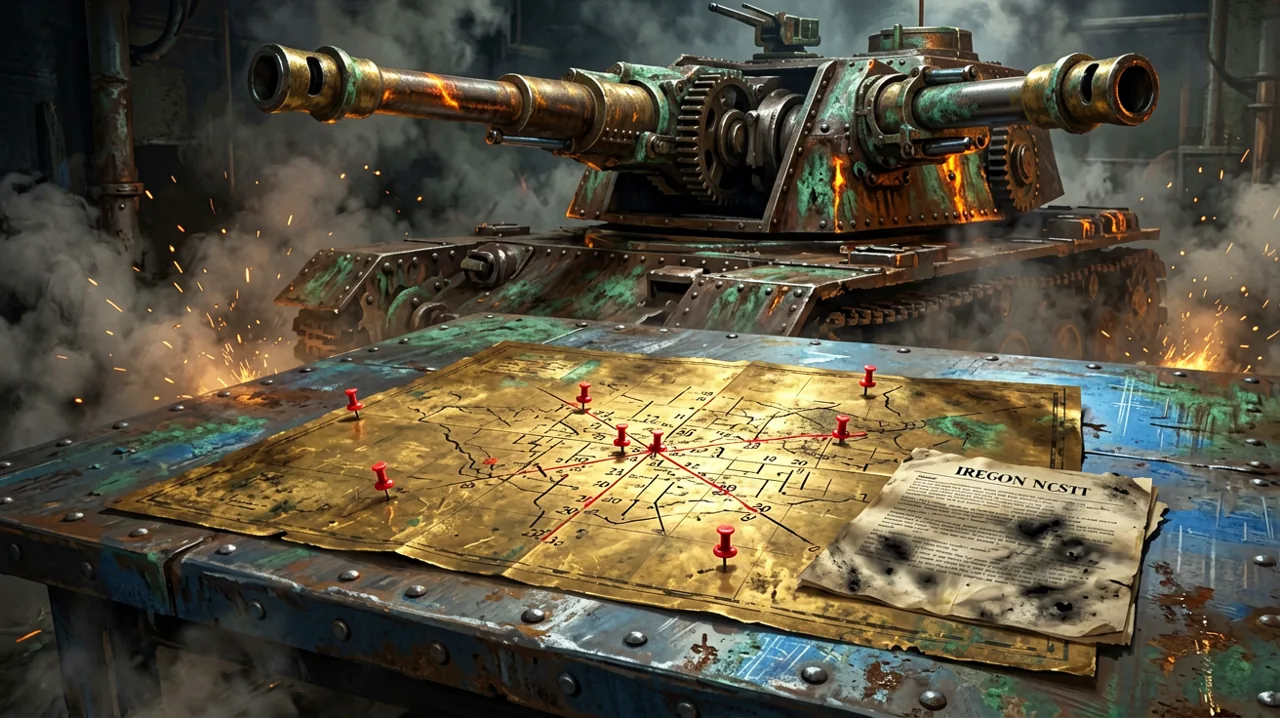
The beauty of a deeply systemic simulator lies in the moment things go catastrophically wrong. For Iron Nest: Heavy Turret Simulator, that moment usually involves hundreds of pounds of high explosives landing exactly where you told them to go—but entirely in the wrong place.
This weekend, popular gaming creator Jon from the YouTube channel Many A True Nerd shared his experience with the upcoming dieselpunk artillery game, and the resulting Reddit thread title perfectly encapsulated the core gameplay loop: “This Means War Crimes.” Accompanied by the all-too-relatable quote, “Ok, that wasn’t my fault…”, the community discussion surrounding his playthrough has shed light on one of the most fascinating, nerve-wracking, and terrifying aspects of developers Nick Nieuwoudt and Dominik Latos’s creation: the absolute blindness of the operator.
As we approach the expected August 6 launch window, the conversation sparked by Many A True Nerd serves as a crucial lesson for all prospective gunners. Operating a colossal, 5,000-ton turret in an alternative-history Spanish wasteland isn’t just about crunching numbers. It is an exercise in restraint, target identification, and dealing with the heavy conscience of indirect fire.
The Anatomy of an Accidental Misfire
When you are sequestered inside a steel bunker, miles away from the frontline, you do not see the enemy. You see numbers. You see dials, wind shear readouts, and humidity gauges. The disconnect between the tactile, mechanical input of operating the gun and the devastating output on the receiving end is where Iron Nest thrives.
Many A True Nerd’s reaction—blaming the equipment or the circumstances—is a rite of passage. Setting up your first firing solution is a stressful endeavor. The analog ballistic computers in the game are intentionally clunky and require precise manual adjustments. If you misread the wind dial by just a few notches, or if you fail to account for the temperature drop affecting the barrel’s metallurgy, your shell will inevitably drift.
In a standard shooter, a missed shot hits a wall. In Iron Nest, a shell that drifts two grid squares to the east might level a civilian hospital or obliterate an advancing friendly convoy. The game doesn’t explicitly tell you that you’ve committed a war crime with a flashy game-over screen. Instead, the horrifying realization slowly dawns on you as the updated intelligence reports trickle in via the radio, coldly listing the collateral damage in sector 7-Bravo.
Fog of War and the Tactical Map
The root cause of most accidental devastation in Iron Nest is the fog of war. Players who jump into the game expecting real-time, GPS-style tracking will be severely punished.
As discussed in our guide on reading the tactical map, your situational awareness is entirely dependent on external observers, forward scouts, and delayed radio transmissions. The map on your desk is static. You must manually place pins and draw firing arcs based on coordinate reports that are often minutes out of date.
If a scout reports an enemy armor column at coordinate grid 45-N, you might spend two minutes manually loading the breach, dialing in the trajectory, and pulling the firing lever. But what if the armor column moved during those two minutes? What if the scout misidentified a refugee caravan as a military convoy?
This is the exact scenario that leads to the “Ok, that wasn’t my fault” defense. The operator is merely following the coordinates provided by the chain of command, but the responsibility ultimately rests on the person who pulls the trigger. The game brilliantly forces you to question your orders. Do you fire immediately to provide rapid support, risking a blind strike? Or do you request a confirmation, wasting precious minutes while friendly frontlines might be overrun?
Choosing the Wrong Shell for the Job
Another major factor in collateral damage—and likely a contributor to the explosive mishaps seen in recent community playthroughs—is ammunition selection. Iron Nest is reportedly launching with over 30 distinct shell types, and understanding their specific applications is a matter of life and death for whoever is downrange.
Players often default to High Explosive (HE) rounds because they offer the most spectacular auditory and visual feedback through the periscope (when you can actually see the horizon). However, HE shells have a massive blast radius and send lethal shrapnel across multiple grid zones. Dropping HE on an enemy bunker situated near a contested village is almost guaranteed to rack up civilian casualties.
A disciplined operator must consult their ammunition guide and choose wisely. If the target is a reinforced concrete pillbox, an Armor Piercing (AP) shell is the professional choice. It delivers localized kinetic energy without wiping out the neighboring grid squares.
Furthermore, smart players utilize utility shells to confirm targets before committing to a destructive payload. Firing a Smoke shell or an Illumination flare over a suspected enemy position allows forward observers to visually confirm the target’s identity. It takes longer, and it burns through your limited supply of utility rounds, but it prevents the kind of catastrophic mistakes that lead to post-action tribunals.
The Psychological Burden of the Iron Nest
What makes the Many A True Nerd playthrough so compelling to the community is how accurately it reflects the psychological design of the game. Iron Nest: Heavy Turret Simulator is not a power fantasy. It is an industrial nightmare wrapped in a tactical puzzle.
The physical environment of the turret reinforces this. The deafening roar of the breach closing, the hiss of hydraulic fluid, and the claustrophobic metal walls all serve to isolate the player from the outside world. You are a cog in a massive dieselpunk machine. This isolation breeds a dangerous detachment. When targets are just coordinates on a brass dial, it becomes dangerously easy to disregard the human cost of your actions.
The developers have managed to gamify the concept of blind obedience. When you finally hit the right coordinates and a delayed radio crackle confirms a successful strike on an enemy position, the relief is immense. But when the radio crackles with frantic screaming because your ballistic calculator guide math was off by a single decimal point, the pit in your stomach is entirely real.
Final Preparations Before Deployment
As highlighted by the recent influx of media coverage—including dedicated pages spinning up on mainstream sites like Kotaku—the anticipation surrounding Iron Nest is reaching a fever pitch. With the game sitting on hundreds of thousands of wishlists and the release date officially set for early August 2026 on Steam, the community is rapidly preparing for deployment.
For those who want to test their nerve (and their math skills) before the full release, the demo guide offers a comprehensive breakdown of the currently available trial version. The demo provides a localized slice of the tactical map and a limited selection of shells, serving as a perfect training ground to get your misfires and “war crimes” out of your system before the campaign begins in earnest.
Just remember: when the radio crackles with a fire mission, take a deep breath, double-check your windage dials, confirm the coordinates on your map, and ask yourself if you really know what you’re aiming at. Because once that colossal gun fires, you can’t take the shell back, and “it wasn’t my fault” won’t look good on the after-action report.