Iron Nest Surpasses 800,000 Wishlists Just Two Weeks Before Launch
With only two weeks remaining until its August 6 release, the dieselpunk artillery simulator Iron Nest has crossed a staggering 800,000 wishlists on Steam.
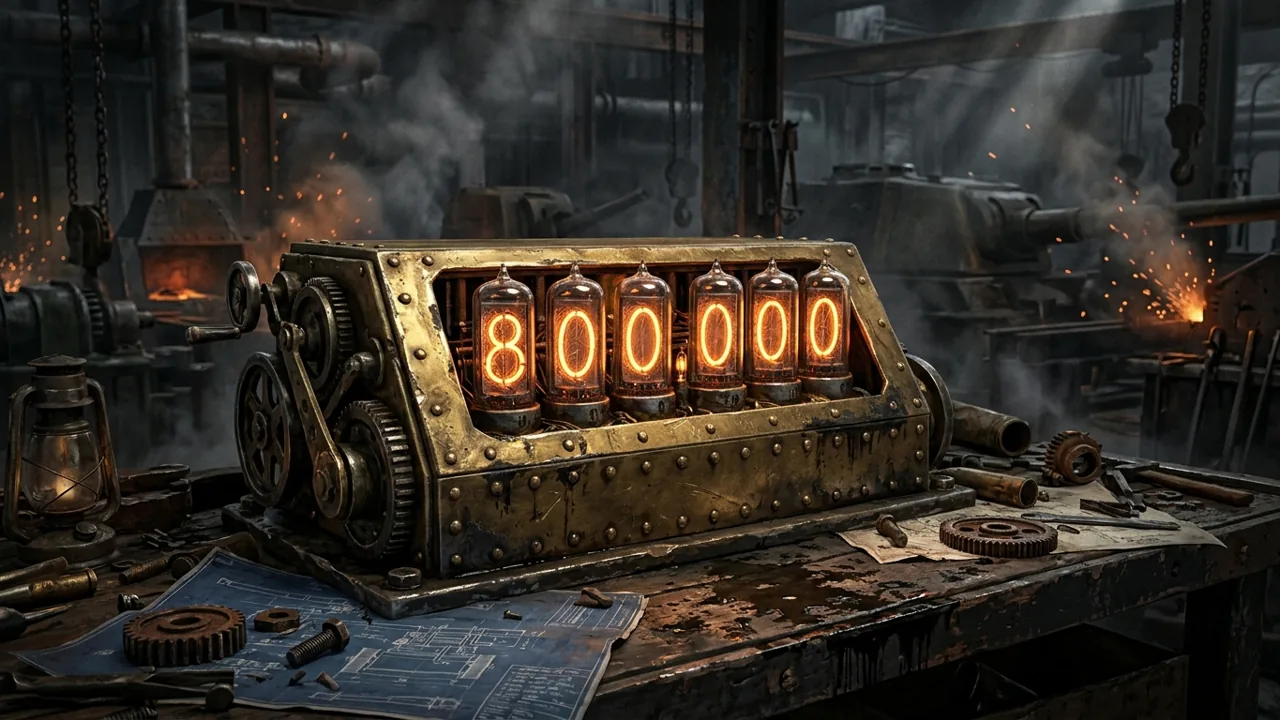
A Monumental Achievement for a Two-Person Studio
When independent developers Nick Nieuwoudt and Dominik Latos first revealed their dark, atmospheric artillery simulator, few could have predicted the sheer scale of the ensuing community response. Fast forward to late July 2026, and IRON NEST: Heavy Turret Simulator has officially surpassed 800,000 wishlists on Steam. This remarkable figure was recently celebrated in community circles, notably gaining high visibility on the IndieGameWishlist subreddit, underscoring the immense and continuously growing anticipation leading up to the scheduled August 6 launch.
Securing over 800,000 wishlists is a staggering feat for any development studio, let alone a two-person indie team operating without a massive publisher-backed marketing campaign. The momentum began swelling significantly during the Steam Next Fest, where the game’s deeply tactile, highly demanding demo captured the attention of simulation purists and strategy enthusiasts alike. From hitting 400,000 wishlists in mid-June to breaking the 700,000 mark in early July, the title has maintained a steady, exponential growth trajectory. Now, sitting comfortably past 800,000 with just two weeks left on the clock, it is abundantly clear that the heavy metal mechanics and bleak conscience of this alternate-history Spanish battlefield have struck a major chord with the gaming public.
The Masterminds Behind the Machinery
It cannot be stated enough how rare it is for a duo to command this level of global pre-release attention. While mainstream titles have heavily leaned into faster movement speeds, forgiving physics, and instant gratification, Nieuwoudt and Latos looked in the exact opposite direction.
Their development philosophy appears deeply rooted in the physical weight of historical military hardware and the grim realities of industrial warfare, filtered through a distinct, dieselpunk lens. By focusing entirely on the claustrophobic operation of a single, static weapon system, they channeled all their resources into making that isolated environment incredibly immersive. Every brass dial, hydraulic piston, and grease-stained lever inside the turret serves a tangible mechanical purpose. This unapologetic laser focus on mechanical realism has resonated deeply with a community starved for genuine complexity, proving that an immense open-world scope is not always a prerequisite for viral success.
The Appeal of Uncompromising Simulation
At the core of this massive wishlist count is a gameplay loop that vehemently rejects modern gaming conveniences. Players are not superhuman soldiers sprinting across a map; they are operators tethered to a colossal, stationary cannon. Every action requires deliberate, physical effort within the game’s meticulously modeled turret interior.
Loading the gun is far from pressing a single reload key. It involves interacting with complex mechanical hoists, opening massive breeches, and ensuring the hydraulic systems of the turret are functioning at optimal pressure. This uncompromising approach to mechanical interaction is precisely what has drawn so many eyes to the project. Operators are forced to rely on analog instruments, reading gauges and physically wrestling with heavy cranks. The resulting sensory feedback is reportedly spectacular—the deafening roar of the 5,000-ton gun, the metallic clang of spent brass casings hitting the deck, and the visceral shaking of your screen create a suffocating yet exhilarating atmosphere that few other simulators can replicate.
Mastering the Science of Ballistics
The true challenge, and the aspect that has the simulation community eagerly analyzing every frame of released footage, lies in the ballistics calculation. Landing a massive shell on a distant target in IRON NEST is an intricate mathematical puzzle. Operators must extensively utilize their ballistic calculator to factor in a myriad of environmental variables.
Before you even touch the firing mechanism, you have to acquire the target using long-distance rangefinders, read the current wind speed and directional drift, and properly adjust for significant elevation differences. The painstaking process of achieving your first firing solution is expected to present a formidable learning curve for newcomers. You are constantly cross-referencing worn paper charts, listening to garbled intelligence reports over a crackling radio, and manually inputting data into the turret’s analog computing arrays. Because the game never hands you an easy victory or an arcade-style crosshair, every successful hit is the direct, satisfying result of your own spatial awareness and mathematical precision.
Strategic Ammunition Selection
A heavy turret is ultimately only as effective as the shells it fires. As players progress through the campaign and face increasingly complex tactical scenarios, they will need to familiarize themselves with a wide array of specialized ordnance. While our comprehensive ammunition guide breaks down the core types, the tactical flexibility they demand in the heat of battle cannot be overstated.
Standard High Explosive (HE) shells are your go-to tool for decimating soft targets, disrupting trench lines, and neutralizing unarmored supply convoys, offering a wide and devastating blast radius. However, when heavy enemy armor rolls into your sector, you must physically initiate the laborious process of swapping to Armor Piercing (AP) rounds, which require pinpoint accuracy to penetrate thick steel plating.
The battlefield remains highly dynamic, often demanding creative, non-lethal support solutions. If spotters report heavy enemy troop movements under the cover of a pitch-black night, firing Illumination flares high into the sky can suddenly light up the kill zone for allied forces. Similarly, Smoke shells can blind enemy artillery spotters or mask vulnerable allied movements, while Incendiary rounds can deny entire sectors of the map to advancing infantry. The sheer physical act of selecting, hauling, and loading these massive shells adds a frantic layer of resource and time management to the core simulation.
Navigating the Tactical Map
Confined to the claustrophobic interior of your metal fortress, your situational awareness is entirely dependent on a tenuous chain of external intelligence. This is exactly where the skill of reading the tactical map becomes a matter of life and death. You will receive urgent coordinate updates via field telephone, which you must manually plot on a physical paper grid laid out in your workspace.
This map is not a magical, real-time GPS interface that tracks enemy movements automatically. It is a static piece of paper where you must place pushpins, draw lines of sight, and estimate target velocity. Misinterpreting a grid coordinate, failing to account for terrain heights, or acting on delayed intelligence can quickly lead to catastrophic friendly fire incidents or entirely wasted ammunition. The stark disconnect between the quiet, sterile map planning and the violently deafening reality of actually firing the gun creates a brilliant psychological tension. You are playing a high-stakes, life-or-death game of battleship, but you are the one shoveling the coal and pulling the trigger.
Visual Fidelity and a Bleak Atmosphere
Recent media coverage, including extensive image galleries highlighted by outlets like Kotaku, continues to showcase the grim, oppressive beauty of the game’s engine. The dieselpunk aesthetic is not just superficial window dressing; it informs the entire mechanical and architectural design of the world. Everything looks incredibly heavy, coated in oil, and exceptionally dangerous. The art direction masterfully emphasizes the bleakness of the alternate-history European theater, wrapping the player in a gritty world of rusted iron, thick cordite smoke, and relentless conflict.
The environmental design outside the turret viewing slits is equally hostile. Whether your emplacement is stationed overlooking a barren industrial wasteland, guarding a jagged and turbulent coastline, or holding a highly contested mountain pass, the lighting and weather effects are expected to play a crucial role in your operational efficiency. Rain streaks across your heavily armored glass, thick fog rolls in to completely obscure your distant targets, and the massive muzzle flash of your own weapon illuminates the desolate landscape for brief, terrifying seconds. It is a visual masterclass in atmospheric storytelling, achieved entirely from a fixed perspective.
Hardware Readiness and Final Countdown
With the August 6 release date now firmly on the horizon, players are busy ensuring their gaming rigs are fully prepped to handle the demanding physics calculations and dense visual effects. Fortunately, the developers have been highly transparent regarding the system requirements, and the recent confirmation that the game will run smoothly on portable hardware like the Steam Deck has only expanded the potential day-one player base.
For the 800,000 operators currently sitting with the game in their wishlists, the final two weeks will undoubtedly feel like an agonizing wait. The development duo is expected to share some final launch details and patch notes in the coming days, potentially outlining the initial suite of challenge modes and confirming the exact deployment times across global regions. Until that launch day arrives, the community continues to meticulously dissect every available frame of gameplay footage, preparing their handwritten ballistic charts, and mentally steeling themselves for the grueling reality of the turret operator.