Alternate-History Spain in IRON NEST: The Confirmed Setting
What IRON NEST officially establishes about its late-1920s alternate-history Spanish setting, and how to discuss its historical echoes without turning fiction into a real-world chronology.
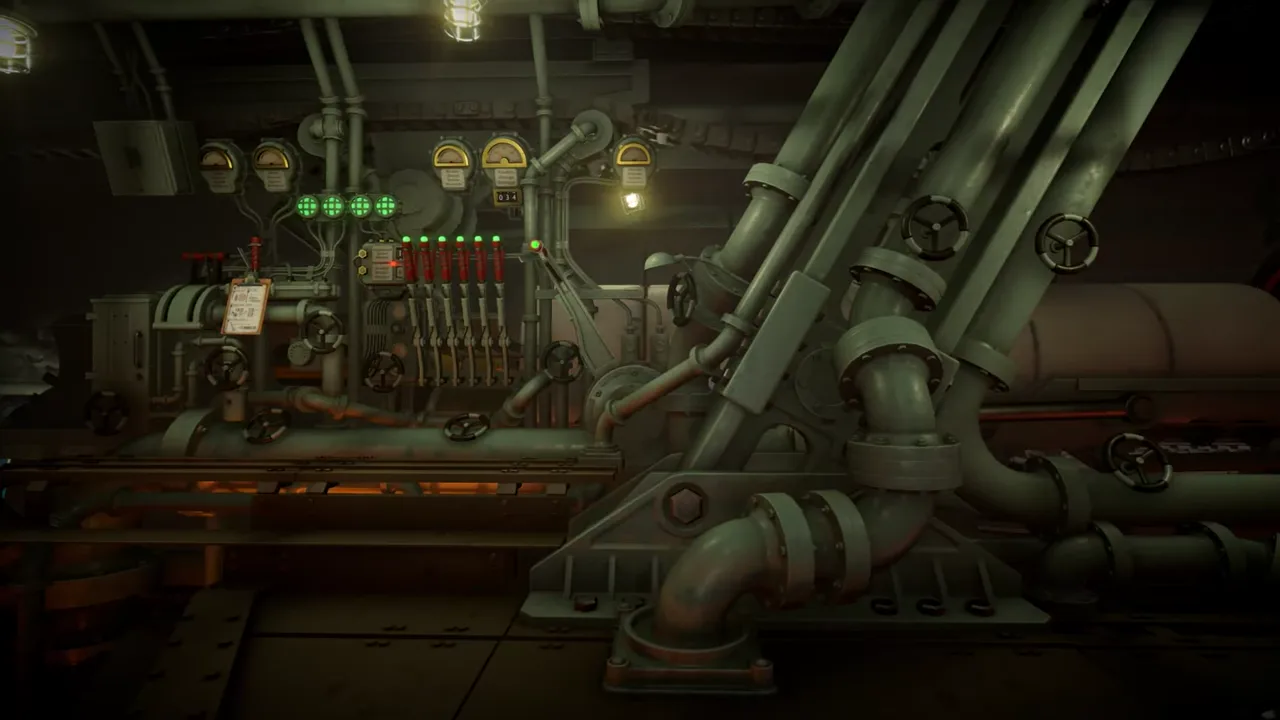
IRON NEST places its campaign in alternate-history Spain in the late 1920s, on the brink of a civil war. The official Steam description states the key divergence plainly: in this timeline, the monarchy still holds power while a republican uprising spreads across the country. That is the reliable foundation for the setting.
It is also deliberately less than a real-world chronology. The game has a fictional 5,000-ton heavy turret, a stylized industrial military apparatus and a campaign advertised across 15 regions. It can evoke histories of interwar politics, artillery, authoritarian propaganda and Spanish conflict without reproducing a specific real government, battle, province, weapon program or historical outcome. A useful lore reference begins by preserving that difference.
The facts current official material establishes
The current product page establishes five broad setting facts. First, the campaign is in Spain. Second, its time frame is the late 1920s. Third, the history is alternate rather than literal. Fourth, a monarchy remains in power. Fifth, a republican uprising is expanding. The page also frames the player as an Operator receiving orders through High Command while operating a colossal war machine.
These statements are enough to discuss the game’s central tension: a player inhabits an enormous weapon within a conflict whose political legitimacy and human consequences are intentionally uncomfortable. They are not enough to name the reigning monarch, identify every faction’s ideology, reconstruct a national timeline, assign a real province to each map, or predict how any historical event would unfold in the fictional world.
The distinction matters because a precise historical-sounding detail can be more misleading than a broad truthful one. Saying “the game is inspired by an interwar Spanish crisis” is compatible with its setting. Saying “this mission recreates a particular historical battle” needs an explicit source that the reviewed material does not supply.
Alternate history is an instruction to compare carefully
Alternate history often begins with familiar context so a divergence is legible. In IRON NEST, the setting signals an alternate late-1920s Spain before the real-world Spanish Civil War chronology that many players may expect. That cue invites comparison, but comparison is not equivalence.
The game can use historical visual vocabulary—industrial steel, artillery paperwork, teleprinters, military reports and propaganda—while rearranging politics, technology and chronology. The Iron Nest itself is an obvious example: a fictional 5,000-ton “heavy spider-turret” is not a historical weapon to be placed on a museum chart. Its scale and form are part of the dieselpunk premise.
When writing about a real event or machine, label it as background. Explain why it helps a reader recognize an influence or ask a question. Then return to what the game actually confirms. Do not let a real historical source prove a fictional in-game detail that developers have not named.
The campaign geography boundary
Official material says IRON NEST has 15 regions. That tells readers the campaign has geographic breadth. It does not provide an authoritative public list of names, unlock order, terrain mechanics or one-to-one real-world locations. The older wiki used invented labels such as coasts, highlands and capitals to make an apparent campaign atlas. Those labels have been removed because they were not source-backed.
The responsible approach is to record exact in-game names when a current build or official document presents them, preserve spelling and context, and avoid filling blank spaces on a map with likely historical geography. A target grid, aerial photo, briefing dateline or regional count is evidence for a specific layer of information, not an automatic map key.
See 15 regions: official evidence for the full sourcing standard. It provides a better foundation for future regional lore than a list of picturesque but unsupported biomes.
The setting serves the operator perspective
IRON NEST does not market itself as a cabinet-level strategy simulation. It puts the player inside the machine. The official description emphasizes reports from High Command and the frontline, map planning, calculation, physical operation and consequences that appear in aerial evidence and persistent scars. The late-1920s alternate setting gives those tasks a political and aesthetic frame, but the player’s immediate experience is procedural.
This helps explain why the setting is communicated through systems as well as exposition. A report can imply hierarchy. A newspaper can frame an aftermath. A censored reference to phosgene can signal institutional cruelty. A map scar can make a distant decision feel less abstract. These are interpretive readings of the sources and presentation; they should not be treated as proof of a complete morality-stat system or an exhaustive lore bible.
The operator and responsibility page explores this perspective. The newspaper reports system separates confirmed printed-information features from assumptions about branching narrative outcomes.
Why dates need care
“Late 1920s” is a setting anchor, not a patch note for every prop. The official description does not say every visual object follows one year, every terminology choice mirrors a real military doctrine or every technology level maps to the historical record. Dieselpunk deliberately permits stylized anachronism.
Do not use an era label to infer precise ammunition inventories, armor values, radio formats, map conventions or faction equipment. For game rules, use current official product wording, visible current interface behavior or a dated developer statement. For historical explanation, cite a reliable historical source and label it as comparison rather than game documentation.
This is particularly important for chemical-war references. The official product page names phosgene in a censored action, but that single marketing phrase is not a comprehensive statement of a real-world chemical weapons history, an in-game ruleset or a faction doctrine. The chemical-shell reference and ammunition evidence status establish what the sources can support.
A method for responsible setting research
When you encounter a possible lore detail, classify it before writing. Is it explicit official setting text? A current-build label? A visible but ambiguous prop? A pre-release developer intention? A real historical comparison? Or a player inference? Each has a different confidence level.
Then preserve provenance. Quote the exact label where reasonable, record the source date and build, and separate the observation from the explanation. “This map screen displays a name” is an observation. “The name corresponds to a real province and therefore sets the campaign route” is an inference that needs additional proof. If no proof exists, leave the route unknown.
The official-video frame above is used as an attributed illustration of the game’s industrial operator-space atmosphere. It does not identify a location or prove a historical machine lineage. The image ledger keeps that purpose explicit.
The dependable conclusion
IRON NEST officially establishes alternate-history late-1920s Spain, a monarchy still in power and a spreading republican uprising. It also establishes a fictional heavy-turret war machine and a campaign across 15 regions. These facts invite historical reflection, but they do not turn the game into a real chronology or publish a complete map of fictional Spain.
Use real history as clearly labeled context. Use official game material for canon. Keeping that boundary intact lets the setting remain rich, uncomfortable and imaginative without asking a familiar date or place name to do work the sources never gave it.
Frequently asked questions
Is IRON NEST a historical simulation of the Spanish Civil War?
No. The official listing calls the setting alternate-history Spain in the late 1920s. Historical context can inform interpretation but does not make the game a documentary or a recreation of a specific campaign.
Does the game publish a complete list of real Spanish locations?
The reviewed public product material confirms 15 regions but does not provide a complete canonical public region list or a map that maps each area to real geography.