Phosgene Gas and Chemical Shells
Confirmed chemical ammunition with censored official purpose
An evidence-based guide to IRON NEST's confirmed phosgene reference, the PGAS and TEAR labels in official footage, gas-mask imagery and the limits of known mechanics.
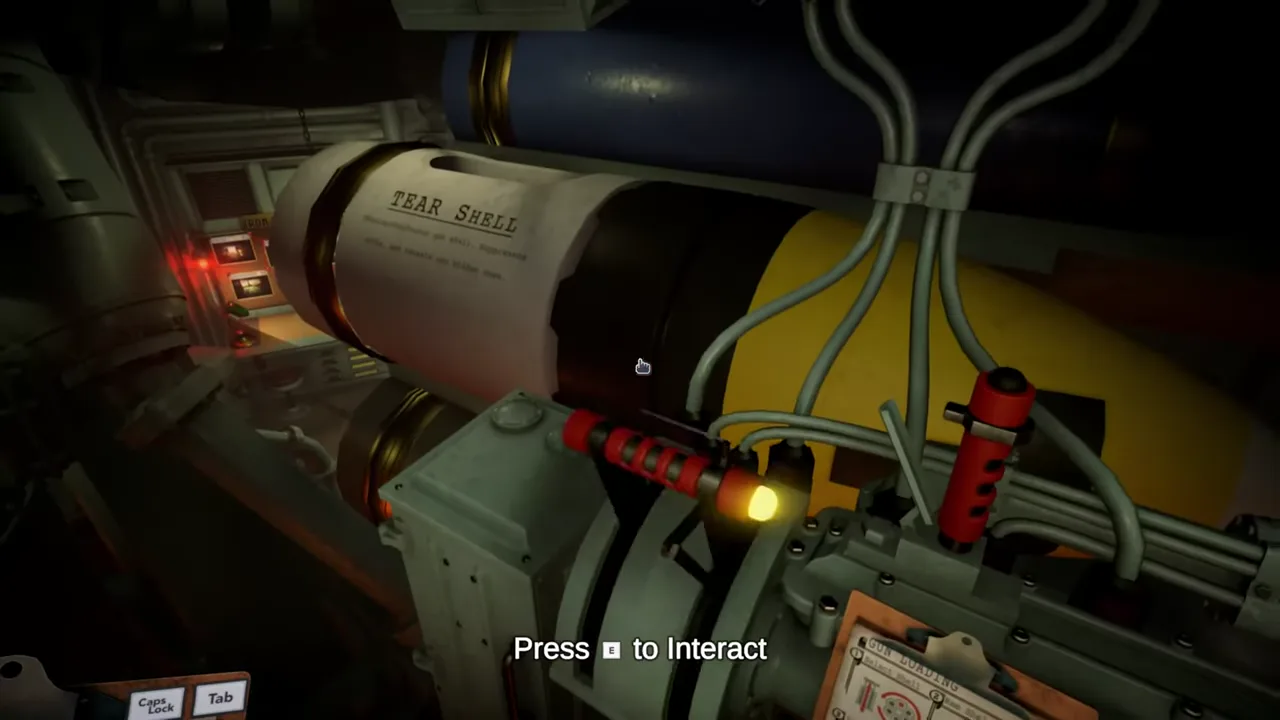
Phosgene is named; the official sentence censors its exact action.
Chemical ammunition is confirmed in IRON NEST, but the official presentation deliberately withholds part of its meaning. The current Steam page and official website name phosgene gas inside a sentence whose action is obscured by black blocks. Official video imagery adds a firing-solution card labeled PGAS. A separate launch-trailer frame shows a physical cylinder labeled TEAR SHELL.
These are three pieces of evidence, not three interchangeable names. Phosgene is the agent explicitly named in product text. PGAS is a likely in-game abbreviation associated with a solution card. TEAR SHELL is a distinct visible label on the pictured ammunition. The sources do not justify claiming that the tear shell contains phosgene or that every chemical round behaves identically.
What is directly confirmed
The strongest claim is narrow: phosgene gas exists in the game’s advertised ammunition context. The official sentence places it beside AP bunker breaching and smoke screening, then censors the phosgene action. The censorship is part of IRON NEST’s propaganda voice; it is not permission for a wiki to fill the blank with invented mechanics.
The PGAS card appears on the same task clipboard as AP, SMK, STAR and HCHE. Like those cards, it has charge and angular values. This shows chemical ammunition participating in the normal firing-solution process.
The TEAR SHELL image above proves that a shell with that visible label appears in the official launch trailer. It does not establish its inventory status, chemical composition, effect radius or relationship to PGAS. Keeping those labels separate is essential.
Why the old “area denial” claim was too strong
The previous page described chemical shells as order-restricted area-denial rounds that clear ground over time. That is plausible genre language, but the current sources reviewed here do not publish those rules. The redacted verb might describe an objective, effect or piece of dark humor; we should not reconstruct it from expectation.
Similarly, no official page cited here gives a cloud duration, spread model, wind interaction, protective threshold or target response. Those details could exist in the released build, but they require direct version-specific observation.
An evidence-based arsenal entry can still be useful. It tells players what is confirmed, how to prevent cross-contamination between solutions, what to inspect in the current build and why the ammunition’s narrative framing matters.
Chemical ammunition still uses the gun workflow
The PGAS solution card demonstrates that the operator must solve a ballistic delivery problem. Identify the requested location, measure range and bearing from the current Iron Nest position, select the correct card, match charge and elevation, load the intended shell, traverse and fire.
Do not reuse AP, SMK or HCHE values merely because the target point is unchanged. The official clipboard displays different cards with different recorded settings. Any ammunition change should trigger a complete charge–elevation verification.
If the task arrives during a multi-stage operation, note which gun is already loaded and whether its cycle can be safely changed under the current controls. A new narrative order does not magically clear the physical mechanism.
Reading the censored order
IRON NEST repeatedly contrasts High Command’s language with frontline information and visible consequences. Chemical ammunition intensifies that structure. A censored phrase can deny the operator a clean description while still demanding precise technical work.
Read every available channel before acting. Separate the official directive, frontline report, target geometry and later reconnaissance. Do not assume censorship changes the target coordinates; do not assume correct coordinates settle the moral question.
The operator and responsibility page explains this theme at the campaign level. Mechanically correct operation and responsibility are intentionally not the same concept.
Gas-mask imagery is context, not a protection table
Official videos show gas-mask imagery, and one Q&A briefly discussed the physical reproduction mask used on camera. That conversation was about the prop and possible merchandise, not a detailed in-game protection mechanic. It should not be converted into claims about filters, exposure time or safe distances.
If the current build requires a gas mask, follow its tutorial and interface. Record the exact trigger and version before adding a mechanic to the wiki. Never treat game behavior as real-world safety guidance; this page documents fictional interaction and source provenance only.
The frame chosen here shows a TEAR SHELL rather than a mask because it creates a useful evidence boundary. The label is visible, physical and official, while its detailed operation remains unknown.
How to verify a current-build chemical objective
Use a controlled checklist:
- record the exact ammunition label shown by the operation or inventory;
- record whether PGAS and TEAR appear as separate selectable entries;
- copy the task wording without reconstructing censored text;
- note the target location and required success state;
- record the shell, charge, elevation and bearing actually fired;
- observe the visual effect, objective update and later reports;
- repeat only if the game permits and conditions can be matched.
One dramatic cloud does not prove a universal radius. One objective’s timer does not prove every chemical effect shares a duration. The purpose of verification is to isolate stable mechanics from mission scripting.
Troubleshooting without guessing at exposure
If the shell lands in the wrong place, troubleshoot the firing chain exactly as for other ammunition. Check target construction, range, bearing, PGAS card, charge, elevation, traverse and physical load. The miss guide covers those states.
If it lands at the intended point but the mission does not advance, reread the current objective. The issue may be timing, wrong ammunition label, an additional stage or an unfulfilled condition. Do not improvise wider firing or repeated chemical use based on an assumed area-denial model.
Preserve post-shot evidence. Aerial photographs and newspapers may communicate consequences even when the firing station does not provide a conventional damage number.
Relationship among PGAS, TEAR and other cards
The official clipboard makes ammunition plural and purpose-specific. PGAS, SMK, STAR, AP and HCHE each receive distinct solution cards. The launch trailer separately shows TEAR SHELL. This supports a diverse arsenal but not a complete public inventory.
The version 1.0 feature list advertises “30x Ammo Types and Abilities,” combining ammunition and abilities in one number. It must not be rewritten as 30 chemical or even 30 total shell types. See the ammunition guide for that wording and the verified selection framework.
The dependable conclusion
Phosgene gas is explicitly named in IRON NEST’s current official description. PGAS appears on an official firing card, and TEAR SHELL appears as a separate visible label in the launch trailer. The exact phosgene action is intentionally censored, while mechanical effect, duration and protection rules are not published in the cited sources.
Document the labels accurately, keep them distinct, solve the ammunition-specific trajectory, and let the released build establish any further rules. Chemical ammunition is one of the clearest places where an IRON NEST wiki must resist turning atmosphere into false mechanical certainty.