Newspaper Reports and Propaganda
Confirmed narrative reporting with unverified reactivity limits
What IRON NEST officially confirms about newspaper reports, how they frame consequences and propaganda, and why branching or one-to-one causation should not be assumed.
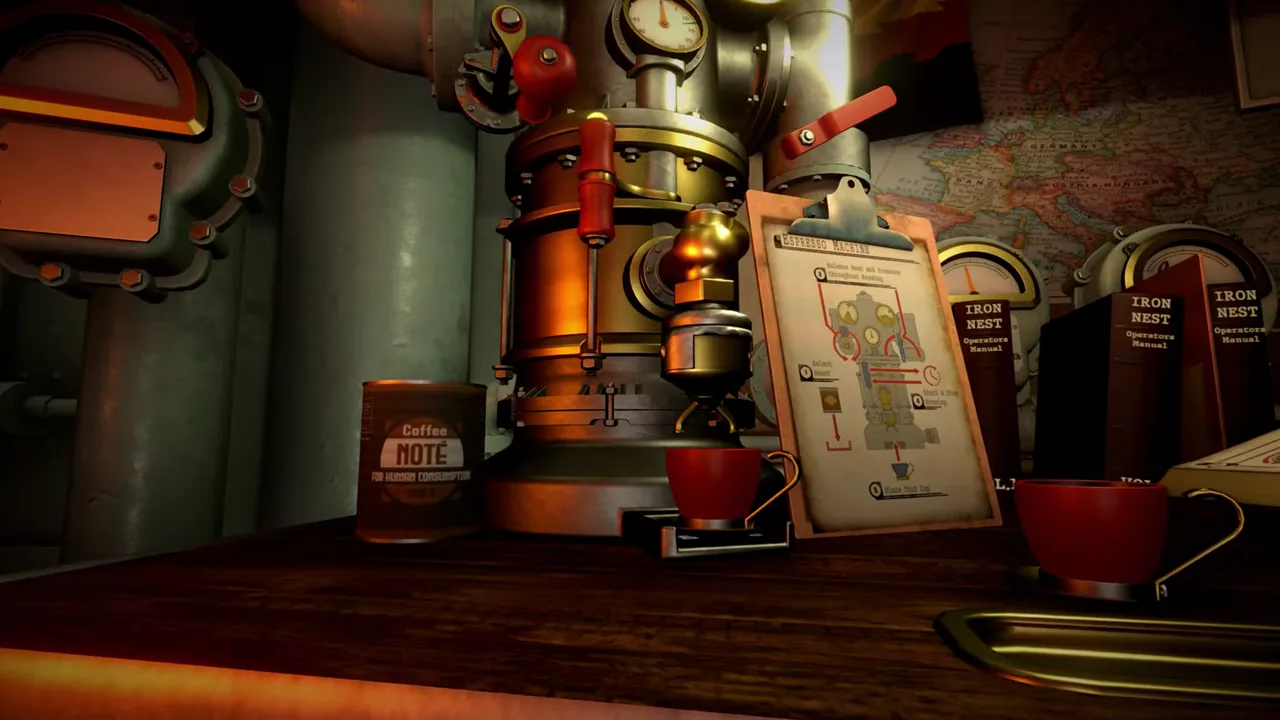
A headline can frame an outcome without proving how the underlying branch was calculated.
“Newspaper Reports” appears in IRON NEST’s current official feature list alongside a handcrafted story. The product description also emphasizes propaganda, frontline information, aerial evidence and the consequences carried by the operator. Together, those sources establish newspapers as an in-world narrative system.
They do not publish a complete branching specification. The old page said the reports reflected what the player chose, made the campaign reactive and answered every refused order. Those ideas may fit the game’s themes, but current public evidence does not prove a one-to-one newspaper response for every action.
Confirmed presence, limited public mechanics
The safest factual claim is straightforward: newspaper reports are a listed version 1.0 feature. They exist within a handcrafted campaign set in late-1920s alternate-history Spain, where the monarchy remains in power and a republican uprising is spreading.
The official description repeatedly uses the language of paperwork and propaganda. It says neither flawless paperwork nor the finest propaganda can erase guilt. This makes reports part of the perspective through which consequences are interpreted, even when the exact trigger logic is not public.
No cited source lists headline counts, newspaper frequency, branch variables or whether every report is generated dynamically.
Publication is not neutral evidence
A newspaper selects facts, language and emphasis. In IRON NEST’s setting, an in-world publication can frame an operation as victory, necessity, accident or silence. That framing may differ from the frontline call or aerial photograph.
Treat the report as a source inside the fiction, not an omniscient developer summary. Record what it claims, what it omits and whose interests the wording appears to serve. Interpretive conclusions should be labeled as analysis.
The High Command page explains why institutional authority and battlefield knowledge can diverge.
Comparing four information channels
A strong campaign record compares:
- High Command directive: what authority requested.
- Frontline report: what local participants communicated.
- Aerial photograph: what physical evidence became visible.
- Newspaper report: how the event was narrated afterward.
Agreement among all four strengthens a conclusion. Disagreement is not automatically a bug; it may be the narrative point. Preserve exact wording and sequence before deciding which source is unreliable.
This comparison creates useful analysis without claiming the newspaper engine generated each line from a simulation variable.
Avoiding false causation
If a newspaper appears after a mission, temporal sequence alone does not prove that one specific shell or choice generated every phrase. The report may be authored for the operation, selected from variants or influenced by several conditions.
To support a reactive claim, compare repeat playthroughs with controlled differences or cite current developer documentation. Record mission, build, decision, outcome and report text. One playthrough establishes what appeared, not why the system selected it.
Use “followed” for sequence and “responded to” only when evidence supports causation.
Handcrafted story versus generated newspaper
The official listing separately names a handcrafted story and procedurally generated objectives. Newspaper reports appear as another feature. This structure does not establish whether newspapers are authored, parameterized or procedurally assembled.
A handcrafted story can contain conditional report variants. Procedural objectives can also lead to authored summary text. Do not force the system into a binary choice between totally fixed and infinitely generated.
The campaign and procedural objectives page explains the broader hybrid evidence.
Building a newspaper archive
For each report, record:
- headline and publication date if shown;
- mission and stage completed beforehand;
- High Command objective;
- relevant frontline message;
- shells fired and target outcomes;
- visible aerial evidence;
- exact newspaper claims;
- interpretation and confidence;
- game version and verification date.
Separate transcription from commentary. A searchable archive can later reveal recurring phrases, factions and confirmed variants without relying on memory.
Headline language and propaganda markers
Look for agency, euphemism and certainty. Does the headline name the operator, High Command, rebels, civilians or an abstract “incident”? Does it describe destruction directly or replace it with sanitized language? Does the article claim certainty where the battlefield evidence was ambiguous?
These questions are literary analysis. They should not be presented as hidden mechanical variables unless the game exposes them. Their value is understanding how the world frames action.
The page image shows the operator’s printed-information workspace rather than claiming a particular unreadable prop is a newspaper. Its editorial purpose is the recurring relationship between paper, protocol and machinery.
Newspapers and consequences
The official product description explicitly tells the operator that consequences belong to them. Newspaper reports can participate in that framing by returning public language after a technically remote shot.
Still, consequence is broader than a headline. Aerial scars, mission state, later calls and story developments may carry information the newspaper omits. Do not use a celebratory headline to erase contradictory evidence.
Likewise, do not claim the paper always condemns or always praises action. The cited public material does not publish its full editorial stance.
Newspapers and medals
The feature list also advertises more than 100 medals. It is tempting to infer that newspaper outcomes grant medals or that both share a scoring system. No current source cited here establishes that link.
Document medals and newspapers as separate confirmed progression or narrative features until a current-build sequence shows direct interaction. Co-occurrence in one feature list is not causation.
The abilities and upgrades page maintains the same evidence boundary for unlocks.
Spoiler-aware documentation
Newspaper content can reveal campaign consequences. Index pages should describe the system without exposing late-story headlines. Individual archive entries can carry spoiler labels and mission context.
Use neutral slugs and descriptions where possible. Do not place the outcome of a moral decision in a search-result title unless the page is explicitly a spoiler analysis.
This system page remains spoiler-light by focusing on source method rather than enumerating reports.
What the sources do not establish
Current official sources do not publish:
- the total number of newspaper reports;
- whether every mission produces one;
- exact report trigger variables;
- the number of headline or article variants;
- a universal link to shell choice, refusal, medals or score;
- whether procedural objectives generate unique prose;
- whether newspaper state persists across modes.
Each claim requires build evidence or a direct developer statement.
A responsible wording guide
Use these distinctions:
- Confirmed: Newspaper Reports is a listed feature.
- Observed: A specific report appeared after a documented mission state.
- Inferred: Its language appears to frame or omit particular evidence.
- Unverified: A particular player choice caused that exact version.
This vocabulary makes narrative analysis useful without disguising uncertainty.
The dependable conclusion
Newspaper Reports is a confirmed IRON NEST feature embedded in a handcrafted alternate-history campaign concerned with propaganda and operator responsibility. Reports can be read alongside High Command directives, frontline calls and aerial photographs as an in-world narrative source.
The public sources do not prove a fully reactive newspaper generator or a response to every choice. Archive exact text, compare controlled states, distinguish sequence from causation and label interpretation. A newspaper can reveal how the world tells the story without revealing the complete code that selected the headline.