What the IRON NEST Demo Shows—and What It Cannot Confirm
An evidence-led guide to interpreting the IRON NEST demo after release: the hands-on operator loop it can demonstrate, the wider features it cannot exhaust, and how to compare it with current official information.
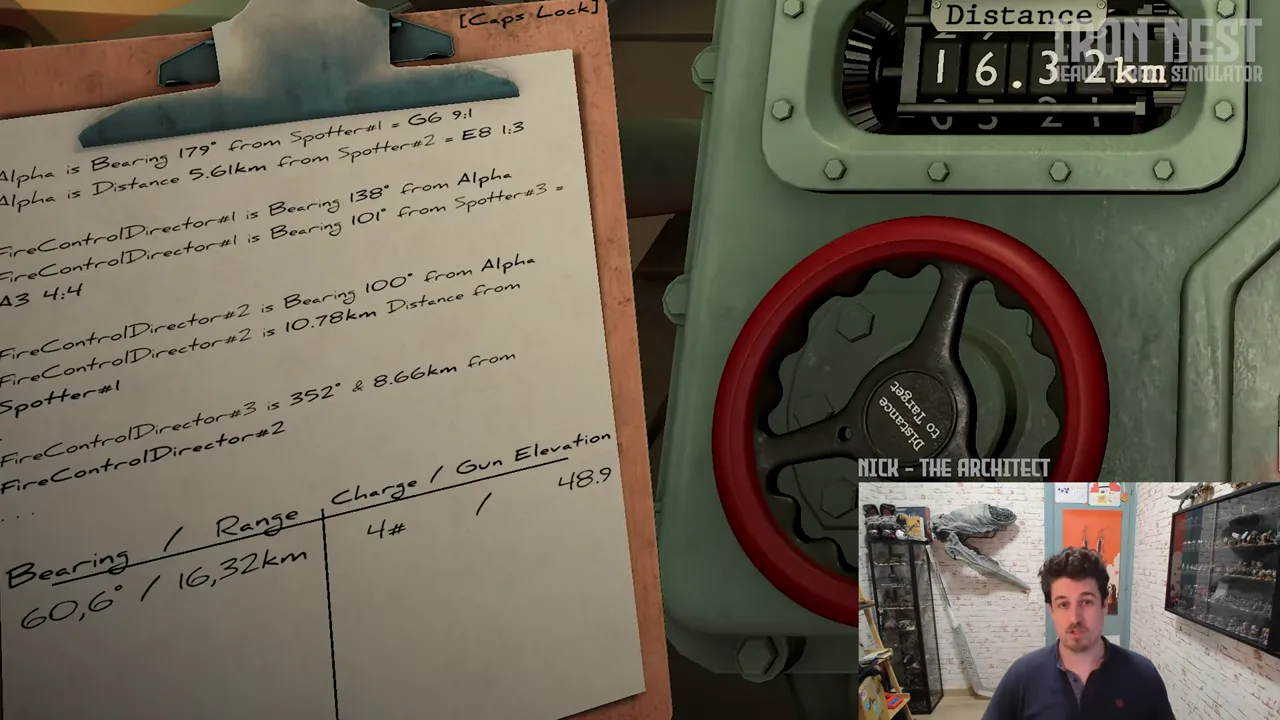
A demo is good at answering one decisive question: do you enjoy the moment-to-moment work the game asks of you? For IRON NEST, that work is unusually visible. You take in reports, turn information into a target location, measure from the current turret position, use the game’s fire-control tools, set up the hardware and assess the outcome. The demo can show whether that chain feels like engrossing competence or needless friction.
It is not a complete public audit of the released game. The full product released on August 6, 2026 and its official pages advertise a larger structure: a handcrafted story, procedurally generated objectives, two challenge modes, leaderboards, more than 100 unlockable medals, 15 regions and a combined set of 30 ammunition types and abilities. A demo may include examples or hints, but it cannot be assumed to contain all of them, reveal their exact unlock order or establish their full current behavior.
What the demo can demonstrate directly
The strongest evidence from a demo is the player’s own reproducible interaction. If the demo gives you a report, map, calculator, shell choice, control and outcome display, you can say those items were present in that build and context. You can describe how the sequence feels, how much information is supplied and which stages demand attention.
This makes the demo especially useful for IRON NEST’s operator fantasy. The public materials do not sell the game merely as “artillery.” They show a layered process in a physical interior. A player can learn whether they enjoy following instructions carefully, keeping sources separate, plotting a location rather than guessing, and carrying a solution across multiple controls.
Direct observation should still be recorded precisely. Note the demo version if shown, the mission or mode, the exact interface text, and whether an effect occurred once or repeatedly. A demo patch can change. A scripted tutorial can simplify a system. A one-off narrative moment may not represent a general rule.
What the demo cannot settle
The demo does not settle a complete campaign map. Official product sources confirm 15 regions but do not publish a full public catalogue of names and mechanics. It does not settle every medal, challenge, leaderboard category, procedural objective type, ability or ammunition state. It does not prove that a feature missing from the demo is missing from the release.
It also does not justify old numerical claims. The previous version of this article split the official “30 ammunition types and abilities” wording into roughly 30 ammunition types and 20 abilities. That split is unsupported. It also treated broad story reactivity and regional progression as though the demo had established them. The corrected evidence is narrower: the released feature list advertises the combined count, story, procedural objectives and regions; details beyond that need an explicit current source or careful current-build observation.
The abilities and progression reference and 15 regions evidence record explain these limits.
A practical way to test the loop
Use the demo as a small research exercise. Read each message before acting. Label whether it comes from High Command, frontline information or another source. Plot information from its stated origin rather than assuming every bearing begins at the turret. Measure the target from the current Iron Nest position only after the target point is established. Keep range and bearing separate. Then use the appropriate interface to convert the result into the next physical action.
After firing, compare the result with the objective and available aerial or map evidence. If something looks wrong, diagnose upstream: source, plotted target, current turret position, range, shell state, charge, elevation and traverse. Do not invent a terrain modifier or unseen rule to explain a miss. The why firing solutions miss guide offers the same order.
This test tells you more than a review score. It tells you whether the game’s attention demands are enjoyable to you and whether the physical workflow becomes clearer with practice.
Compare the demo with released information correctly
When moving from demo to full release, make a three-column note. In the first column, record what you personally saw or did in the demo. In the second, record what the current official Steam page or website explicitly advertises. In the third, leave unverified details blank. This prevents a demo impression from becoming a false claim and keeps an official feature promise distinct from current observed behavior.
For example, an official listing can confirm that challenge modes and leaderboards exist. A demo run may show that map work feels tactile. Neither by itself tells you the exact leaderboard categories, every challenge condition or every mission’s progression consequence. Evidence becomes more useful when it retains the boundary of what it supports.
The credited image is from an official behind-the-scenes video. It illustrates the map-and-material context of the demo’s core work and records its source separately. It is not presented as a replacement for a release-build screenshot or proof that any particular item is in the demo.
The demo after launch
After a game releases, a demo has two roles. It can still be a way to assess fit before buying, and it becomes an archive of the project’s pre-release or introductory presentation. Its current availability, content and requirements must be checked on the dedicated Steam page. Do not assume that an old Next Fest deadline, build, price, system requirement or launch forecast still applies.
For current product facts, start with the released listing. For the historical event, read IRON NEST demo at Next Fest. For a player-oriented walkthrough, use the demo guide. These pages have different jobs and should not collapse into a single vague statement that the demo “shows the whole game.”
The dependable conclusion
The IRON NEST demo can directly demonstrate whether the core operator loop—reports, map work, calculation, control and outcome review—appeals to you. It is strong evidence for the feel of the slice you play. It is not evidence for the complete released campaign, every advertised system, a separate ammunition-and-ability count or a fixed region progression chart.
Use the demo for firsthand fit, the official released pages for product scope and current-build observation for precise mechanics. That combination gives a player a clear picture without asking a short pre-release slice to answer questions it was never designed to settle.