Iron Nest Ranks Among 2026's Best Indie Games: Exploring the High Command Atmosphere and Expanding Features
Iron Nest is being hailed as one of the best indie games of 2026. Discover how its High Command atmosphere and brutal dieselpunk mechanics keep players engaged.
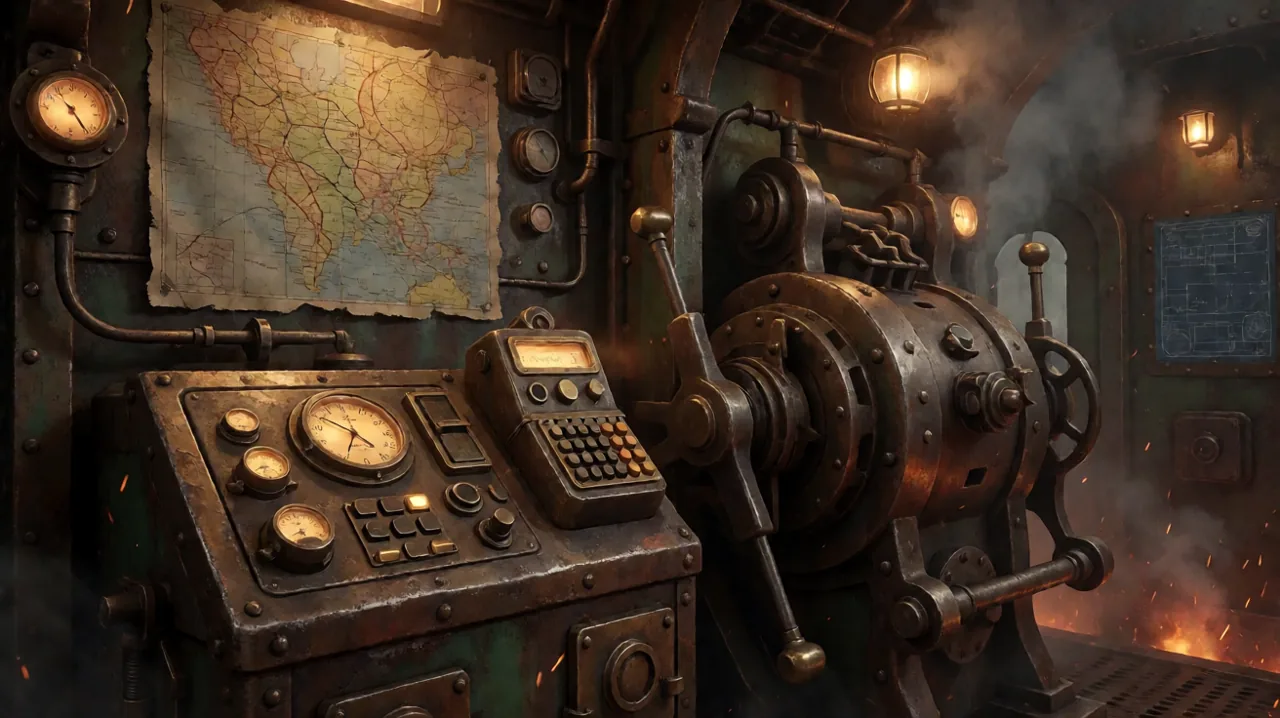
As we move into the final quarter of the year, the discussion around the standout independent titles is heating up across various gaming communities. Among the usual array of fast-paced action games and narrative adventures, a distinctly heavy, soot-stained contender has firmly entrenched itself in the conversation: IRON NEST: Heavy Turret Simulator. Recently featured in prominent community spotlights on Reddit as one of the best indie games of 2026, this atmospheric dieselpunk artillery simulator continues to draw intense attention for its uncompromising vision.
Developed by the two-person team of Nick Nieuwoudt and Dominik Latos, the game drops players into a grim alternative-history Spanish battlefield. However, you do not deploy as a mobile infantryman. Instead, you operate a colossal, fixed heavy artillery emplacement. With mainstream outlets continuing to highlight the game’s brutal visual fidelity and sharing the latest game footage, it is clear that the momentum from its successful August launch is not slowing down. The recent community buzz specifically praises the game’s oppressive “High Command” atmosphere and the developers’ ongoing, reportedly expanding commitment to new modes and features.
Immersion Through Isolation: The “High Command” Atmosphere
One of the most defining characteristics of IRON NEST, and a frequent talking point among veteran players and new recruits alike, is its deliberately over-the-top “High Command” atmosphere. Unlike traditional war games that provide a god-like view of the battlefield or put a rifle directly in your hands, this simulator traps you inside a massive steel cage. You are a small cog in a vast military machine, receiving cold, calculated directives from an unseen authority.
The immersion stems directly from this profound sense of isolation. Your connection to the outside world is limited to crackling radio transmissions, static-laced intercom barks, and the rhythmic clatter of teletype machines spitting out coordinates. You do not see the faces of the enemies you are bombarding, nor do you see the infantry you are supporting. You are simply given a target, a timeframe, and an expectation of absolute compliance. This framing elevates the gameplay from a mere mechanical exercise to a psychological endurance test. The specific challenges of this environment include:
- Strict Time Constraints: Orders arrive with a narrow window for execution, forcing rapid, high-pressure calculations before the tactical window closes.
- Delayed Intelligence: Information from forward observers is often minutes old, requiring operators to predict enemy movements rather than reacting to real-time positions.
- Zero Visibility: Relying entirely on analog instruments and radio chatter rather than direct visual confirmation of the target zone.
The game utilizes this narrative device to justify its complex mechanics, making every dial adjustment and lever pull feel like an act of desperate duty rather than a simple puzzle.
Translating the Information War: The Tactical Map
Surviving the demands of High Command requires absolute mastery over the game’s informational tools, chief among them being the tactical map. Because your visual range is severely restricted by the turret’s narrow viewing slits and the thick fog of war, the map is your primary eye on the battlefield. Players must learn to read the topography of the desolate industrial wastelands and coastal batteries that make up the game’s environments.
When coordinates are relayed from forward scouts, they arrive as raw, unfiltered data. It is up to the operator to locate the specific grid square, assess the elevation changes between the turret’s position and the target zone, and anticipate enemy movement based on delayed intelligence. The tactical map is not a dynamic, modern GPS display; it is a static piece of paper that requires manual updates. Players must physically interact with the interface to place pins, draw intersecting lines to triangulate positions, and constantly re-evaluate the battlefield geometry.
Understanding the nuances of map reading is so critical that many players spend their first few hours simply studying the grid layouts before even attempting a live fire mission. For those struggling to decode the complex topography and contour lines, brushing up on the fundamentals through our reading the tactical map breakdown is highly recommended. The difference between a direct hit and a harmless crater often comes down to correctly interpreting a single elevation marker.
The Cold Calculus of the Firing Solution
Once the target’s location is verified on the tactical map, the true heart of IRON NEST engages: calculating the firing solution. This is where the game earns its hardcore simulator moniker. Aiming the massive cannon is not a matter of pointing a crosshair and clicking a button. It is a rigorous mathematical process that demands patience, precision, and a steady hand under pressure.
Operators must utilize the brass rangefinders and the onboard ballistic calculator to dial in the exact parameters. Distance is only the first variable in a complex equation. The heavy artillery shells are subject to extreme atmospheric interference, meaning players must actively account for wind speed, wind direction, and air density. Furthermore, because the targets are often located at completely different elevations than the turret itself, the parabolic trajectory of the shell must be adjusted accordingly. The physical act of setting these parameters is deeply tactile. You are interacting with heavy rotary dials, throwing thick electrical switches, and watching physical gauges respond to your inputs.
When the calculations are complete, the loading sequence begins. The screech of hydraulics, the heavy thud of the breech opening, and the mechanical clanking of the shell hoist create a symphony of industrial warfare. Pulling the firing lanyard results in a screen-shaking roar that temporarily blinds the optics with smoke and dust. For operators looking to refine their mathematics and reduce their time-to-target, mastering the intricate dials is essential; our detailed ballistic calculator guide provides a thorough analysis of these advanced mechanics.
Expanding the Arsenal: Ammunition and Challenge Modes
The continued relevance of IRON NEST in late 2026 is largely due to the developers’ active post-launch support. Community observers have noted the ongoing expansion of the game, with reports of new features and modes being actively discussed. While the core campaign provides a grueling test of endurance, the expected expansion of dedicated challenge modes will provide veteran operators with new ways to test their skills.
These community-reported challenges are expected to enforce strict restrictions, such as severely limiting the time available to calculate a firing solution or providing heavily obscured, unreliable intelligence. Such scenarios force players to rely on intuition and deep mechanical knowledge rather than leisurely calculation. You can find strategies for preparing for these grueling scenarios in our challenge modes overview.
Equally important to the game’s strategic depth is the expanded emphasis on ammunition selection. The game boasts a distinct variety of shell types, each serving a specific tactical purpose that must be matched to the High Command’s orders:
- Armor-Piercing (AP): Heavy kinetic penetrators designed specifically to crack reinforced concrete bunkers and heavy armor plating.
- High Explosive (HE): Fragmentation rounds utilized for wide-area suppression and obliterating soft targets in open terrain.
- Illumination: Specialized flare shells crucial for painting targets during night raids and severe weather conditions when visibility drops to zero.
- Smoke: Tactical rounds deployed to mask allied troop movements or intentionally blind enemy emplacements.
Knowing when to utilize each shell type, and managing the limited space in the ready-rack, is a meta-game in itself. Loading an HE shell when an AP shell was required means wasting precious minutes reloading while the enemy advances. Operators looking to optimize their loadouts should consult our ammunition guide to ensure they are always bringing the correct tool for the job.
Visualizing the Dieselpunk Brutality
Beyond its mechanical depth, IRON NEST continues to captivate players with its striking visual design. Recent coverage from gaming outlets has rightfully highlighted the game’s oppressive, grimy aesthetic. This is not a polished, futuristic vision of warfare; it is a rusted, bleeding, diesel-soaked nightmare that feels incredibly grounded in its alternative history setting.
The interior of the turret is a masterclass in environmental storytelling. Every surface is coated in a layer of grime, oil, and spent cordite. The massive gears and hydraulic rams that rotate the gun housing look dangerously over-engineered, groaning and sparking under the immense strain of combat. When the weapon fires, the lighting dynamically shifts, casting long, erratic shadows across the confined space as emergency lights flicker and smoke fills the cabin.
The external environments are equally bleak. Through the aiming optics, players observe a shattered world of ruined Spanish architecture intermingled with brutalist military installations. The coastal batteries are battered by relentless waves, while the industrial zones are choked with thick, black smoke. This commitment to a cohesive, grim atmosphere ensures that even during the quiet moments of calculation, the tension remains palpable.
The Future of the Heavy Turret
As IRON NEST: Heavy Turret Simulator solidifies its place as a standout title of 2026, the achievement of its two-person development team cannot be overstated. By leaning heavily into the niche appeal of hardcore simulation and wrapping it in an incredibly atmospheric package, they have cultivated a dedicated and passionate player base.
The ongoing updates, the community-reported expansion of challenge modes, and the continuous refinement of the core mechanics suggest that this turret will remain operational for a long time to come. For players who have yet to step inside the steel behemoth, there has never been a better time to enlist, grab a clipboard, and start running the numbers. The artillery does not rest, and High Command is always watching.