Iron Nest Crosses 200,000 Players: Patch 1.0 (1558) Fixes Crucial Elevation Mechanics and Cat Glitches
Iron Nest has reached a massive milestone of 200,000 operators! Explore how Patch 1.0 (1558) improves the heavy turret simulator with save fixes and elevation lever tweaks.
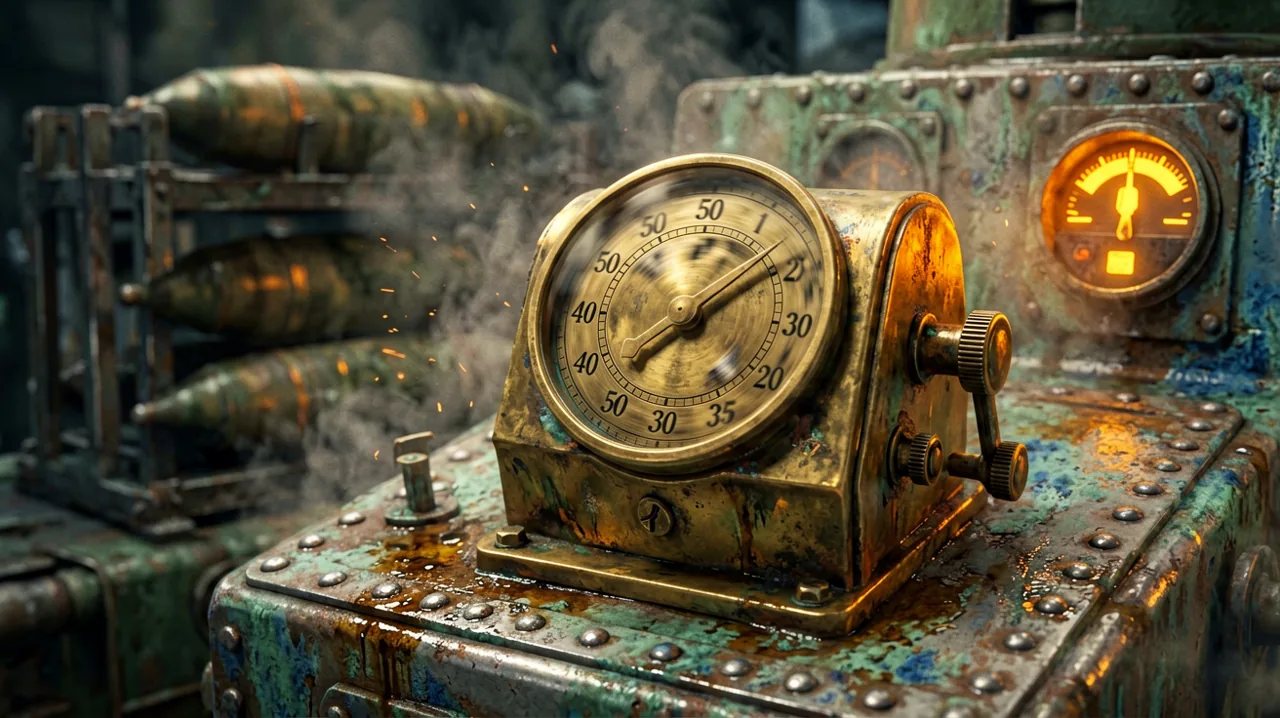
The Call to Arms: 200,000 Operators Deployed
Just days into its highly anticipated launch on PC and Steam, the dieselpunk heavy turret simulator IRON NEST has achieved a truly remarkable milestone. According to the latest official frontline report deployed by the developers, over 200,000 Operators have already answered the call, manning their stations in the grim, alternative history Spanish battlefield. For a highly niche, uncompromising simulator developed by the two-person indie team of Nick Nieuwoudt and Dominik Latos, reaching a player base of this magnitude is a testament to the game’s unique tactile chaos and mechanical depth.
Players are not just passively consuming a cinematic experience; they are actively wrestling with a massive stationary artillery piece. They are hauling heavy ordnance, manually loading breech mechanisms, and calculating complex firing solutions under extreme pressure. The sheer number of people willing to embrace this level of hardcore tactical simulation indicates a strong hunger for grounded, mechanically demanding titles. The development team expressed their profound gratitude in the latest patch notes, noting that “Castile will remember those who stepped forward in those first critical hours.”
Rapid Deployment: Patch 1.0 (1558) Arrives
With a rapidly growing community comes the immense pressure of maintaining a stable frontline. Developer Nick Nieuwoudt is reportedly working at full capacity to keep the game updated and functioning smoothly. This dedication has already materialized in the form of Patch 1.0 (1558), a crucial hotfix that addresses several severe issues that Operators encountered during the initial wave of deployments.
The most critical fix in this patch involves game stability. Some players experienced devastating save file corruption and bugs that prevented them from entering missions after a client crash. In a game like IRON NEST, where every mission requires intense concentration, careful resource management, and meticulous planning, losing a campaign save is a crushing blow. The manual process of deciphering tactical intelligence and executing precise bombardments means that players invest significant time into every single encounter. Securing the integrity of save files ensures that the long, grueling hours spent in the turret are never wasted and progress remains permanently secured.
Mechanical Precision: Fixing the Elevation Linkage
A major part of the IRON NEST experience is the physical interaction with the turret’s machinery. Every lever, wheel, and dial has a specific purpose, and the game demands precise manual inputs from the player. Patch 1.0 (1558) tackles a mechanical desync issue that was actively breaking immersion for many artillerymen: the non-resetting elevation and elevation linkage lever when exiting a mission after shooting.
To understand why this is a significant fix, one must look at how the game handles aiming. Generating a firing solution is not an automated process. You must rely on your brass rangefinder, read the distance to the target, and factor in wind direction and atmospheric conditions. Once you have your numbers, you engage the elevation controls to angle the massive gun barrel correctly. If the elevation linkage lever fails to reset properly between missions, the mechanical state of the turret becomes compromised. Operators would spawn into a new scenario with their equipment in an unexpected, uncalibrated state, leading to catastrophic misses on the first shot of a new engagement.
For those struggling to master these intricate physical controls, brushing up on the fundamentals via our controls and interface analysis is highly recommended. The physical sensation of turning the handwheels and locking the elevation into place is the beating heart of the game, and this patch restores the necessary consistency to the turret’s intricate hydraulic systems.
The Calculus of Destruction: Ammunition and Ballistics
When your elevation levers are working correctly, the next step in mastering the turret is understanding what exactly you are firing. IRON NEST features a diverse array of munitions, including Armor-Piercing (AP), High Explosive (HE), Smoke, Incendiary, and Illumination shells. Each shell type drastically alters the weight of the projectile, which in turn affects the ballistic trajectory over long distances.
You cannot simply use the same elevation settings for an AP shell as you would for a Smoke shell. The heavier the ordinance, the more you must compensate for projectile drop over the grey wasteland. Players must constantly cross-reference their chosen ammunition with their targeting data. If you are finding the mathematics of the battlefield overwhelming, our ballistic calculator manual breaks down the specific gravity and drag coefficients for the different shell types. Correctly predicting where an Incendiary shell will land on a distant enemy trench line requires patience, raw data, and a perfectly functioning elevation linkage.
Tactical Awareness and Engine Systems
Another vital fix in Patch 1.0 (1558) pertains to the turret’s engine control lights, which were previously reported as non-functional by some users. The heavy turret is essentially a small, self-contained factory, requiring continuous power to rotate the massive gun mount and operate the mechanical loading assists. The control panel lights provide crucial feedback on the status of your generators and hydraulic pressure. Without these visual indicators, Operators were essentially flying blind, risking total power failures during critical combat engagements.
Monitoring your internal systems is just as important as monitoring the external battlefield. The alternative history Spanish landscape is vast and unforgiving, requiring constant surveillance. Players must regularly consult the tactical map, coordinate with spotters, and interpret cryptic intelligence reports. A malfunctioning engine light might distract you at the exact moment you need to be adjusting your coordinates. For strategies on managing your external awareness, consult our tactical map interpretation guide, which details how to properly translate map grids into actionable firing data.
The Feline Companion: Eradicating the Nightmares
Amidst the oil, sweat, and deafening roar of artillery fire, the developers included a small comfort for the isolated Operator: a stray cat that wanders the turret’s cold iron floors. However, this heartwarming addition briefly turned into a source of absolute horror due to a graphical glitch.
Players running the game on “Very Low” graphics settings reported a terrifying phenomenon where the cat’s eyes would completely disappear, leaving void-like empty sockets staring back at them in the dimly lit bunker. The developers explicitly addressed this in the patch notes, humorously apologizing “for any trauma caused by witnessing that monstrosity.”
Additionally, a bug that caused the Operator to remain stuck in the carrying animation if they were holding the cat when a mission ended has been completely resolved. Previously, the character model would glitch out, desperately trying to operate heavy artillery handwheels while still pantomiming the act of cradling a feline. While slightly amusing, it severely disrupted the gritty, realistic tone of the dieselpunk setting. The cat is now safe to pet, carry, and admire, even on the absolute lowest graphical presets.
Visuals and Accessibility: The Motion Blur Toggle
Firing a heavy artillery piece is a violent, earth-shaking event. IRON NEST simulates this kinetic energy with intense screen shake and recoil effects. Up until this recent patch, these events were permanently accompanied by a forced motion blur effect designed to simulate the physical disorientation of the blast wave.
While highly effective for cinematic immersion, forced motion blur is a notoriously divisive feature in PC gaming. For many players, it causes motion sickness or simply degrades the visual clarity of the meticulously modeled turret interior. Patch 1.0 (1558) introduces a highly requested Motion Blur Toggle. The developers clarified that motion blur in the game only occurs during screen shake events (such as firing the cannon or sustaining an enemy hit), rather than during standard camera movement. This new toggle allows players to completely disable the blur specifically for those high-impact events, ensuring that the dials, numbers, and brass instruments remain crystal clear even in the heat of battle.
For players seeking the perfect balance between stable performance and visual fidelity, adjusting these newly added graphical settings can drastically improve the daily experience. Ensure your rig is properly optimized by reviewing the official minimum and recommended specs.
Community Achievements and Beyond
As the game client stabilizes and the population of Operators grows past the 200,000 mark, the broader gaming community is beginning to deeply explore the extreme edges of the simulation. External gaming outlets, such as Sportskeeda, have already begun publishing detailed lists of all in-game achievements and the methods required to unlock them.
These achievements are not mere participation trophies; they require absolute mastery of the heavy turret simulator. From landing a first-round hit on a moving target using a fully manual firing solution, to successfully illuminating a night battlefield with a perfectly timed flare shell, the challenges push players to understand every single nuance of the game’s mechanics. The achievements serve as a lasting testament to an Operator’s skill in managing the chaos, reading the wind, and executing precise, calculated strikes across the war-torn landscape.
The Road Ahead for the Iron Nest
The rapid deployment of Patch 1.0 (1558) so soon after launch demonstrates the unwavering commitment of the two-person development team. Resolving game-breaking save issues, fixing critical mechanical desyncs in the elevation levers, adding essential quality-of-life toggles, and curing the terrifying low-poly cat eyes proves that the developers are listening closely to feedback from their frontline Operators.
As the smoke clears on the first few days of the global campaign, the future looks incredibly bright for IRON NEST: Heavy Turret Simulator. The sheer complexity of its manual reloading, its highly atmospheric dieselpunk setting, and its demand for rigorous intellectual engagement have successfully carved out a massive, dedicated player base on Steam. With over 200,000 players currently calculating their next firing solution, the war in this alternative history battlefield has only just begun. The Iron Nest is fully operational, the linkage levers are freshly oiled, and the artillery barrage will continue unabated.