Rock Paper Shotgun Hands-On: Context, Claims and Limits
A source-conscious reading of Rock Paper Shotgun's June 2026 IRON NEST hands-on: what a critic's account can illuminate about the demo and what should not become a universal release-game rule.
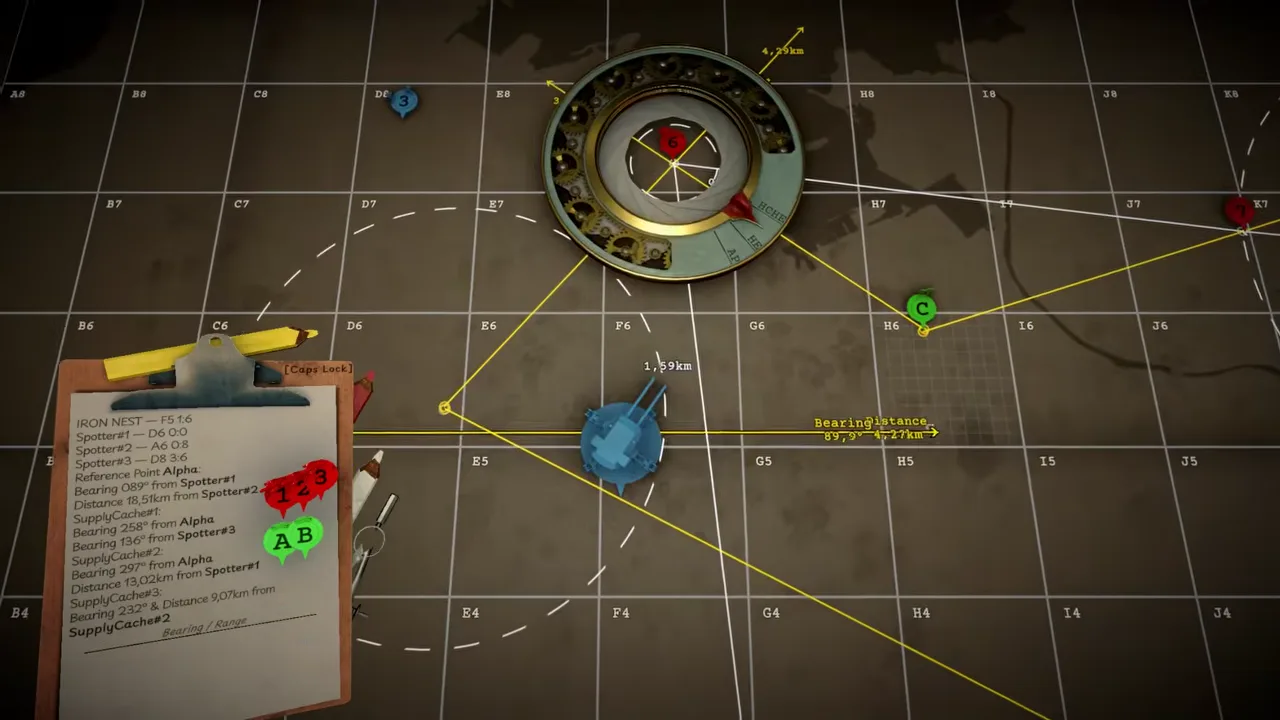
Rock Paper Shotgun’s June 2026 hands-on article gave IRON NEST an unusually vivid pre-release frame: a game about the procedural satisfaction of artillery work that also asks the player to confront the consequences of orders delivered from a distance. The article’s title itself signals the critic’s emotional response to a reported hospital strike. That makes the piece valuable as a record of one writer’s encounter with a demo or preview build. It does not convert every described scene, control, narrative event or interpretation into a universal rule of the released game.
This distinction is not a dismissal of criticism. A strong hands-on can tell readers how a game feels in action, which elements a player noticed, and why a premise lands emotionally. It becomes misleading only when a wiki copies a critic’s perspective as feature documentation without keeping the build date, context and attribution attached.
What a hands-on article can tell us
A hands-on is evidence of experience. It can establish that an author encountered particular scenes or systems in the build they played and that they interpreted those scenes in a certain way. It can explain why slow, deliberate actions felt tense, satisfying, funny, alienating or morally uncomfortable. It can also capture the public conversation around a demo in a way a feature list cannot.
The RPS headline and old article frame IRON NEST around heavy machinery and conscience. That emphasis matches broad current official material: the game is about manual operation of a vast turret, reports and battlefield outcomes; it is set in a fictional authoritarian conflict in alternate-history Spain. It is reasonable to say the game invites a reading of distance, obedience and consequence.
It is not reasonable to promote every anecdote into a fixed checklist. A critic’s playthrough may include a scripted mission, a demo-specific sequence, a particular choice, a condition that changed later, or an outcome seen only once. A review’s phrase can be metaphorical rather than an interface label. Preserve the author, outlet and date whenever summarizing such material.
The mechanics that current sources support
The released official pages establish a manual fire-control loop. Operators receive intelligence through High Command and frontline reports, use an interactive map and measurements to form a plan, work with ammunition, charge and elevation, then inspect results through aerial photographs and persistent battlefield scars. The product pages also state the campaign setting, the 5,000-ton turret, a handcrafted story, procedural objectives, challenge modes, leaderboards, medals and 15 regions.
That is stronger evidence for the overall loop than a single critical anecdote. It does not provide every detail claimed by the previous version of this article. The official text reviewed here does not describe IRON NEST as a four-legged walking artillery vehicle. It does not publish a universal hydraulic-pressure-management rule, a generic environmental-variable calculation, or a rule that the player must physically lug every shell. It does not establish that every first mission contains the same hospital event or that every order can be disobeyed in a particular way.
The right reference pages are the teleprinter, tactical map, ballistic calculator and mission structure articles. They distinguish what official material confirms from what requires current-build observation.
Consequence is not a damage spreadsheet
The official description says aerial photos reveal outcomes and that map scars remain. That is meaningful evidence that results are shown and remembered inside the game’s presentation. It supports a discussion of consequence: the operator does not merely watch a muzzle flash and reset a target.
It does not, by itself, define a morality meter, civilian-casualty formula, narrative branch matrix or universal collateral-damage mechanic. A critic’s account of a tragic result may illuminate one scene’s tone. It should be read alongside the current game’s explicit text rather than used to claim a general system that the game does not document.
This is particularly important for a fictional war setting. The game can make an order feel sinister, show an aftermath or frame High Command as callous without being a simulation of every historical or legal category of harm. A reference site should not invent those categories for it.
Preview date and released state
The RPS piece was published before the August 6 release. Preview coverage is frozen in the time of the build, editorial deadline and information available to its author. It is a source for June reception, not a substitute for a post-launch patch note or current store listing.
When comparing a preview with the release, ask three questions. Was the feature explicitly promised in current official material? Is it visible and repeatable in the current build? Did the preview label it as a plan, a specific mission moment or an inference? If the answer is unclear, retain the claim only as attributed critical context.
This also prevents release-date confusion. The older article discussed conflicting windows. That uncertainty was real before launch but is resolved now: official sources set and support the August 6, 2026 release. The release-date guide is the appropriate current-status reference.
Reading criticism without flattening it
The best way to retain a hands-on article is not to turn it into a neutral spec sheet. Keep its perspective. RPS’s premise is that the physical labor of the turret can create a powerful contrast with what happens at the target. Whether a reader shares that reaction is subjective, but it is a useful reason to try the demo or released game.
Then give the reader a path to primary evidence. The official demo trailer shows the operator-space mood. The Steam page states the current feature set. A player can then test the loop personally: read reports, plot carefully, calculate from current position, set the gun, and examine results. The critical account remains an invitation to think rather than an unsupported source of exact systems data.
The dependable conclusion
RPS’s June 2026 hands-on is credible evidence of a critic’s pre-release experience and its heavy-conscience interpretation of IRON NEST. It should be cited as such. The released official sources independently support the manual turret, report, map and outcome framework, but do not substantiate the old article’s walking-platform, hydraulic, environmental or universal-story claims.
Read the hands-on for its perspective; use current first-party sources and current-build observation for mechanics. That preserves the article’s force without letting one preview become the game’s entire documentation.