Inside the Iron Nest: Historical Inspiration and What Is Confirmed
A corrected source review of IRON NEST's 5,000-ton dieselpunk turret: confirmed setting and design language, visible manual machinery, and the historical-engineering claims not supported by reviewed sources.
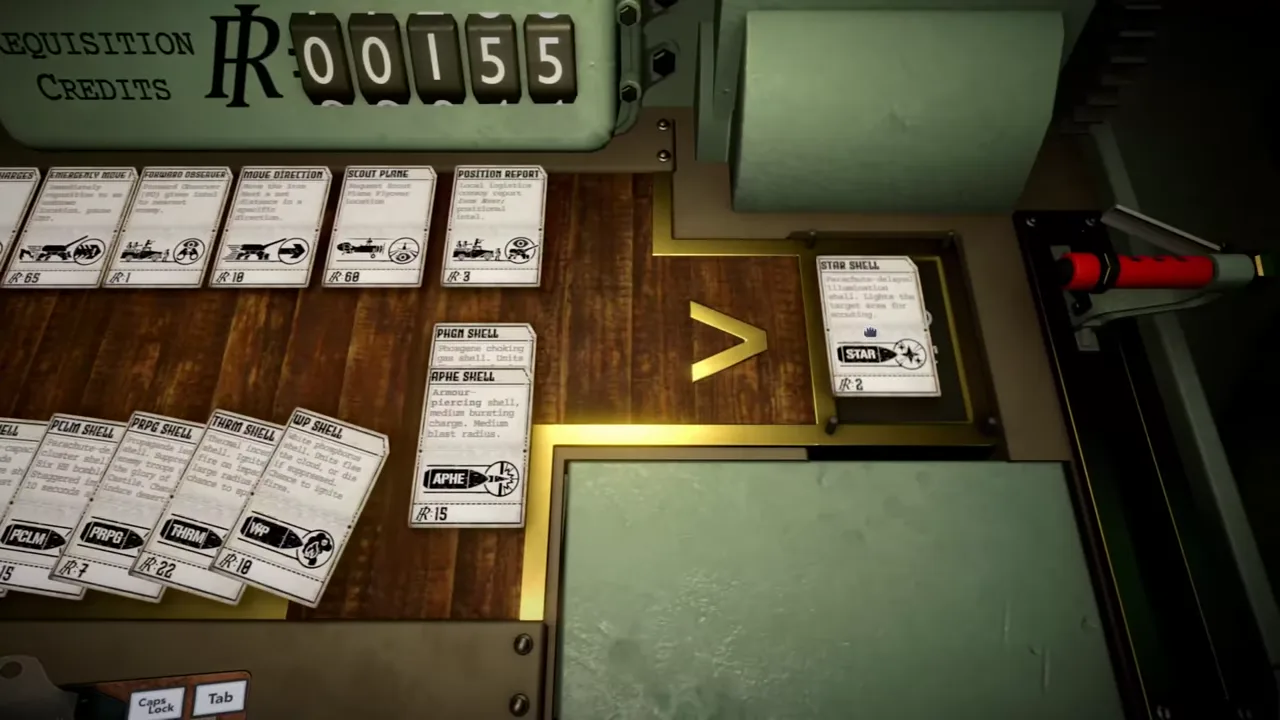
IRON NEST: Heavy Turret Simulator is built around a deliberately impossible object: a 5,000-ton heavy turret operated from inside a dense, tactile machine space. The released official material places it in an alternate-history late-1920s Spain and presents its machinery through levers, controls, maps, reports, ammunition handling and gun-laying work. That is enough to say the game draws on a broad visual language of heavy artillery, naval machinery and dieselpunk fiction.
It is not enough to claim that the turret is a scaled Bismarck-class 380 mm twin mount, that it contains 800 mm barrels modeled on Schwerer Gustav, that it stands on a named Castilian defense line, or that its loading mechanism derives from a French AMX-13-style cylinder. Those detailed assertions appeared in the earlier version of this article without a reviewed first-party source that established them. They have been removed rather than repeated as lore.
This corrected piece explains the difference between confirmed game design, visible evidence, historical comparison and unsupported technical fan fiction. The difference is important because IRON NEST is alternate history: it intentionally uses recognisable industrial forms while inventing a machine far beyond a conventional historical blueprint.
The confirmed object
The official Steam page and developer website describe IRON NEST as a game about manually operating a 5,000-ton heavy turret. Public descriptions and videos show an interior built around physical interactions: incoming reports, an interactive map, ballistics, ammunition and mechanisms for laying and firing the guns. The launch trailer frame above visibly contains a red-lit mechanical assembly inside the operator space.
From that evidence we can make several careful statements. The turret is colossal by design. Its weight and enclosed interior are part of the game’s fantasy. Its operation is not abstracted into one button; the player works through multiple information and control stations. The visual presentation uses riveted metal, pipes, gauges, mechanisms, darkness and industrial lighting to create a heavy dieselpunk atmosphere.
The public material does not publish a full engineering drawing, barrel caliber, internal crew complement, hydraulic schematic, ammunition hoist specification, armor thickness, drive system, real-world prototype list or exact mechanism model. A trailer can show a control but does not automatically disclose its engineering ancestry or simulation depth.
Why historical resemblance is tempting
Heavy artillery has a rich and visually distinctive history. Naval turrets, railway guns, fortress batteries, tank autoloaders, shipboard rangefinding rooms and industrial power systems share an aesthetic vocabulary that makes an invented machine feel legible. A player can look at IRON NEST and think of battleships, super-heavy guns, interwar fortifications or later armored vehicles. That association can be a useful starting point for discussion.
It becomes unreliable when the association is rewritten as a design source. A large paired gun does not demonstrate a Bismarck blueprint. A huge barrel does not demonstrate Gustav caliber. A rotating feed-like shape does not demonstrate an AMX-13 mechanism. A fictional Spain-inspired setting does not demonstrate a specific historical defense line. These are different kinds of claim with different evidence requirements.
Historical reference is especially fragile in an alternate-history game because alteration is the point. The 5,000-ton figure already signals intentional exaggeration. The fiction can borrow the emotional and material weight of real engineering without preserving a single real-world scale, doctrine, manufacturer or chassis.
Visible machinery versus mechanical rules
Official footage is strong evidence for what it visibly shows. A frame can document a valve wheel, a control bank, a loading-space silhouette, a map table, a printed directive or a red-lit corridor. It can support a claim such as “the operator station presents mechanical controls in a confined industrial interior.” It cannot support “this wheel sets hydraulic pressure in a way that reduces reload time” unless the game or developer explicitly shows that causal rule.
The same applies to sound and motion. A clang, rotating gear or shell rack can establish atmosphere and interaction context. It does not reveal a hidden cooldown, reliability system, pressure simulation or failure model. If a release-build interface exposes an input and outcome repeatedly, document both states and the version. If no such evidence exists, phrase the observation as presentation.
This page’s credited frame is an editorial illustration of the confirmed interior aesthetic. The source ledger records the video title, channel, timestamp and capture date. Its use does not grant the article license to infer a complete blueprint from one shot.
The manual-operation premise
The current product description supports a more interesting analysis than speculative caliber lists. IRON NEST turns artillery into a chain of labor: interpret information, create a target solution, select the relevant ammunition state, set charge and elevation, lay the gun and inspect the result. The player is asked to inhabit the constraints of a machine rather than simply point at a reticle.
That framing explains why the turret needs to feel physically large even when its exact technical dimensions are fictional. Multiple stations create separation between knowledge and action. A teleprinter report is not yet a firing solution; a plotted target is not yet a charge setting; a calculator output is not yet a correctly traversed gun. The bulk of the machine becomes part of the game’s pacing and drama.
For system-specific information, consult the teleprinter, tactical map, ballistic calculator and turret traverse references. They identify what the public sources confirm about the workflow and keep pre-release commentary separate from released-game facts.
Setting, fiction and historical context
The official setting is alternate-history late-1920s Spain in which a monarchy remains in power and a republican uprising challenges it. That establishes a political and aesthetic context, but it does not turn the game into a documentary of the Spanish Civil War, naval artillery development or a particular arsenal. The developers can use historical echoes without being bound to real chronology.
Readers interested in historical comparison should label it as comparison. It is fair to say that naval turrets and railway guns offer visual reference points for the idea of enormous artillery. It is fair to say that interwar industrial design informs the game’s dieselpunk mood. It is not fair to state a direct lineage without a developer citation, concept-art annotation, official technical note or another first-party source that names it.
This standard also protects real history. It avoids projecting fictional details onto historical weapons and avoids presenting contested or simplified popular anecdotes as the game’s research base. A good comparison article would cite both the official game material and reliable historical sources, then make its inferences visible.
A standard for future design claims
New technical claims about the Iron Nest should clear one of three bars. An explicit current official statement can establish a stated design fact. Direct released-build observation can establish a visible, repeatable interface behavior. A developer-owned pre-release statement can establish a dated intent or development-era description, with a release caveat.
For each claim, preserve the exact wording. Record the source date and whether it is marketing, interface, interview or post-release documentation. Do not turn an analogy into a fact. Do not use a non-developer forum post or an unlabeled screenshot as evidence of a blueprint. And where details are absent, say “not published in reviewed sources” rather than filling the gap with the most familiar historical machine.
The dependable conclusion
IRON NEST officially confirms a fictional 5,000-ton heavy turret, alternate-history late-1920s Spanish setting and a manually operated interior full of information and fire-control work. Official video visibly supports the game’s heavy industrial dieselpunk presentation.
The earlier Bismarck, Gustav, AMX-13, caliber, defense-line and exact autoloader claims are not supported by the reviewed first-party material and should not be treated as canon. Historical artillery remains a useful lens for appreciating the fiction, provided the lens is labeled as interpretation rather than quietly substituted for evidence.