IRON NEST Full Game vs Demo: What Is Shared and What Needs Checking
A release-era guide to comparing the free IRON NEST demo with the August 6, 2026 full release without assuming that one store listing exhausts the other.
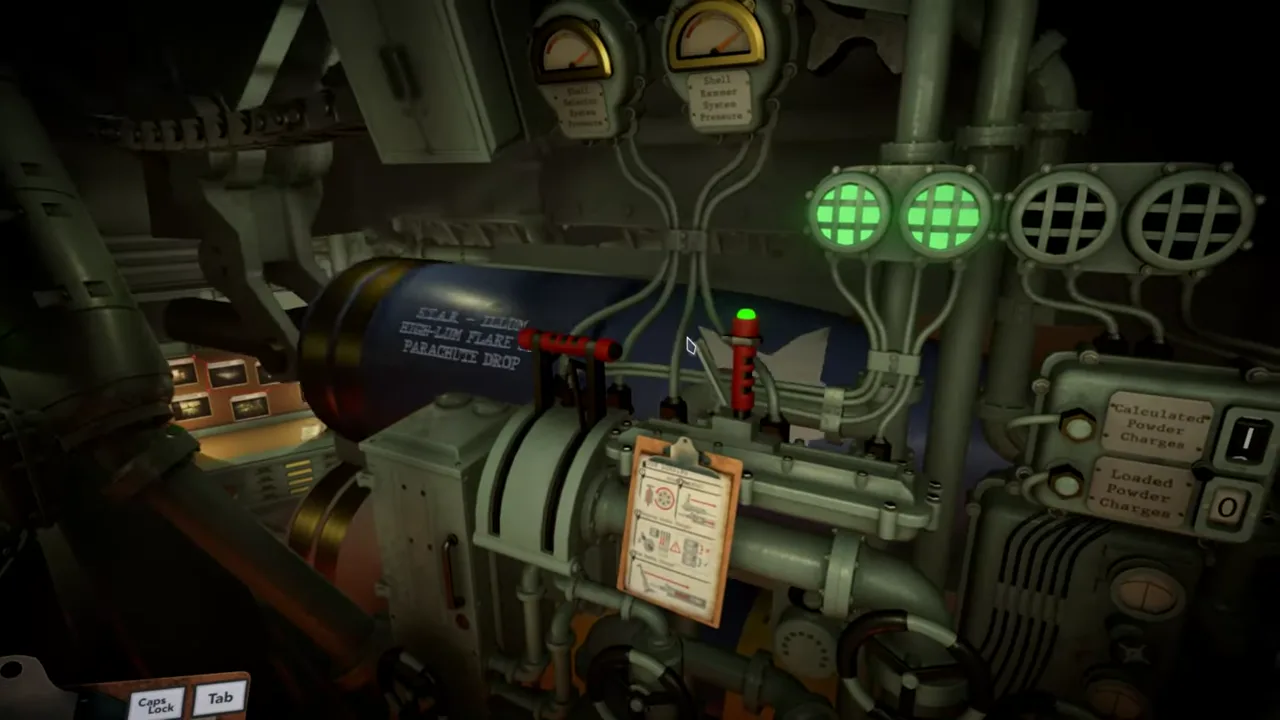
IRON NEST has two separate Steam listings: the released full game and a free demo. The full game released on August 6, 2026; the demo listing dates to June 15, 2026 and remains separately installable at the time of this check. They share the same central pitch—manual operation of a colossal dieselpunk heavy turret—but a player should not assume that the demo is a complete map of the release or that every detail on the full-game page appears in the free build.
The useful comparison is not “demo bad, full game complete.” It is a question of evidence. The demo tells you what you can personally experience in its current slice. The full-game listing tells you what the developers advertise for the released product. A feature visible in one may have different scope in the other, and an omitted feature in a demo is not evidence that it is absent from the full game.
What both listings clearly share
Both Steam descriptions present the same identity: a first-person heavy-artillery experience in which the player works inside a gigantic machine. You receive information through teleprinters, transform reports into a plan on a map, use a ballistic calculator, manage powder charges and elevation, and operate heavy controls before firing. The descriptions also foreground the consequences of the shot through aerial photographs and visible battlefield scars.
That shared loop is the point of trying the demo. It lets you assess whether you enjoy slow, source-aware problem solving inside a physical operator space. A player who dislikes reading a directive, plotting carefully and moving through several stations is unlikely to find the full release appealing merely because it contains more content. A player who finds the procedure satisfying has direct evidence that the game’s core design fits.
The demo’s separate page also confirms that it is a free single-player demo and lists its own current languages. The full product page is a separate single-player listing with Steam achievements, Steam Cloud and Family Sharing. Features on the store pages can change, so use the live listings rather than a screenshot or old Next Fest post when deciding what to install.
What the full release additionally advertises
The full-game page adds a larger campaign and progression frame around the basic loop. It advertises procedurally generated objectives, endless replayability, two challenge modes, leaderboards, a handcrafted story, newspaper reports, more than 100 unlockable medals, 15 regions and “30x Ammo Types and Abilities” in combined wording. It also lists a customizable cat companion and a fully operational warhorn among its feature language.
Those claims are useful because they tell a prospective buyer that the game is not sold solely as one tutorial firing range. They do not, however, provide every implementation detail. The combined 30 figure is not a source for a separate exact ammunition count and ability count. The region count is not a published atlas of fifteen canonical names. The medal count is not an unlock chart. “Endless replayability” does not reveal a procedural algorithm.
Read the full listing as a current promise of scope. Use current interface observation when you need exact menus, unlock conditions, challenge rules or leaderboard categories. The abilities and progression reference and regional evidence record spell out this source boundary.
What the demo can reliably answer for you
Use the demo to answer tactile questions. Can you parse the messages? Do you understand why a bearing source differs from the gun’s current position? Does marking an intersection on a physical map feel rewarding? Do the calculator and heavy controls create a satisfying handoff rather than a frustrating delay? Is the audio-visual pressure of an enclosed machine space appealing over a full operation?
These are not minor questions. They describe the labor IRON NEST wants the player to inhabit. A demo session can also reveal accessibility preferences: whether you want to take written notes, whether the text and controls are comfortable, and whether the required concentration suits your available play time. The demo cannot determine every later difficulty curve, but it can establish your relationship with the game’s essential verbs.
Record what you observe with context. A tutorial mission can supply extra prompts. A demo build can be patched. An event scene can be scripted. If you report a behavior, say what mission and version you saw rather than turning a personal run into a universal rule.
What the demo cannot settle
A short free slice cannot settle the full campaign’s story, all procedural objective combinations, the final regional progression, every medal, or every ammunition and ability state. Its absence of a feature is not a negative finding about the full game. Its presence of one version of a mechanism does not guarantee every challenge or story mission uses it in the same way.
For example, the full listing explicitly says the campaign is set in alternate-history late-1920s Spain, with a monarchy holding power against a republican uprising. It also describes a 5,000-ton turret and uses “heavy spider-turret” language in the team section. A demo’s environment can establish what it visibly depicts, but it does not independently document every setting or campaign claim.
Similarly, the full page names AP rounds, smoke and phosgene examples. A demo can show what task cards or ammunition labels are available in that build; it cannot alone validate a universal effect table. Follow the ammunition evidence status page rather than extrapolating from generic artillery expectations.
A simple comparison method
Before buying, write three short lists.
First, list observed demo facts: the exact mission, interface labels, actions you completed and any setting or performance issue you personally encountered. Second, list official full-game claims from the current Steam page. Third, list open questions that neither source answers, such as exact challenge leaderboard categories, a named region route or a specific ability’s unlock requirement.
This method prevents two common mistakes. The first is treating marketing as a tutorial manual. The second is treating a demo omission as proof that a feature is fictional. It also tells you when a question needs a different source: release notes for patches, a current in-game screen for a menu, or a developer statement for a named design decision.
The dependable conclusion
The demo and full game share IRON NEST’s manual heavy-turret core: reports, map work, ballistic problem solving, physical control and consequence review. The full release adds an advertised campaign and progression scope that a demo does not have to display in full. The full game released August 6, 2026, while the demo has its own current Steam listing.
Try the demo to test the work of being an Operator. Use the released store page to understand official feature scope. Keep exact behavior, unlocks and content boundaries tied to the build and source that actually show them.
Frequently asked questions
Is the IRON NEST demo still available?
The full-game Steam page currently links to a demo and the separate demo listing offers installation. Check those live listings because availability can change.
Does the demo contain every full-game feature?
Do not assume so. The full release advertises story, procedural objectives, challenge modes, leaderboards, medals and 15 regions; a demo is evidence for the slice it exposes.
When did the full game release?
The official Steam page lists August 6, 2026.