Rotation Time and Task Switching
How IRON NEST makes turret rotation a period for verified task switching rather than empty travel time, using only the official claim that a heavy machine takes time to swing and skilled Operators use that time.
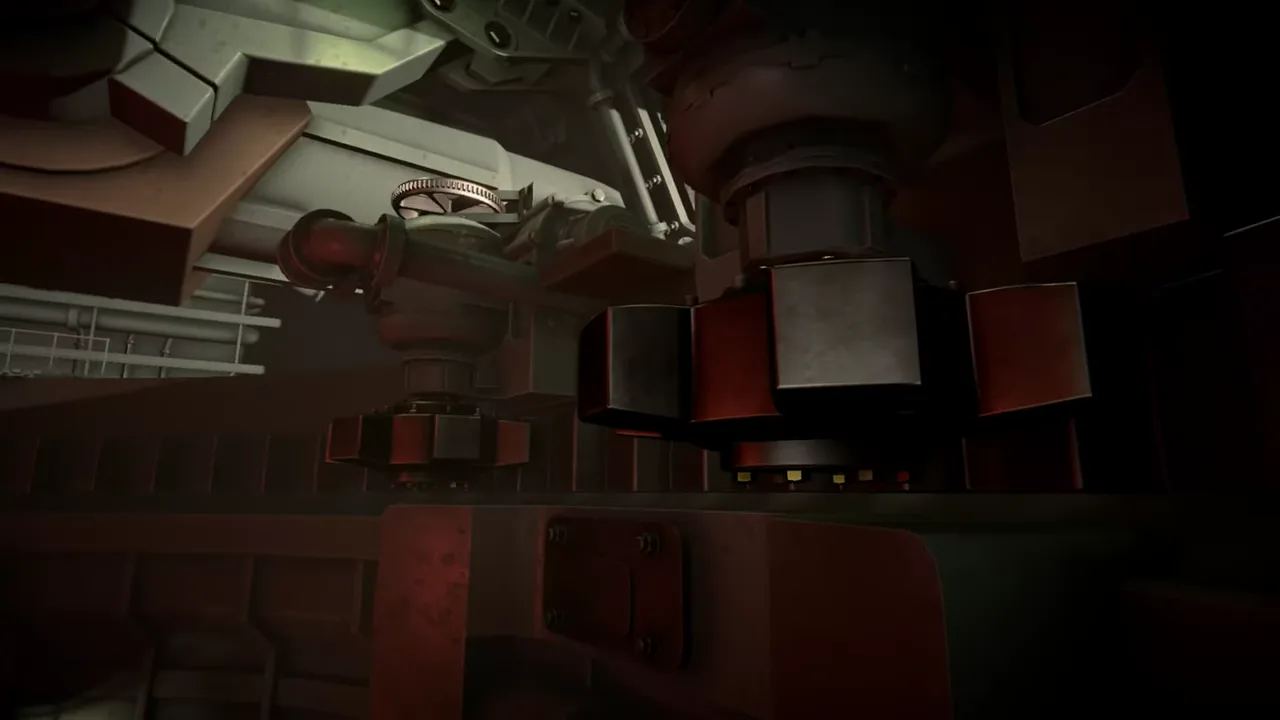
IRON NEST’s official description says that a machine like the Iron Nest does not spin on a whim: it takes time to swing that much iron with grace. It then adds a practical line: skilled Operators use that time to handle other tasks. This is a small statement with a large mechanical consequence. Rotation is not only an aiming delay; it is a window in which the player can preserve, verify or prepare information before the next shot.
The public material does not publish a universal turn-rate table, a list of every action permitted during rotation or a rule that the gun can safely fire while another station is active. This page does not invent those values. It explains how to use confirmed waiting time as an operational resource while keeping the firing chain auditable.
Rotation creates a second clock
Every mission already has an information clock: reports arrive, objectives change and a target may need to be plotted. Rotation adds a physical clock. The turret’s movement takes time, which means the player can either stare at the mechanism or use the interval to check the next handoff.
This does not turn the game into a multitasking contest by default. A task is worth doing during rotation only if it does not make you lose the state that is moving. The best candidate is a verification task with a clear endpoint: reread a source message, confirm a written bearing, check a shell state, inspect whether a new report arrived or prepare the next note. The worst candidate is a broad, uncontrolled change that makes you forget which gun state is currently active.
The skill lies in matching the time window to a small responsibility, not in opening every menu at once.
Start with a movement record
Before beginning a significant traverse, record the current target, measured bearing, target range, active shell state, charge and elevation output. This is the state that must survive the movement. If the gun is rotating toward a new bearing, mark whether the value you gave it was current and how you will confirm arrival.
Then choose one task that does not alter the target solution. For example, reread the High Command directive and frontline message for a changed condition. Check that your calculator note identifies both charge and elevation. Prepare the after-action section of your note. Look at the current objective text. If the map and interface make it safe and visible, verify that the Iron Nest marker has not changed.
Do not recalculate range simply because the turret is traversing. Traverse changes orientation, not necessarily world position. If the turret relocates, that is a different event and requires a fresh origin check. The repositioning reference explains the difference.
Use rotation to catch stale information
The most valuable use of waiting time is detecting a change before it becomes a shot. If a new teleprinter message arrives, compare it with the existing record. Does it revise the target? Add a source? Change the objective? Or merely provide context? Preserve the old state and label what changed rather than overwriting a number in place.
If the target remains the same but the mission has supplied a different shell instruction, update the active state before you reach the trigger. If the target itself changes, stop treating the old traverse as a complete solution. Rebuild the map construction and remeasure from the current gun position when appropriate.
The official sources establish two report channels and an interactive map. They do not say every rotation will receive an update. The mechanical lesson is conditional: use available time to check for new information, not to assume that new information always appears.
Separate preparation from interference
Some tasks prepare a future action without interfering with the current one. Writing down a second objective, checking a task card, organizing notes or locating a known observer on the map can be preparation. Changing the active shell, calculator range or elevation while you have not verified the current movement can be interference.
Use a simple question: if the turret completes its turn now, can I immediately identify the correct current bearing, elevation and shell state? If the answer is no, your side task has become too large. Return to the gun state first.
This rule is especially important because the Iron Nest’s physical layout creates distance between stations. Moving away from the traverse controls can feel efficient, but it also raises the cost of discovering that a number was wrong. Preparation is useful only when it preserves the return path.
Rotation is not a substitute for map work
The waiting window can make players tempted to solve a target by feel. Resist that. A target point still has to be constructed from source-relative reports. A bearing still has to be measured from the gun after the target is accepted. The rotation mechanism executes a bearing; it does not determine it.
Use rotation to audit the existing solution, not to patch a missing one. If the target is provisional, keep it marked as provisional. If two intersections remain possible, do not rotate toward the one that looks convenient. Seek the missing constraint or objective evidence. The information provenance mechanics page explains why uncertainty can be a valid operational state.
Time management under pressure
The official store description pairs slow mechanical movement with consequence and says skilled Operators use the time to handle other tasks. The pressure is not merely a countdown. It is the risk that a player can become busy without becoming more prepared.
Build a priority order. First, anything that could invalidate the current shot: new objective, new target report, changed turret position or wrong shell state. Second, anything that confirms the shot: range/bearing note, calculator output, objective requirement. Third, preparation for a possible next action. Fourth, atmosphere or convenience tasks.
Do not assume that every “other task” is mechanically allowed during rotation. Follow the current interface and mission prompts. This is a management method, not a claim about simultaneous interaction permissions.
After rotation: a five-second recheck
When the movement completes, do not fire from memory. Run a short recheck:
- Is this still the active target?
- Is this the intended gun bearing?
- Did any report or objective state change during movement?
- Are shell, charge and elevation still the selected and recorded values?
- Can I identify the next outcome evidence I will review?
This takes less time than a bad shot and preserves the purpose of using the rotation interval well.
The dependable conclusion
IRON NEST officially makes turret rotation slow enough that skilled Operators can handle other tasks. Treat that time as a verification window. Preserve the current firing state, check for information changes, prepare one small next action and recheck the gun before firing.
Rotation becomes meaningful not because it has a hidden speed statistic, but because it creates room for an Operator to turn waiting into disciplined attention.