IRON NEST Lore and Setting: Confirmed Canon vs. Inference
A source-led guide to alternate-history Spain, High Command, the republican uprising, the operator and the wider IRON NEST universe—without invented timeline lore.
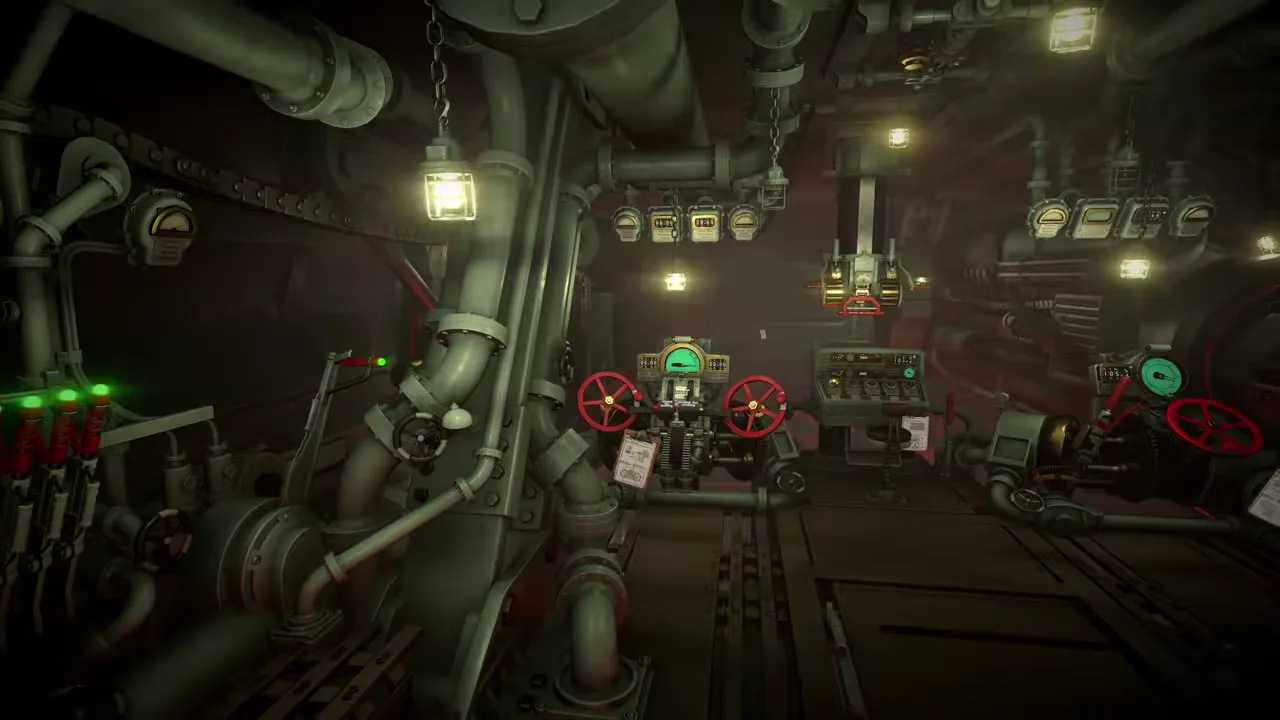
IRON NEST’s confirmed setting is concise: alternate-history Spain in the late 1920s, on the brink of civil war. In this timeline the monarchy still holds power, and a republican uprising is spreading across the country. The player operates a 5,000-ton heavy turret while High Command issues directives and frontline calls bring other information into the machine.
That foundation is enough to support dieselpunk atmosphere, political tension and questions about responsibility. It does not support every elaborate backstory that appeared on early fan pages. The previous version of this guide claimed that the Great War never happened, aviation failed, naval guns became obsolete, an “Iron Nest Initiative” repurposed them, and the player controlled a first prototype for a military junta. The current official website, Steam listing and cited developer videos do not establish those details, so they have been removed from canon here.
This guide separates three evidence levels: current official facts, dated developer statements and editorial interpretation.
Confirmed: late-1920s alternate-history Spain
The official setting paragraph appears on both the game’s website and Steam page. Its four stable elements are place, period, political condition and approaching conflict:
- Spain, in an alternate timeline;
- the late 1920s;
- a monarchy that still holds power;
- a spreading republican uprising and imminent civil war.
The wording does not say that this is a retelling of the real Spanish Civil War. The dates differ, and the industrial war machine is openly fantastical. Real history can provide context for words such as monarchy and republic, but should not be used to assign fictional leaders, battles or factions without game evidence.
The monarchy and republican uprising
The monarchy is the established political power in the official summary. The republican uprising is the expanding opposition. That relationship defines the campaign’s crisis without answering every allegiance question.
It would be tempting to equate High Command directly with the monarch, name the operator’s army “monarchist,” or assume every frontline caller belongs to one side. The sources cited here do not make those identities explicit. High Command is the operator’s military authority; its exact constitutional relationship remains a subject for mission documents and dialogue.
Likewise, “republican uprising” is a broad political description, not a complete faction roster. Add names, symbols and territories only when version 1.0 displays them directly.
High Command as an institution
Official copy presents High Command through a teleprinter that delivers top-priority directives. Another teleprinter relays direct calls from the frontline. This split creates a world in which authority and immediate battlefield information arrive through different channels.
High Command remains largely institutional in the public description. No single named leader is identified. Its presence is carried by formal orders, priority, propaganda and the pressure to obey.
The dedicated High Command page examines that institution without inventing a general staff or secret ruler.
The operator’s place in the world
The player is addressed as “Operator,” a role defined by responsibility for the machine. High Command can issue the order, but official text says the chain ends at the player’s fingertips and that the distant authority does not carry the consequences.
That statement establishes moral framing, not a complete branching-system specification. The Steam short description asks whether the player will obey. It does not prove that every mission contains a refuse button or that each decision creates a distinct ending.
The operator’s agency is clearest in physical action: choosing ammunition, accepting information, calculating a solution and pulling the trigger. The Operator and responsibility page explores the theme while keeping mechanical claims separate.
The Iron Nest itself
The official feature list calls the machine a manually controlled 5,000-ton turret. The site also describes it as a colossal war machine and a heavy spider-turret. Developer footage shows an enclosed network of pipes, gauges, wheels, calculators, loading mechanisms and paired guns.
Those facts establish scale and visual identity. They do not establish that the guns came from a particular battleship, that this is the first prototype or that a named initiative created it. Those older details may be plausible dieselpunk lore, but plausibility is not evidence.
The image above documents the interior rather than an invented origin story. It shows how the operator experiences the world: indirectly, through mechanisms and information arriving from outside.
Propaganda, paperwork and newspapers
The official site repeatedly uses propaganda language. Injury is denied, gas is redacted, guilt is contrasted with flawless paperwork, and Dominik Latos’s team role is jokingly labeled “propaganda.” Newspaper reports are a listed feature.
This establishes satire and mediated truth as important parts of presentation. It does not mean every official statement inside the story is false. A newspaper can report a real outcome while framing it politically. A High Command order can be tactically correct while morally troubling.
The useful lore method is comparison. Set directives beside frontline calls, aerial photographs, map scars and later reports. Ask how each source describes the same event.
Aerial evidence and a persistent battlefield
The official description says aerial photographs reveal the outcome of the player’s actions. It also says the map is a window onto the battlefield and that the scars remain even if markers move.
This language connects story to procedure. Consequences are not presented only in a cutscene; they return through the operator’s information systems. The same map used for geometry can become evidence of what the shot changed.
Do not turn that statement into a claim that every crater persists forever or that every mission uses fully simulated terrain deformation. The broader confirmed fact is that outcomes and lasting consequences are part of the game’s narrative design.
Ammunition as world-building
Armor-piercing, smoke and phosgene are the official examples. Their descriptions show three relationships to war: breaching hardened targets, supporting a friendly withdrawal and committing an act surrounded by redaction and denial.
Ammunition therefore tells us what institutions in this world are willing to order and what the operator can make the machine do. The shell list is not only a technical catalogue.
The current feature line combines 30 ammunition types and abilities. It should not be expanded into a fabricated arsenal. Each entry requires released-build evidence.
The campaign route: a dated developer statement
In the May 2026 community Q&A, the developers described a campaign plan beginning around Madrid, heading south and later reaching Costa Brava. They also said the Spanish civil-war story was intended as the beginning of a broader IRON NEST universe that could expand elsewhere in Europe and the world.
Because this answer predates version 1.0, it is a dated statement of design intent. It does not prove the final order or names of all 15 regions, and it does not confirm a sequel. A direct released-build route should replace the plan when verified.
The current official site does corroborate the broader ambition by calling Heavy Turret Simulator the first step in the IRON NEST universe.
The wider universe
“Universe” confirms that the creators see potential beyond this one machine and campaign. The official Q&A suggested possible geographic expansion. No current source cited here announces a specific next title, release date or protagonist.
Document the ambition without building a fictional franchise roadmap. Future games, DLC or stories become canon only when officially announced or released.
This distinction keeps the wiki ready for expansion while preventing speculative pages from outrunning the creators.
What remains unverified
The following older claims are not treated as confirmed by the current source set:
- a world in which the Great War never happened;
- universal survival of European monarchies;
- aircraft limited to observation because aviation failed;
- an unchecked naval arms race and obsolete gun stockpile;
- a named Iron Nest Initiative;
- a first prototype built from repurposed naval guns;
- deployment by a military junta;
- a universal mechanic to refuse every order.
If any appear in version 1.0 documents, this page can restore them with exact citations. Removal now is not a claim that they are impossible; it is a recognition that evidence is missing.
Reading IRON NEST lore responsibly
Start with what a source directly says. Date developer statements. Treat visible objects as observations, not proof of an unseen history. Mark thematic readings as interpretation. Keep real history separate from fictional canon.
IRON NEST does not need an invented encyclopedia to have meaningful lore. Its confirmed world already places an operator inside an impossible industrial weapon, between a threatened monarchy, a spreading uprising, High Command’s directives and frontline evidence. The uncertainty is part of the design—and an accurate wiki should preserve it rather than filling every redaction with a guess.
Frequently asked questions
Where and when is IRON NEST set?
The current official website and Steam page place the campaign in alternate-history Spain in the late 1920s, on the brink of civil war. The monarchy remains in power and a republican uprising is spreading.
Is the Iron Nest officially a repurposed naval prototype?
The current official sources cited here describe a 5,000-ton heavy turret and colossal war machine but do not establish the older fan-page claims about an Iron Nest Initiative, naval stockpiles or a first prototype. Those claims are not treated as canon.
Can the operator refuse every order?
Official copy asks whether the operator will obey and emphasizes personal consequences, but that framing alone does not prove a universal refuse-order mechanic or a specific branching ending. Mission-level behavior requires version 1.0 verification.