IRON NEST Mission Briefings: Build an Evidence Chain Before Firing
A mission-preparation method for IRON NEST that turns High Command and frontline reports into a traceable objective record before the operator touches the gun.
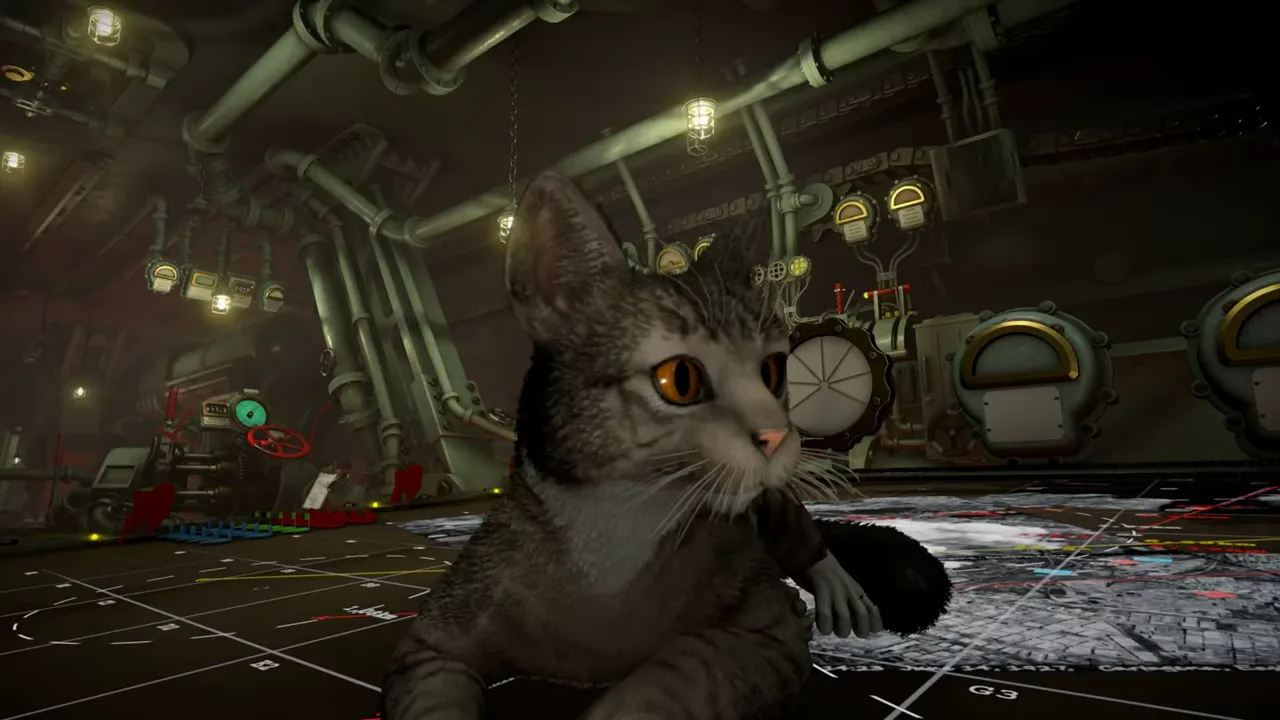
In IRON NEST, a mission does not begin at the trigger. It begins when information enters the turret. The official product page describes two teleprinters: one for top-priority High Command directives and one for calls from the frontline. It says every piece of information can determine an operation, and that the interactive map turns intelligence reports into a battle plan. Those statements describe a mission structure built around an evidence chain.
The best preparation habit is to build that chain before moving into the physical gun controls. Identify what each message literally says, who said it, what is an objective versus a constraint, what is already known and what still must be constructed on the map. This does not guarantee every decision is morally simple or every report is complete. It gives you a way to separate a mission problem from the panic created by its presentation.
Begin with a clean briefing record
Before taking action, copy the minimum data from each message. Record the sender, the exact objective language, any named target, coordinate, bearing, distance, ammunition instruction, timing condition and the time or order in which messages arrived. If the current interface displays a mission title or mode, record that too.
Do not translate a message into a more convenient meaning while writing it down. “Bearing from observer” is different from “bearing from turret.” “Breach” is different from “destroy every object.” A phrase that sounds like a general order may contain a specific target or shell constraint. Your notes should preserve the source’s wording first; interpretation comes after the facts are visible.
This habit is useful whether you are playing a story task, a procedural objective or a challenge. Official material confirms that handcrafted story and procedurally generated objectives coexist, but it does not give a public template for every briefing. The current mission tells you what it demands.
Separate orders from observations
High Command and frontline reports have distinct official roles. An order can tell you what the command structure wants accomplished. A frontline message can supply local information. Neither should be silently collapsed into one undifferentiated “target number.”
For each note, label it as one of three types. An objective tells you the result the mission asks for. A constraint describes location, bearing, distance, target identity, required ammunition or timing. An observation describes context that may help resolve uncertainty. This classification keeps a dramatic phrase from accidentally becoming a calculator input and stops a number from being treated as an order.
Do not assume that a source’s tone establishes its mechanical reliability. Official material does not publish a universal truthfulness score, contradiction system or order-refusal flowchart. It does establish that source provenance matters. Treat the current mission text and interface as the place to discover how much corroboration the task provides.
Turn constraints into a target construction
The map is the bridge between a briefing and the gun. If you have an explicit coordinate, locate it using the current map notation. If you have bearings or distances, plot them from their stated sources. If two constraints generate multiple candidate points, mark the ambiguity rather than choosing the closest or most dramatic one.
Only after a target point is accepted should you measure the range and bearing from the current Iron Nest position. These are separate outputs. Range belongs to the ballistic calculation; bearing belongs to traverse. A briefing can mention a target without providing either in gun-relative form.
See tactical map plotting errors for recovery when a construction is unclear. The core rule is simple: every line on the map should identify the report and source that justify it.
Identify the state that must carry forward
Once you have a target, make a short transfer card. It should include current turret position, target label, range, bearing, selected shell or task-card state, charge, calculator elevation result and any mission-specific condition. Keep objective language on the same card so an accurate solution does not drift away from the actual task.
This is not an invented in-game notebook mechanic. It is an operator practice that reduces handoff errors between separate stations. The official presentation deliberately makes you move among map, calculation and machinery. Written or mental state that survives those transitions is more valuable than speed at any one control.
If a new message arrives, do not overwrite the old record. Add the new source, then decide which field it changes. A new target location, a revised source position or an updated mission objective can invalidate a solution. A flavor line may not. Preserving the sequence lets you explain why you changed course.
Briefing does not prove every future outcome
A good briefing record creates disciplined action; it does not reveal a hidden mission script. The official page says aerial photographs show outcomes and map scars remain. This supports after-action review, not a promise that the first message contains all future conditions. A story mission may stage information over time, and a procedural objective may present variation.
Avoid turning an observed sequence into a universal mission rule. “This briefing added a report after the first shot” is an observation tied to a mission and build. “Every mission will add a report after the first shot” needs much stronger evidence. The developer Q&A includes pre-release discussion of multi-stage mission ideas, but current released behavior and current interface take priority.
A mission briefing checklist
Run this checklist before the first deliberate shot:
- What is the exact current objective?
- Which messages are from High Command, frontline sources or another stated observer?
- Which facts are coordinates, bearings, distances, conditions or target labels?
- Where is each constraint’s source located on the current map?
- What target point satisfies the available reports?
- Where is the current Iron Nest marker?
- What are the separate gun-relative range and bearing outputs?
- What shell or task-card state is explicitly required or currently selected?
- Which information is confirmed, provisional or still unknown?
This list does not slow the game down. It moves uncertainty into visible categories, where it can be solved rather than carried into the gun room.
The dependable conclusion
IRON NEST officially frames missions through High Command directives, frontline information, an interactive map and a manual firing workflow. Build an evidence chain before you fire: preserve sender and objective, classify constraints, construct a target from sources, then derive range and bearing from the current turret position.
The mission briefing is not background flavor. It is the first station of fire control. Treat it as a record you can audit, and later stations will have a real question to answer instead of a pile of urgent-looking numbers.
Frequently asked questions
Should I obey the first message immediately?
Read it completely and record its source, objective and constraints first. Official material confirms distinct High Command and frontline report channels; a good firing solution needs provenance before action.
Does a briefing tell me the final range and bearing?
Not necessarily. Reports provide intelligence; use the map to establish a target point and then measure range and bearing from the current Iron Nest position.