Uncertainty as an Operational Input in IRON NEST
Why IRON NEST reports, maps and firing plans work better when unknown details are preserved as explicit constraints rather than replaced with false precision.
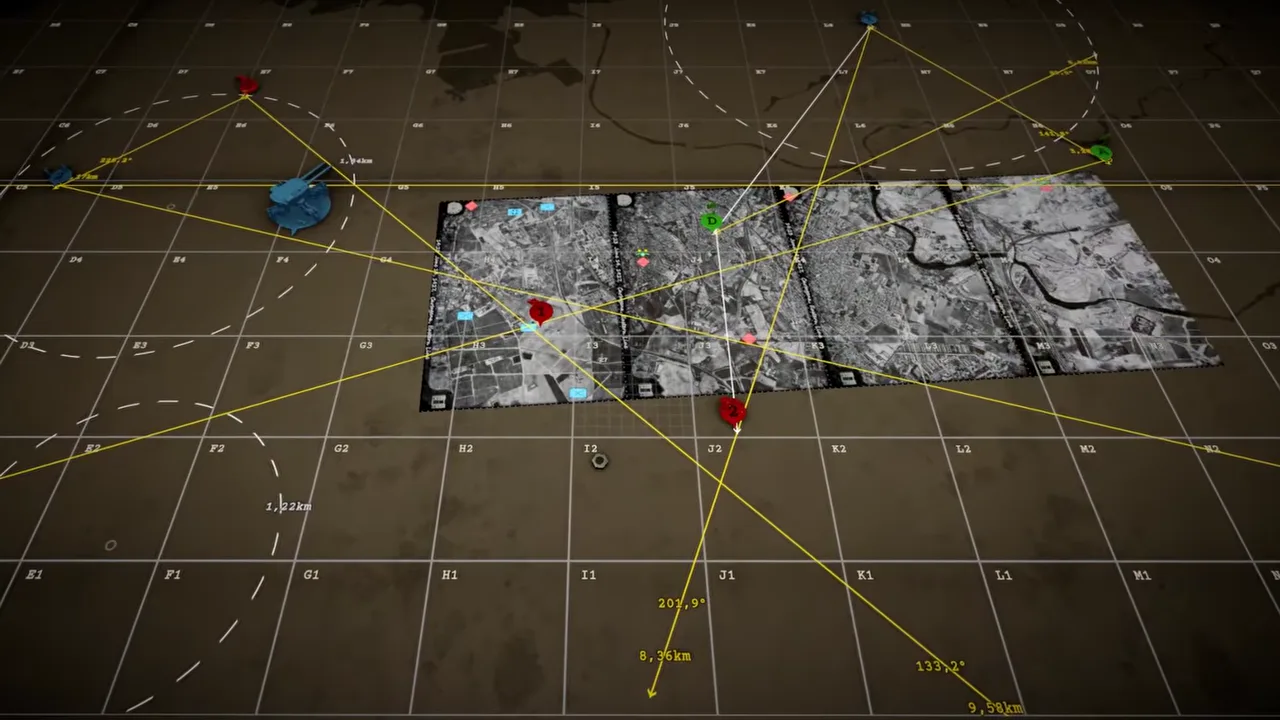
IRON NEST’s official description makes incomplete information part of the heavy-artillery workflow. The Operator receives High Command and frontline reports, tracks who said what, marks information on a map, calculates trajectory and turns the plan into a physical shot. That sequence does not require the player to be certain about everything before acting. It requires the player to know which parts of the plan are confirmed, which are observed and which remain unknown.
Treating uncertainty as an operational input means keeping it visible. A report can be useful without being complete. A map mark can be actionable without being exact. A calculator result can be correct for inputs whose source confidence is limited. The mistake is not uncertainty itself; it is replacing an unknown with a precise-looking assumption and forgetting that the substitution occurred. This guide explains how to retain uncertainty through the visible stages of a current IRON NEST operation.
Uncertainty begins with source provenance
The current Steam listing highlights two teleprinter channels, High Command and frontline radio traffic, and says the player should track who said what. That is the first signal that an incoming message is not merely a coordinate. It has a source, purpose and scope. A High Command order may establish the mission priority. A frontline message may establish an observation or local urgency. Neither statement needs to be discarded merely because it does not answer every question.
Start with a basic source note: who supplied the information, what they explicitly stated, what they did not state and whether another current message agrees. Do not invent a universal reliability ranking. The public listing does not say that one channel is always right. Use the current mission wording and visible context to decide how much weight the report can bear.
This practice also protects lore and gameplay analysis. An in-world message can be a statement from a fictional institution, not a neutral omniscient fact. The Operator can still act on it, but a responsible record preserves the distinction.
Map marks should retain their confidence
An interactive map turns information into a spatial claim. The mark may represent a direct observation, a reported area, a corrected location or a player inference. Record which it is. If the evidence only supports a broad area, do not write down an invented exact point as though the report contained it. If the evidence supports a point but its timing is uncertain, note that timing.
This does not make the map unusable. It makes the map honest. A player can choose a current operational target while recognizing that the location is based on a certain report. If aerial evidence later contradicts the plan, the source and confidence label show where to begin the review. Without that label, an error can look like a mysterious calculator failure.
The Steam page does not publish every marker type or coordinate convention. Let the current interface determine the detail possible, and use plain categories such as confirmed objective point, frontline observation, estimate or unresolved conflict.
Calculations preserve input quality; they do not improve it
The official listing names a ballistic calculator, charges and elevation. These tools can transform a stated spatial relationship into a firing configuration. They cannot make a weak location claim more reliable simply because the output has more digits. A precise output built from uncertain input remains a precise answer to an uncertain question.
This is why a solution should include an uncertainty note. “Calculated for the current frontline estimate” communicates more than a bare value. It tells the player not to reuse the result blindly if a new report refines the mark. It also helps distinguish two types of correction after a miss: a configuration may need recalculation, or the target evidence may need reconsideration.
Do not claim that the game exposes a formal confidence meter or uncertainty calculation unless the current build shows one. This is a player method derived from confirmed report, map and calculation systems. Its value comes from preserving the limits of the inputs.
Choose action proportional to evidence
The question is not always “fire or do nothing.” It is “what action is justified by what is known?” The official listing confirms manual ammunition selection and aerial feedback, but it does not publish a universal decision table for every target type. A player should therefore begin with the stated mission goal, choose a plan supported by current labels and visible evidence, and avoid promising an exact effect where public sources are silent.
When evidence is strong, a direct target action may be justified. When evidence is partial, the player may need to verify the map relationship, wait for an update or use an attempt as a controlled observation. The current mission interface determines which options exist. The important principle is proportionality: do not use a speculative assumption as though it were a confirmed target identity.
This approach prevents a familiar kind of misinformation. A single observed result can suggest a useful tactic, but it does not create a hidden rule. Label the outcome as observed in that context and test again when the claim matters.
Physical controls do not erase ambiguity
The product page describes the final physical stages: shell choice, charges, elevation and turning a massive turret. A well-prepared gun state is necessary for a defensible shot, but it does not turn uncertain intelligence into certain intelligence. Keep the two questions separate. “Is the configuration internally consistent?” is different from “is the target claim well supported?”
Before firing, verify that all visible settings correspond to the current plan. Then state the remaining uncertainty if it exists. This makes later review possible. A poor outcome may reveal a map or information problem even when the gun state was correctly set. Conversely, an uncertain plan cannot excuse a mismatched shell or stale elevation setting.
The manual workflow becomes more rewarding when the player can say exactly what they knew and what they chose despite not knowing everything.
Aerial results update evidence, not certainty by magic
IRON NEST advertises aerial photographs after strikes and persistent battlefield scars. These give the Operator new evidence. An image may show an impact relative to the intended area, a visible consequence or a reason to revisit the current target. It should be described first, interpreted second.
An aerial photo does not necessarily identify every cause of a result. It may not expose the entire damage model, target state or objective formula. Use it to update the confidence of specific claims. If an impact appears inconsistent with a mark, reconsider the mark, bearing, range and configuration in a controlled order. If it appears consistent, record that the current plan produced that visible result in that context. Do not jump from one image to a universal mechanic claim.
The persistent-scar feature makes this feedback meaningful over time. The world can retain evidence of prior action, but the player still has to decide what that evidence establishes.
A compact uncertainty record
For each active plan, record: source; claim; confidence; map representation; configuration; visible outcome; next check. Confidence can be simple: confirmed by current objective, direct observed report, estimate, conflict or unknown. The record is not a formal game system. It is a way to stop uncertainty from being silently erased between stations.
When a new report arrives, update the earliest field it affects. When a target changes, rebuild the solution rather than patching the last number. When an outcome surprises you, change one plausible variable and label the rest as held steady or unknown. This preserves learning under pressure.
The dependable conclusion
IRON NEST’s published systems do not demand impossible certainty. They demand disciplined transformation of information into action. High Command and frontline reports, map marks, calculations, physical settings and aerial photographs are linked because each can add, preserve or challenge evidence.
Treating uncertainty as an operational input lets the Operator act without lying to themselves about what a report proves. That is not hesitation. It is the basis of a defensible firing decision.
Frequently asked questions
Is uncertainty a failure state?
No. It is a condition to record and manage. The official listing explicitly asks the Operator to track report provenance before converting information into action.
Should I ignore a report that is not perfectly precise?
Not necessarily. Preserve its source, scope and confidence, then decide whether it is sufficient for the current objective or needs corroboration before firing.