Simultaneous-Impact Fire in IRON NEST: Confirmed Intent and Limits
What the developer actually said about two-shot simultaneous-impact missions, why IRON NEST's rate of fire limits the concept, and how such a solution would work.
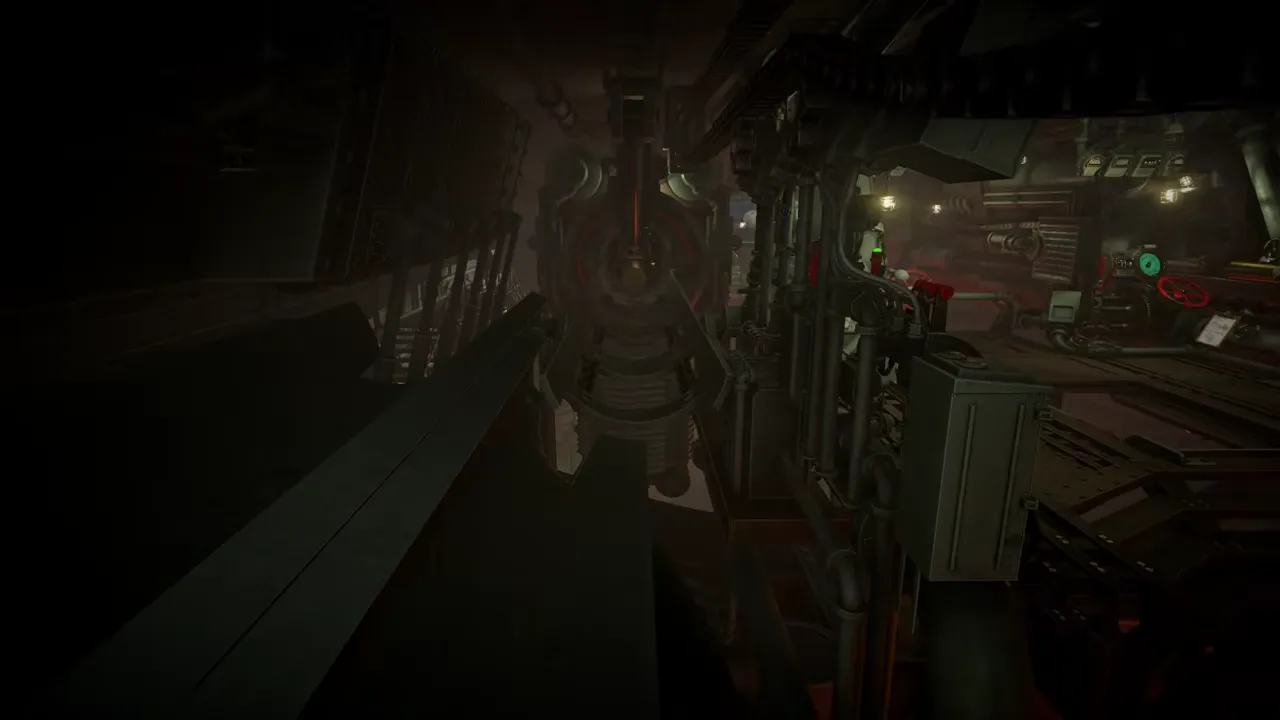
Simultaneous-impact fire is one of the clearest examples of a fascinating IRON NEST idea that must be documented with a date and a boundary. During the May 5, 2026 community Q&A, a player asked whether the campaign would include missions in which multiple artillery shells land at the same time. The developer said the team had been exploring it and that a two-shot version was something he definitely wanted in some campaign missions.
He also explained why the concept had limits. Modern automated artillery can fire several rounds on different trajectories before the first arrives, but IRON NEST’s rate of fire makes a five-round version impractical. The relevant design was two shots landing together, supported by the machine’s two barrels.
That answer predates version 1.0. This page records the official intention and the mechanical reasoning; it does not name a shipped mission or publish a step-by-step solution until the released campaign is independently verified.
What “simultaneous impact” means
Two rounds impact simultaneously when their arrival times at the target are close enough to function as one coordinated event. If both are fired at exactly the same moment on identical trajectories, the idea is simple. The more interesting artillery technique fires rounds at different times and uses different trajectories or velocities so their flight times compensate for the delay.
Suppose the first shot spends longer in the air. The operator can fire it, reconfigure the weapon, then fire a second shot on a shorter-time trajectory. If the difference in flight time equals the delay between firing, both arrive together.
That is general physical background, not a confirmed IRON NEST formula. The game may simplify timing, constrain available charges or provide mission-specific tools. Only the released interface can establish the actual procedure.
The developer’s exact boundary
The Q&A answer distinguishes two concepts. First, the developer admired modern systems that can place approximately five shells in the air from a single automated gun. Second, he said IRON NEST’s rate of fire made that level impractical.
He then returned to a feasible game design: two shots landing at the same time. The word transcribed near “defensive” is not clear enough to define a formal mission class, so this wiki does not build lore around it. The reliable claims are the two-shot scale, campaign interest and rate-of-fire constraint.
This restraint matters. Turning the modern-artillery example into “IRON NEST can fire five simultaneous shells” would reverse the meaning of the answer.
Why the twin-gun architecture matters
The questioner pointed out that IRON NEST has two barrels. Official developer video shows the paired gun assemblies inside the enormous turret, including the wide interior view above. Two guns can create opportunities to prepare separate states or fire in a coordinated sequence.
The footage does not by itself establish independent timing rules, reload speed or whether every mission allows the guns to hold different elevations. Those details must be observed. It does establish why the simultaneous-impact question is natural: the machine visibly presents more than one barrel to manage.
For the player, a twin-gun problem can demand careful labeling. “Left” and “right” must remain attached to charge, elevation and readiness. A correct solution applied to the wrong gun can destroy the timing plan.
The three times in a coordinated shot
Any simultaneous-impact problem can be organized around three moments:
- The first gun fires.
- The second gun fires after a controlled delay.
- Both projectiles arrive at the target together.
Let the first flight time be longer than the second. The firing delay should match the flight-time difference. In compact notation:
second firing time − first firing time = first flight time − second flight time
This equation explains the concept without claiming the game asks players to solve it numerically. A mission could provide a timing table, calculate part of the relationship or design two valid charge–elevation pairs. Until verified, those are possible implementations rather than facts.
Charge and elevation create trajectory choices
The official Steam page says operators can drive charges higher for reach or dial them back to arc shells deliberately, while matching exact charge with elevation. That confirms trajectory choice as part of the game’s vocabulary.
For simultaneous arrival, the operator would need at least two valid solutions with different flight times. A higher or lower charge alone is not sufficient; elevation must belong to the selected charge and target range. The physical gun must then match each pair.
Do not use the simple rule “higher arc always takes longer” as an undocumented game constant. It is a useful physical intuition, but actual flight time depends on the complete solution and simulation.
Why reload and rate of fire are the gate
The developer identified rate of fire as the main limiting factor. After the first shot, the machine must be ready for the second before the timing window closes. A slow reload makes it difficult to exploit small flight-time differences.
That constraint fits IRON NEST’s design. The game emphasizes heavy mechanisms, manual controls and a machine that does not move on a whim. Simultaneous impact is interesting precisely because the player is not commanding a rapid automated battery.
The two-barrel arrangement may reduce some reconfiguration pressure, but no official source cited here publishes a reload-time value or proves a particular sequence. Mission instructions should be treated as authoritative.
A safe preparation framework
If a released mission explicitly requires simultaneous impact, begin by separating the two solutions:
| Field | First shot | Second shot |
|---|---|---|
| Target | Confirmed objective | Same confirmed objective |
| Gun | Left or right | Other named gun |
| Range | Turret to target | Recheck if position changes |
| Charge | Mission-supported value | Mission-supported value |
| Elevation | Calculated for first charge | Calculated for second charge |
| Flight time | Use game-provided evidence | Use game-provided evidence |
| Fire time | Start of sequence | Required delay |
The table is an organizational template, not a supplied solution. Never invent flight-time values when the game has not given a method to obtain them.
Execution risks
The first risk is swapping solutions between guns. Label every value left or right. The second is changing charge without recalculating elevation. The third is starting the timing sequence before both guns are actually ready.
Another risk is using one target marker but two slightly different ranges copied from earlier work. If the turret and target are stationary, both solutions begin from the same geometric range even when their trajectories differ. Keep the common inputs common.
Finally, do not confuse simultaneous firing with simultaneous impact. Two triggers pulled together do not guarantee equal arrival if trajectories differ.
How this should be verified in version 1.0
A build-level verification needs direct answers: Is a simultaneous-impact objective present? Does the mission provide flight time, a reference table or a timing aid? Can the two guns hold independent charge and elevation states? How close must impacts be, and what feedback confirms success?
Until those observations are recorded, the page remains official-statement rather
than version-1.0. That status does not make the Q&A unimportant. It preserves a
specific design discussion without upgrading intention into shipped fact.
Why the idea suits IRON NEST
Simultaneous impact would combine the game’s central skills: map accuracy, multiple ballistic solutions, physical gun state, timing and twin-system management. It also turns slow machinery into the challenge. The player cannot solve the task by firing rapidly; they must exploit different flight paths with careful preparation.
The confirmed story today is therefore precise. The developer explored the concept, wanted two-shot simultaneous arrivals in some campaign missions and rejected a five-round modern-artillery comparison as impractical for IRON NEST’s rate of fire. Anything beyond that belongs to released-build verification, not assumption.
Frequently asked questions
Does IRON NEST have simultaneous-impact missions?
In May 2026 the developer said two-shot simultaneous impact was being explored and was something he definitely wanted in some campaign missions. That is a dated official design statement, not proof of a specific shipped version 1.0 mission.
Can IRON NEST put five shells in the air at once?
The developer used modern automated artillery as an example of that capability, then said IRON NEST's own rate of fire made the same approach impractical. The relevant game concept was two shots landing together.
Why would simultaneous impacts need different firing solutions?
Two shots fired at different times must have different flight times to arrive together. In general, trajectory and flight time can change with charge and elevation, but the exact in-game procedure must come from the released mission.