Evidence Hierarchy During an IRON NEST Operation
Ranking operational evidence by scope
How to rank current objective text, report provenance, map state, physical controls and aerial feedback when IRON NEST information competes or changes.
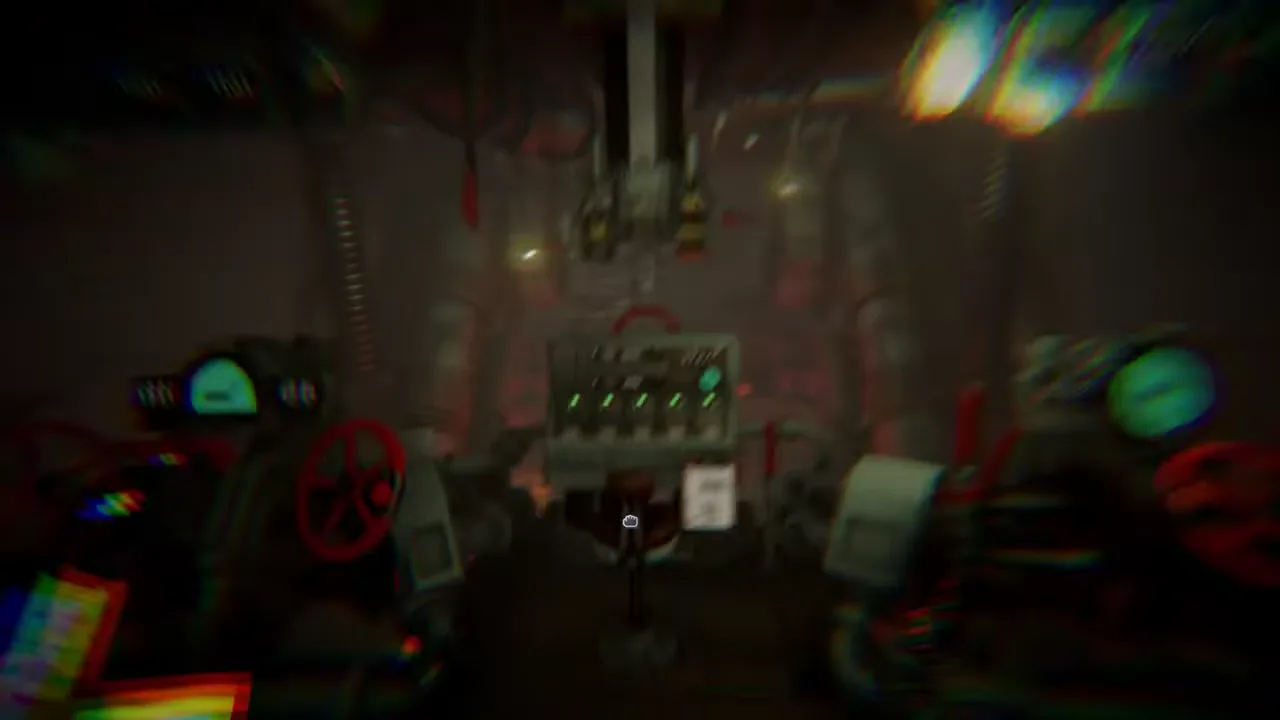
No single source replaces all the others; each is strongest for a different question.
IRON NEST asks an Operator to connect several evidence layers: current mission wording, High Command and frontline reports, an interactive map, a ballistic calculator, physical artillery settings and aerial results. When those layers agree, action feels straightforward. When they differ, a player needs a way to decide what to check first without inventing an undocumented rule such as “this channel always wins” or “the latest number is automatically correct.” An evidence hierarchy is a practical way to do that.
This is not an official scoring system. The Steam listing confirms the ingredients—separate report provenance, map work, calculation, manual gun controls and aerial photographs—but does not publish a universal ranking for every mission. The hierarchy below ranks evidence by the question it can answer. Current objective text is strongest for what the mission visibly asks now. A report is strongest for what its named source states. The map is strongest for the location currently plotted. The calculator is strongest for a result based on its present inputs. The gun station is strongest for what the machine is actually set to do. Aerial evidence is strongest for what visibly happened after the action.
Start with the question, not the source prestige
When information conflicts, ask what you are trying to decide. If the question is “what is the active task now?”, use current mission-facing wording and visible state. If the question is “where did a particular observation place a target?”, read the relevant report and its provenance. If the question is “what did we actually fire?”, inspect the current visible configuration. If the question is “what was the consequence?”, begin with aerial or outcome evidence.
This prevents a source from being used outside its scope. A High Command message can set priority but may not provide the freshest local location. A frontline message can offer a specific observation but may not replace a current objective. A calculator output may be mathematically consistent with its inputs but cannot prove that the target mark was correct. Aerial evidence can show an impact but cannot necessarily reveal the complete hidden damage model.
The hierarchy is therefore conditional. It does not decide every conflict before the player knows what the conflict is about.
Current objective state anchors mission priority
The full Steam listing describes a handcrafted story alongside procedurally generated objectives. It does not publish every mission rule, which makes the current interface especially important. When a mission-facing text or explicit state visibly changes, treat that as the first reference for the active task. Do not let an older briefing, a remembered mission pattern or a dramatic report silently replace it.
This does not make older information useless. It turns older information into context. An earlier report may explain why a target was selected. A new objective may redefine which target matters now. Preserve both in a log so that the change is traceable. If no objective text has visibly changed, do not invent a stage transition from an aerial image or a rumor alone.
The rule is simple: explicit current task state answers “what should I plan for now?” It does not automatically answer every question about location or execution.
Report provenance anchors the meaning of a claim
IRON NEST’s product description explicitly distinguishes High Command and frontline radio traffic, and says the Operator should track who said what. This makes provenance operational. A report should be read as a statement from a particular perspective with a particular function. High Command may establish an order or priority. Frontline traffic may establish an observation, urgency or local correction. The public listing does not say one is universally more reliable.
When two reports conflict, retain both rather than merging them into one convenient fact. Note their timing if visible, their exact target language and whether either is tied to the current objective. A new source can refine a plan without erasing why the prior plan existed. This is useful after a surprising outcome because it lets the player identify whether the conflict began in target evidence or later in the configuration.
Do not turn an in-world report into a neutral historical fact. It is evidence inside a fictional alternate-history setting. The Operator’s job is to weigh it, not to assume it has removed all uncertainty.
Map state anchors the current spatial claim
The interactive map converts a report or objective into a location relationship. Treat the map marker as the current spatial claim, and keep a note of what it represents. Is it a direct observation, an objective point, a best estimate or an inference? This answer matters more than a bare coordinate because it tells you how much confidence the calculation can inherit.
If a new report changes the target, update the map before calculating. If the turret repositions, recheck the relationship between the same map point and the current machine position. The map is not merely an image of the world; it is an intermediate step in the chain from message to shot. A perfect firing configuration built for an old marker is still a mismatch.
The current build determines its own marker controls and conventions. A wiki should not invent a universal coordinate system when the product page only confirms interactive mapping.
Calculator and gun state anchor execution
The Steam listing names a ballistic calculator, ammunition, charges, elevation and heavy turret movement. The calculator answers how its current inputs translate into a proposed configuration. The gun station answers what is visibly selected, set and ready. These are related but distinct pieces of evidence.
When a shot is unexpected, do not accuse the calculator before comparing both. Check whether the calculator still belongs to the active target and map state. Check whether the selected shell, charge, elevation and orientation match that result. Check any current visible readiness or fault state. The product description says mechanisms can fail, so a visible operational issue deserves its own record rather than being disguised as an intelligence conflict.
This layer is strongest for “what plan was executed?” It is not strongest for “was the target itself correctly identified?” Keeping those questions separate makes troubleshooting more efficient.
Aerial evidence anchors visible aftermath
IRON NEST advertises aerial photographs after a strike and persistent battlefield scars. Use this evidence to describe what visibly changed after the shot. Compare the impact or consequence with the prior map mark and objective state. Then decide which earlier layer needs review.
An aerial image is not an omniscient answer. It may not identify whether a difference came from map placement, range, bearing, ammunition, machine state or an unpublicized mission condition. It is still powerful because it turns an action into new evidence. State the observation first, then make a narrow hypothesis and test one variable in the next attempt.
If the objective text updates alongside the image, record both as separate events. If it does not, do not claim that the image alone proves success or failure unless the current interface says so.
A practical conflict-resolution sequence
When information competes, work in this order: identify the current objective; preserve report source and wording; confirm the map’s current target claim; rebuild calculation inputs if the target or position changed; verify the physical configuration; inspect aerial and mission-state feedback; then revise the earliest uncertain layer. This is not a forced linear ritual. It is a way to avoid correcting the last value before checking the first assumption.
Record what each source can actually establish. Current objective text establishes immediate task state. Reports establish claims from sources. The map establishes your current spatial interpretation. The calculator establishes a proposed output. The gun station establishes visible execution state. Aerial evidence establishes visible aftermath. No single layer replaces all the others.
The dependable conclusion
IRON NEST’s information systems become clearer when evidence is ranked by scope rather than by drama. The released product description supports a multi-layer workflow in which reports, map work, ballistics, physical controls and aerial results each answer different questions. A good Operator does not search for one source that ends uncertainty. They use the right source for the right decision, preserve conflicts and let aftermath inform the next plan.