A Documentation Standard for IRON NEST Regions
Regional evidence and editorial standard
How to write accurate IRON NEST region references from the confirmed 15-region campaign scale without inventing names, routes, terrain tables or progression rules.
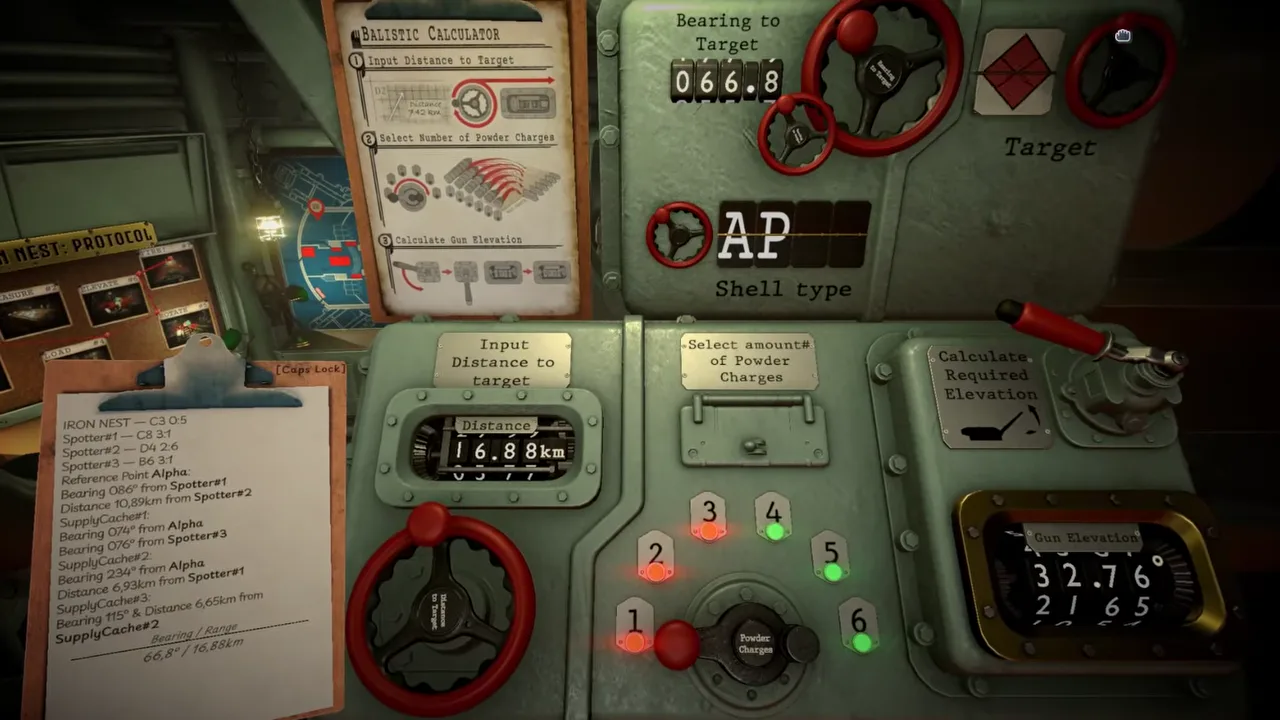
The confirmed regional scale is not a licence to invent a complete regional map.
IRON NEST’s current Steam listing advertises a campaign across 15 regions. That is a useful confirmed scale statement. It is not a complete region database. The same listing also advertises a handcrafted story, procedurally generated objectives, more than 100 medals and a combined thirty ammunition types and abilities. Together, these facts tell readers that regional progression is part of a larger campaign structure. They do not reveal every region name, terrain modifier, route connection, unlock order or mission distribution.
A documentation standard keeps a wiki valuable when official detail is limited. Rather than inventing a map of plausible Spanish locations or assigning mechanics to a visual backdrop, it records what the source actually confirms, what a current build visibly identifies and what remains unverified. This gives readers useful regional context without turning gaps in public material into false canon.
Start with the confirmed campaign scale
The full Steam page supports the statement that IRON NEST has 15 regions. Use that wording directly. It is a count and a campaign-scale claim. It does not supply fifteen names. A reference should therefore avoid presenting a complete named region list unless every name can be traced to current official text, an official published map or a current build capture with clear identification.
The same rule applies to order. A campaign may contain regions without publicly documenting a linear route. Do not transform a player’s one playthrough into a mandatory sequence. If the current build visibly shows an unlock or transition, record the version, exact label and context. If only the total is official, describe the total and say that the route is not publicly documented.
This is not a weak answer. It is a durable one. It remains correct when later updates reveal new names, alter progression or add detail.
Separate a region from a target marker
IRON NEST’s official description includes an interactive map, reports and ballistic work. A marked target, observer position or turret location is not automatically a named region. It may be a local mission coordinate, a report-derived estimate or an objective point. Treat those as distinct layers of geography.
When documenting current gameplay, record what the interface actually calls the place. If the game uses a mission title, a visible region label or an objective location, quote it at the appropriate level. If it only displays a map point, call it a map point. Do not promote a tactical landmark into a campaign region merely because it feels geographically meaningful.
This distinction also helps players. A firing solution is based on the current relationship among target, map and turret position. It should not be built from an assumed regional route or a fictional terrain table that the game has not published.
Treat visual atmosphere as atmosphere
Official videos can show landscapes, interiors, aerial photographs or industrial imagery. These frames are valuable visual evidence. They can support a statement that the official footage depicts a certain atmosphere or apparent setting. They do not, by themselves, establish a region name, real-world location, elevation value, weather system or permanent terrain modifier.
The Steam page establishes an alternate-history late-1920s Spain, where a monarchy remains in power and a republican uprising spreads. That setting supports broad historical and visual context. It does not make every terrain feature a reconstruction of an actual Spanish region, and it does not license a wiki to name unlabelled areas after real places. The game is fictional alternate history, and its spider-turret is fictional as well.
Use captions carefully: “official footage showing an industrial-looking landscape” is an observation. “the Northern Basin region applies an accuracy penalty” would require explicit current evidence. The first helps readers see the game; the second invents a mechanic.
Record progression evidence at the right level
The full listing connects 15 regions with story, objectives, medals and progression context. It does not publish a full unlock chart. A useful article can explain that regional scale likely gives the campaign breadth, while clearly labeling that the exact order and requirements are not publicly specified. If a player observes an unlock screen or region transition in the current build, document it as an observation with version and context, not as a universal rule unless it repeats or official text confirms it.
Do not confuse a medal count with regional completion requirements. More than 100 medals are advertised, but the listing does not state that there is one medal set per region, a fixed number per mission or a particular relationship to Steam achievements. Similarly, procedurally generated objectives are advertised, but that does not prove that every region uses the same objective pool.
This precision lets a reader understand what is known without being handed a fictional completion guide.
Use a source ladder for new region claims
For a proposed region name or rule, use the strongest available source. First, current in-game text with a version note. Second, a current official product page, official map or developer statement that directly identifies the region. Third, an official video frame with readable label and timecode. Fourth, carefully labeled secondary reporting. A community post or an unlabeled screenshot can generate a research lead, but it should not establish a canonical entry alone.
For every claim, record source, access date, quote or visual description, what it supports and what it does not support. This prevents a source from being used beyond its scope. A trailer may show a terrain scene without documenting a region route. A store count may confirm 15 regions without naming them. A current mission label may identify one location without defining the full campaign map.
Update rather than overwrite
When stronger evidence appears, add it to the existing record rather than silently rewriting earlier uncertainty. A page can say: “The full Steam listing confirmed the 15-region scale; later current-build text identified this label in this context.” This preserves the evolution of evidence and helps editors avoid treating old inferences as confirmed facts.
If a previously written region claim lacks a source, mark it unverified, narrow it to what the evidence shows or remove it. The goal is not to maximize the apparent size of a database. It is to give players information they can trust while they navigate the game’s actual maps and missions.
A practical entry template
For each region-related entry, use: official status; displayed name; source and date; observed context; confirmed campaign relationship; unverified details; related map or objective evidence. If only the 15-region total is known, the entry should remain a campaign-scale reference rather than pretending it is a profile for a named place.
This template works for future expansions too. It allows the wiki to add detail as it becomes public without importing guesses from genre conventions or real-world geography.
The dependable conclusion
IRON NEST officially confirms a 15-region campaign scale. It does not, through its public listing alone, provide a complete set of names, routes, terrain mechanics or progression rules. Accurate region documentation should preserve that boundary: distinguish campaign regions from tactical map points, label visuals as observations, cite current text for names and update the record when better evidence arrives.
That standard gives readers a map of what is actually known, which is more useful than a larger map made from confident inventions.