The Team Behind IRON NEST: Attribution and Scope
A source-led profile of the small IRON NEST development team, what official credits and developer material identify, and why team size should not become a substitute for product evidence.
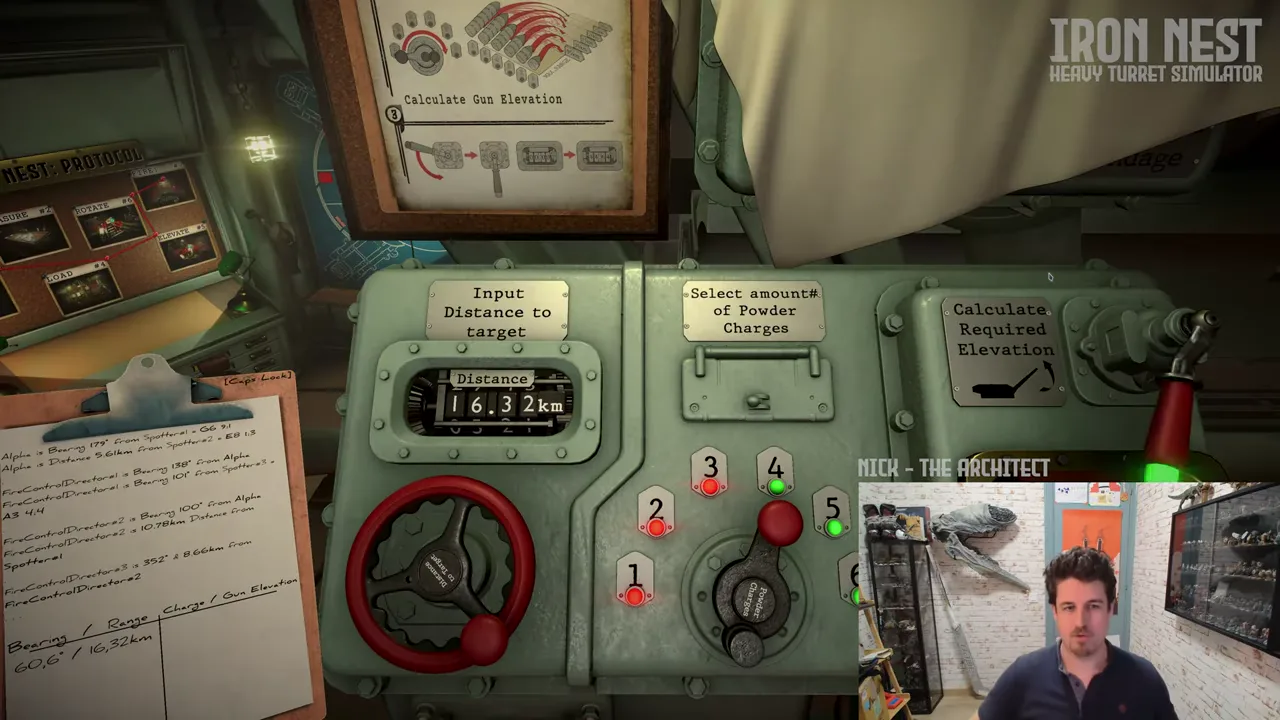
IRON NEST has often been introduced as the work of a two-person independent team: Nick Nieuwoudt and Dominik Latos. That is a compelling piece of development context for a game with a dense operator space, custom-looking mechanical interaction and a large campaign pitch. It should nevertheless be handled as attribution, not as a shortcut to technical, commercial or design conclusions.
Team size can explain why a project attracts attention. It cannot prove that a feature is simple, that a system was built in a particular way, that a release is unfinished, that marketing was absent, or that a game will remain supported for a particular period. The current Steam page, official website and developer-owned videos are the appropriate places to verify who presents the game and what the released product officially advertises.
What the small-team description means
Calling a project “two-person” identifies a development context. It tells readers that a small number of named creators are publicly associated with the work. It can help explain why the game is sharply focused on one distinctive fantasy rather than attempting to cover every kind of warfare, vehicle or open-world activity.
It does not mean each person performed every possible discipline alone, nor does it exclude external tools, collaborators, contractors, middleware, platform support, translators, testers, music contributors or community help. Credits and store metadata can evolve. Unless an official credit source defines a person’s role, the safest claim is that the public material identifies them as the core team, not that one individual exclusively made a particular model, sound, system or business decision.
The earlier article used small-team status to infer that the setting saved production cost, that newspaper reports replaced cutscenes and that the game was “polished hard” through scope discipline. These are plausible editorial readings, but they were not established by the cited sources. They have been removed as factual claims.
The focused operator premise
What official material does support is the nature of the released game. IRON NEST places the player in a 5,000-ton heavy turret in alternate-history late-1920s Spain. The player receives reports, works with a map and fire-control process, manages ammunition and physical controls, and examines outcomes. The game also advertises a handcrafted story, procedurally generated objectives, challenges, leaderboards, medals and 15 regions.
This is enough to say the project has a clear design identity. The physical station and information chain give the game a recognisable hook. A player does not need to know the team size to understand the hook: read, plot, calculate, set, fire and inspect. The systems index breaks those claims into source-backed references rather than asking a developer-profile page to explain every mechanism.
The behind-the-scenes video is particularly useful for showing that the developers publicly discuss the game’s creation. The credited frame on this page is from that official video. Its purpose is editorial: to give the profile a verifiable developer-context image. It is not evidence of a complete production workflow, proprietary tools or individual job allocation.
Attribution needs dates and sources
Small-team stories are often repeated through interviews, social posts and press coverage. Repetition can make a claim seem certain even when its original attribution is fuzzy. Keep the source close to the claim. If a Steam page names a developer or publisher, cite it. If a video identifies the people speaking, cite the video. If an article characterises the group as “two people,” cite the article and preserve its publication date.
This approach also accommodates change. A game can be developed by two core creators while later receiving publishing, porting, localisation or support help. It is better to document the specific source and date than to freeze a marketing phrase into an eternal organizational chart.
For readers, this level of care is respectful. It gives credit where official information directs it without inventing behind-the-scenes narratives. For the wiki, it keeps a team profile from becoming a container for unsupported claims about revenue, marketing budgets, staffing, development time or roadmaps.
What team size does not answer
Do not use the two-person description to answer these questions without separate evidence:
- Does the team plan additional regions, platforms or downloadable content?
- Which person wrote, coded, modelled, voiced, tested or marketed a particular element?
- How much money was spent on marketing or development?
- How many sales, wishlists or active players the game has now?
- Whether a feature is a compromise, an intentional design choice or an unfinished system?
- Whether the game will receive a patch, expansion or port on a stated timetable?
These are all meaningful questions, but each needs its own direct source. A small team can make ambitious systems, and a large team can make narrow ones. The number of core creators should be context, not a diagnostic tool.
Why the profile remains useful after launch
Before release, a small-team profile can make readers curious about an ambitious project. After release, it serves a different role: it identifies the people publicly associated with the work and gives a reader a path to first-party material. The useful next step is not a prediction about what the team will do; it is to check the current Steam page, official website and official channel for current announcements.
The August 6 launch also resolves the older article’s future-facing language. IRON NEST is not merely “worth watching as it heads to release.” It is a released game. The team context remains part of its history, while current product questions belong on the released listing and the relevant system or guide page.
The dependable conclusion
IRON NEST is publicly associated with a two-person core team, including Nick Nieuwoudt and Dominik Latos. That is worthwhile development context, and official store/video material should be cited for the attribution. It is not proof of hidden production roles, marketing spend, feature intent or future support.
Use the profile to understand who publicly stands behind the game. Use current official product sources and current-build evidence to understand what the released game does. Keeping those roles separate is more accurate than turning a small-team story into a catch-all explanation for every design decision.