IRON NEST's 10,000-Wishlist Report: A Dated Milestone
A source-conscious archive of the reported 10,000-wishlist milestone, what a third-party pre-release report can establish, and what it cannot say about the released game.
In June 2026, VGMM reported that IRON NEST: Heavy Turret Simulator had passed 10,000 Steam wishlists with little or no conventional marketing spend. That report is a useful historical snapshot of early interest in a very specific independent project: a manual, 5,000-ton heavy-turret simulator set in alternate-history late-1920s Spain. It is not a current sales figure, review count, owner estimate, or forecast for the released game.
This page preserves the milestone as an archive and corrects the way it should be read after release. Steam wishlists are a pre-purchase interest signal. They can describe attention at one moment, but they do not reveal how many people later bought the game, returned it, played the demo, followed a community channel, or learned about the game through an unrelated source. A third-party article can report a claim and its date; it cannot become a permanent live counter merely because the number is memorable.
What the report says
The cited VGMM article is the source for the 10,000 figure and the characterization of a very small marketing budget. Its value is contextual. It documents that the game attracted enough early attention for an outlet to frame it as a word-of-mouth milestone before the August launch. The number belongs to the report’s publication moment, not to every later version of the Steam store page.
The report also sits in a clear pre-release period. At that point, readers were evaluating a pitch, trailers, community discussion and a forthcoming or recently available demo rather than a mature released-game record. Later claims must be dated separately. A launch trailer, a current Steam description, a player review total or a developer post may all describe different moments and different measurements.
The article should therefore be cited with careful verbs: “VGMM reported,” “the outlet described,” or “the June report stated.” It should not be rewritten as “IRON NEST has 10,000 wishlists” in the present tense. That would convert a historical report into an unverified live metric.
What a wishlist is—and is not
A wishlist is a Steam account’s expression of interest. It can help players remember a game, receive notifications and signal demand to developers or publishers. It is meaningful enough to be watched by small teams, but it is not the same thing as a purchase, an active player, a positive review, a recommendation, a demo download, a newsletter subscription or a social-media follower.
The difference matters especially for a niche simulation. IRON NEST’s premise asks players to read incoming information, plot a target, measure on a tactical map, calculate, prepare ammunition and operate physical controls. That clarity may make the project easy for an interested audience to identify, but it does not tell us how every interested account will respond when a game becomes available.
Nor does the milestone establish a marketing causal chain. The report’s “no marketing budget” framing does not prove that no effort went into trailers, platform work, community posts, creator outreach, store presentation, demo production or direct developer communication. It only describes the article’s account of paid spending. Organic attention and unpaid development work are not the same category.
Release changed the question
IRON NEST released on Steam on August 6, 2026. That date changes the most useful question from “how much pre-release interest exists?” to “what does the released game currently offer, and is it a good fit for the player?” The official Steam page and developer website are the right starting points for current feature claims.
Those official sources describe manual operation of the heavy turret, intelligence reports from High Command and frontline forces, map measurement, aerial photographs, shell and charge decisions, a handcrafted story, procedurally generated objectives, two challenge modes, leaderboards, more than 100 unlockable medals, and a campaign advertised as spanning 15 regions. They also state the setting and name examples such as armor-piercing rounds, smoke and phosgene.
None of those current features can be derived from the wishlist number. Conversely, the milestone does not confirm every old promotional claim that circulated around it. Keep the evidence separate: product text establishes product features; a dated article establishes a reported milestone; current build observation establishes an observed behavior.
Why the early interest was intelligible
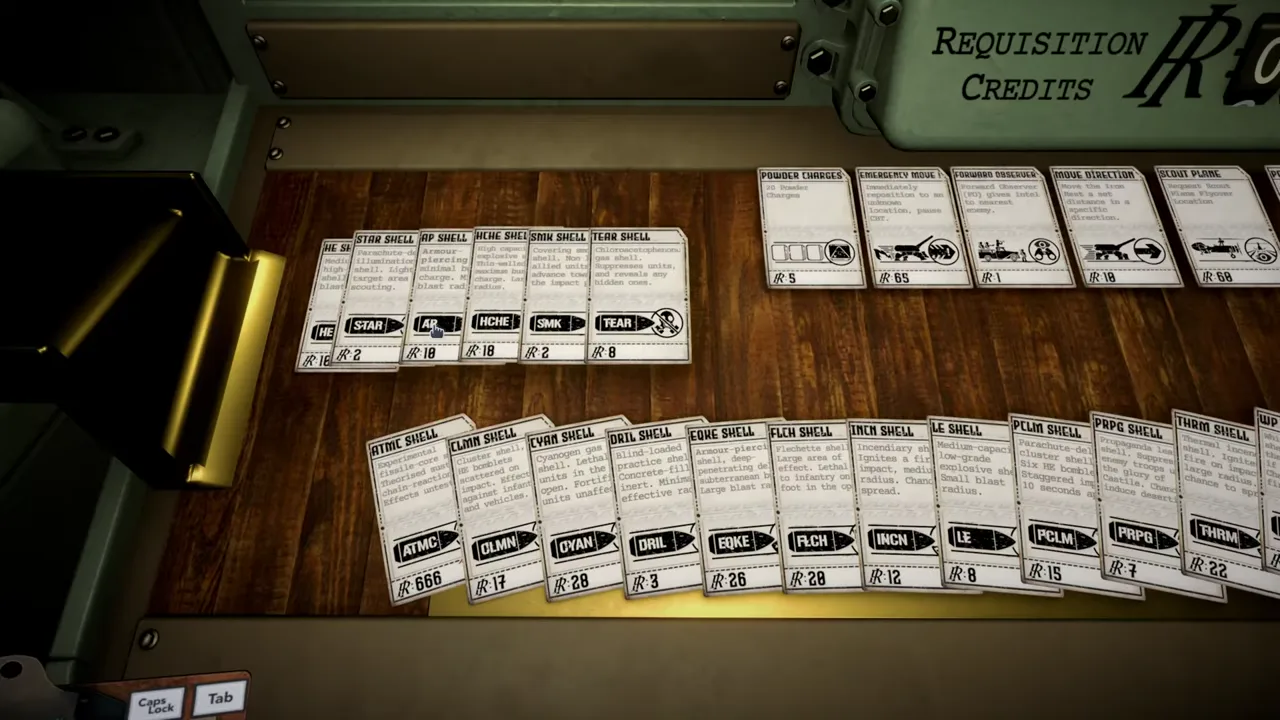
It is reasonable to analyze why the pitch could travel well without treating that analysis as a metric. IRON NEST makes a legible promise. Instead of describing an abstract “war game,” it presents a physical operator space: teleprinter messages, a map, calculation tools, ammunition handling and turret controls. The player is not merely told there is artillery; the public material shows a series of tactile tasks.
Specificity often helps a project find its audience. Someone who wants an immediate arcade shooter may self-select out. Someone interested in procedural machine work, information puzzles, first-person interaction and a bleak alternate-history setting may immediately understand the appeal. That is an editorial explanation, not proof that any particular post, trailer or outlet caused the 10,000 count.
The released launch trailer frame used above is deliberately not presented as evidence for the June number. It is a credited official illustration of the map-and-instrument identity that readers can inspect in current material. The date, video title and timestamp remain visible so the image cannot silently become an uncredited stock asset.
How to cite or update this milestone
If a developer later publishes a new official wishlist milestone, add it as a separate dated item. Record the exact wording, publication date, platform, whether the figure refers to wishlists or another measure, and a direct source link. Do not overwrite 10,000 with a larger number; retaining the smaller dated figure lets readers understand the history.
If a source revises or retracts the claim, annotate that change. If a third-party page disappears, preserve the fact that it was a third-party report rather than silently upgrading it to an official statistic. And if a page wants to discuss commercial performance after launch, use a source that actually measures sales or player activity and explain its limits. Wishlist counts cannot answer that question on their own.
This same approach applies to all campaign-era statistics. Count the thing being counted, identify who reported it, fix it to a date, and avoid converting a promotional moment into a permanent status label.
The dependable conclusion
The 10,000-wishlist item is a June 2026 third-party report about early pre-release interest in IRON NEST. It is a valid archival milestone when attributed to VGMM and dated correctly. It is not current ownership, revenue, review, player or launch-success evidence.
For present-tense information, consult the official released-game listing and current developer materials. For historical context, retain the milestone with its source and uncertainty. That gives readers both the early story of a small, distinctive project and a clear boundary between an old signal of interest and the state of the game after launch.