Keeping an IRON NEST Mission State-Change Log
A source-led note method for tracking what visibly changed in an IRON NEST mission, separating objective text, reports, map evidence, aerial results and inference.
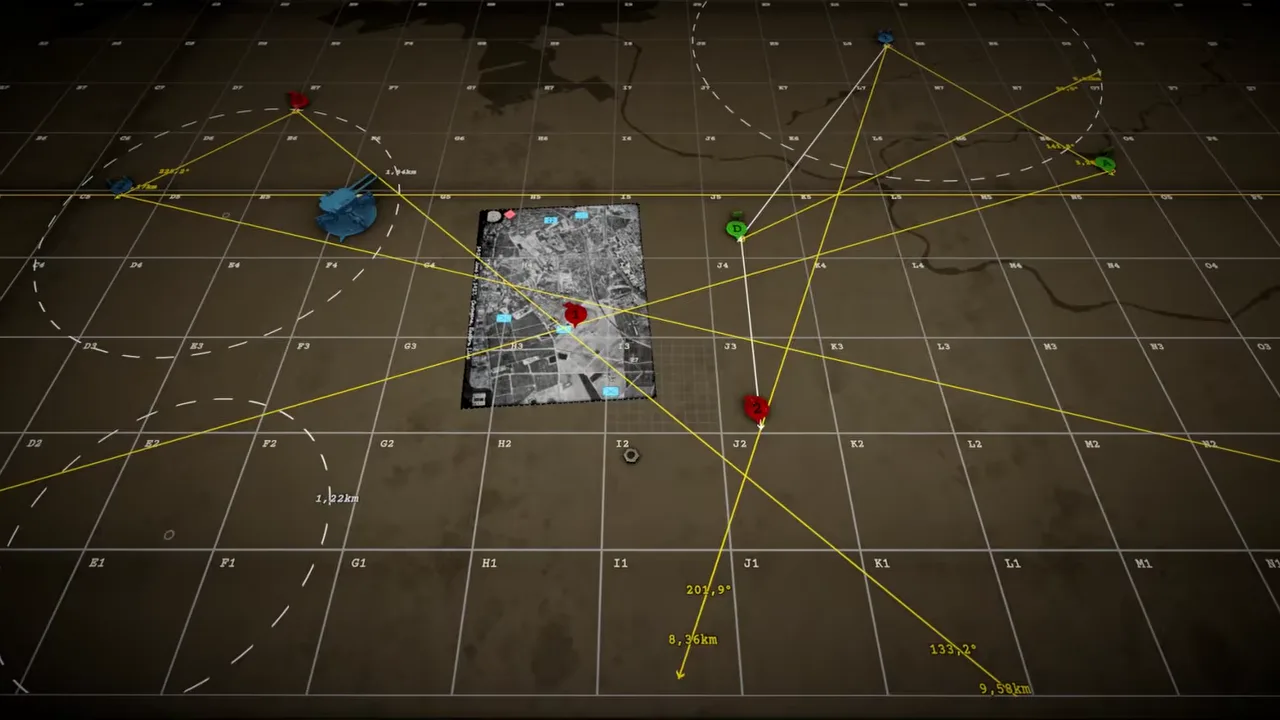
IRON NEST’s official listing describes a handcrafted story alongside procedurally generated objectives, as well as two teleprinter channels, an interactive map, manual fire control and aerial photographs after a strike. Those systems make a mission feel dynamic, but they also make memory unreliable. A player can read a new report, move a target mark, fire, see an aerial image and then struggle to remember whether the objective itself changed or whether only their interpretation changed. A mission state-change log solves that problem.
The log is not a claim that the game has a formal internal event ledger with a particular name. It is a player and wiki method: record each visible change at the moment it appears, attach it to its source and avoid describing an inference as though the interface explicitly stated it. This is especially useful when a mission appears to evolve, because the released listing does not publish every trigger, branch or objective-transition rule.
Begin with a baseline state
Before a mission becomes complicated, write the baseline. Include the exact current objective wording, relevant report sources, visible target context and any planned action. The product page confirms that High Command and frontline radio traffic are separate information sources, so do not reduce the baseline to “the game told me to shoot.” Note who supplied the information and what each message actually said.
The baseline also includes the most relevant map and configuration context. A marker may represent an order, an observation or a working inference. A planned shell, charge, elevation and bearing may belong to that marker. These details do not need to be exhaustive. Their purpose is to establish what “unchanged” means after a new message or outcome arrives.
If the current build visibly labels a primary and secondary objective, preserve those labels. If it does not, do not manufacture them from a pre-release description. The live mission interface is the authority for current state.
Log an event before explaining it
When something changes, write the visible event first. Examples include a new teleprinter message, changed objective text, altered map context, an aerial image after a strike, a visible mechanical fault or an on-screen completion notice. Include a brief time or sequence marker such as “after first shot” or “after map update.” This lets you reconstruct order without claiming a precise hidden timer.
Then add the source. “New frontline report after first shot” is stronger than “the mission changed.” “Aerial photograph shows new damage near the intended area” is stronger than “the shot advanced the stage.” The first statements are observations. The second statements may be true, but they require more evidence.
This order protects later analysis. If a new report appears after a strike, the log can ask whether it was a consequence, a scheduled update, a new observation or an unrelated mission event. Without the original wording and sequence, the player is likely to invent the simplest story.
Use explicit confidence labels
Mark each entry as visible objective update, new report, map observation, aerial outcome, configuration change or inference. These labels keep different kinds of state from collapsing together. A new map marker is not automatically a new primary objective. An aerial impact is not automatically an objective success. A report can affect priority without changing a formal mission state.
Confidence labels are also useful for a wiki. “The current objective text changed” is a confirmed observation. “This appears to begin a second phase” is an inference. “A pre-release Q&A discussed multi-stage missions” is dated design context. All three can belong in one account, but they should not be written with the same certainty.
The developer Q&A is valuable for historical context because it discussed an intention for many missions to use multiple stages, primary objectives and secondary objectives. The current released product listing confirms story and procedural objectives. Neither source publishes a universal event map for every live mission, so a state-change log should describe current evidence first.
Compare the event with the baseline
After recording an event, compare it with the starting state. Did the objective wording actually change? Did the report refine the old target or introduce a new one? Did the map mark move because of a new source or because the player revised an inference? Did the aerial result confirm an expected effect or merely show an impact? This comparison turns a stream of messages into actionable information.
If an event invalidates an earlier configuration, label the prior plan as historical and begin a new one. A calculator result made for an old target should not remain in the active column. Likewise, if nothing in the visible state changed, avoid rebuilding the entire plan from panic. The log gives you a basis for deciding whether a new firing solution is necessary.
This procedure does not make every mission easy. It makes the cause of a decision visible. That is especially useful in procedural contexts where the same remembered pattern may not apply to another run.
Keep configuration changes separate from mission changes
The Steam listing names ammunition, charges, elevation and turret operation. A change in any of those can produce a different outcome without the mission state changing at all. Log it separately. “Switched shell before second shot” is a configuration event. “Objective text changed after second shot” is a mission event. They may be related, but the log should not decide that relationship in advance.
This separation makes troubleshooting cleaner. If an outcome was surprising, you can ask whether the target, mission requirement or physical setup changed. If several variables changed together, record that limitation rather than claiming one cause. A good log preserves ambiguity when ambiguity is real.
Review aerial feedback as evidence, not narration
IRON NEST advertises aerial photographs and persistent battlefield scars. Aerial evidence can be a powerful state-change entry: it shows what is visibly different in the world after a shot. Write what it displays relative to the planned target, then compare it with any objective or report update. Do not claim that every visible scar maps to a score, stage or damage threshold unless the current interface says so.
If the image suggests a correction, create a next-action line: verify target placement, rebuild calculation, reconsider shell choice or wait for a new report. Make one controlled change when possible. This turns the log into a decision tool rather than a scrapbook.
A compact log format
Use five fields: sequence; visible event; source; what changed from baseline; next check. For example: “After first shot; aerial image displayed; post-strike photo; impact visible relative to prior mark, objective text unchanged; verify placement before changing ammunition.” The format is short enough to use during play and detailed enough to support a later troubleshooting or wiki note.
Add a sixth field, confidence, when the event is ambiguous. It takes little effort and prevents a journal entry from hardening into false canon.
The dependable rule
In IRON NEST, log the event that the current build shows, not the story you think it proves. Preserve the initial objective, source reports, target state, configuration and aerial result. Use a new entry whenever a visible change occurs, and label an inferred mission phase as inference until the objective or interface confirms it.
That approach respects both the game’s published procedural-objective framing and the player’s need to make good decisions under changing information. A state-change log turns a complicated mission into a sequence of evidence that can be checked, learned from and reused without inventing the rules between the lines.
Frequently asked questions
What counts as a mission state change?
A visible update to objective wording, a new report, a changed target context, an aerial result or another current-build signal that changes what the player can responsibly plan next.
Does one new teleprinter message prove a hidden mission stage?
Not by itself. Record the message and its visible context; call it a new stage only when the current objective or interface supports that interpretation.