Institutional Language and the Operator Perspective in IRON NEST
How IRON NEST uses orders, reports, propaganda and the player’s limited Operator viewpoint to frame a fictional alternate-history artillery workplace.
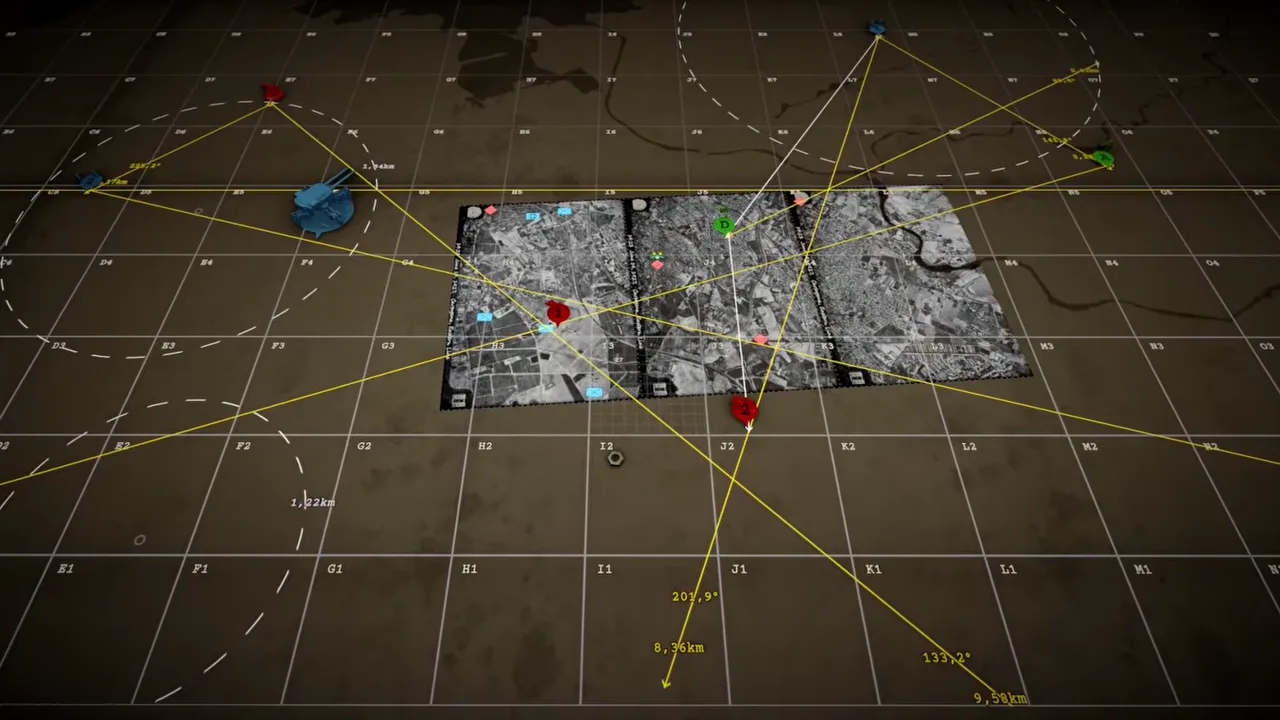
IRON NEST’s world is not presented from a distant historian’s viewpoint. The official Steam description places the player inside a 5,000-ton fictional heavy turret as “the Operator,” receiving information through High Command and frontline teleprinters, working a map and calculator, then converting that information into artillery action. The setting is alternate-history late-1920s Spain, where a monarchy remains in power and a republican uprising spreads. That premise makes institutional language part of the game’s atmosphere and its mechanics.
An order, report, newspaper-style item or piece of propaganda is not merely lore decoration. It tells the Operator what an institution wants, what a witness says or how the fictional world frames a consequence. It does not automatically provide the whole truth of the situation. The store page itself emphasizes source provenance: players should track who said what. This page explains why that instruction matters for reading the world, while keeping a firm boundary between confirmed setting facts and interpretation.
The Operator knows the world through work
The player’s confirmed role is deliberately narrow. You are not described as a general with unrestricted access to a strategic overview. You are an Operator in a heavy turret. You receive reports, mark a map, calculate trajectory, choose ammunition and operate the machine. This creates a perspective defined by labor: the world becomes visible through messages, instruments, targets and aftermath.
That perspective has consequences for lore. A report can be urgent without being exhaustive. A High Command instruction can establish institutional priority without proving every event it refers to. A frontline message can offer close observation without becoming an omniscient account. The game’s design asks the player to work with these partial viewpoints rather than expecting a neutral narrator to settle every conflict.
This is not a claim that every in-world message is deceptive. The released listing does not publish a universal reliability system. It is a reading of the confirmed fact that reports have provenance. Provenance is meaningful precisely because the source of information affects how an Operator should use it.
Institutional language sets priority, not absolute truth
High Command language can sound categorical because orders are meant to direct action. In the fiction, that gives it operational authority. The player needs to know what the current mission asks them to do. But authority and completeness are different. An order may name a target, a political framing or a desired result while leaving local conditions to frontline information and map work.
When reading an order, separate its function from its factual claim. Functionally, it may set the active objective. Factually, it may contain statements that need to be located, compared or contextualized. This distinction lets the player obey a mission without pretending that a single institution has explained the full setting.
The alternate-history premise reinforces this. The product page establishes a fictional Spain with a monarchy still in power and a republican uprising. It does not provide a comprehensive political timeline, a roster of factions or a real-world historical equivalence. Institutional language should be read as part of that invented world, not as a documentary source for actual history.
Frontline language adds proximity and uncertainty
The separate frontline radio channel gives the Operator another kind of information. A frontline observation may be closer to an immediate target or more responsive to a changing situation. It can also be partial, stressed or focused on a different problem from the order. This is mechanically useful: a player can preserve both sources on the map and judge which one currently supports a firing plan.
It is also narratively useful. The presence of multiple channels makes the heavy turret feel embedded in a larger institution rather than isolated in a void. The Operator is connected to command and to people near the consequences of fire, but is identical to neither. The player hears their world through apparatus.
Avoid adding details the sources do not give. The public materials do not establish names, ranks, private histories or a complete communications hierarchy for every sender. A lore article can still discuss the effect of a divided information flow: it places the Operator between institution and frontline, where action depends on interpreting both.
Propaganda is a theme and a source condition
The official product description explicitly uses propaganda and dark-humor language in describing IRON NEST’s presentation. That confirms a tonal frame. It does not authorize a wiki to label every statement in the game as propaganda or to assign precise real-world ideology without evidence. The useful reading is narrower: institutional messages and representations may have motives, and the player should attend to their source and function.
In-world propaganda can also make consequences feel bureaucratic. A report or newspaper-style artifact may transform destruction, success or failure into official language. The player’s material work at the turret is then connected to how the world talks about that work. This is an interpretation grounded in the confirmed coexistence of operator systems, reports, propaganda framing and post-strike evidence; it is not a claim about every possible branch or media response.
The safest lore writing describes the visible device and then marks the inference. “The official setting uses propaganda language” is confirmed. “This message appears to position the Operator inside an institutional narrative” is an interpretation. Both can be interesting when readers can see the boundary.
The machine narrows and intensifies perspective
IRON NEST’s fictional scale is part of the viewpoint. The official listing calls the central machine a 5,000-ton spider-turret. The player does not freely roam a broad world; their influence arrives through map marks, calculations, controls and distant aerial images. This makes the setting feel large without requiring the Operator to know everything about it.
The confined workspace is not only a visual choice. It reinforces the idea that every decision passes through systems. A player sees a target as a report and a map relation before it becomes an impact. A consequence appears as an aerial photograph or a changed message before it becomes a new plan. Institutional language, mechanical work and limited perspective therefore form one loop.
Do not mistake this for a claim that the game has a specific political simulation. The released listing advertises story and procedural objectives, but not a complete branching governance model. The evidence supports a crafted operator perspective, not every imagined extension of it.
How to read a message responsibly
When a notable message appears, ask four questions. Who is speaking? What does the statement ask the Operator to do? What factual claim does it make about the target or situation? What visible evidence supports or complicates that claim? Then preserve the answer in your mission record. This method treats the message as both story text and operational input.
If the message is not clear, record that uncertainty. Do not turn ambiguity into lore fact. If a later aerial image or report changes the picture, keep the earlier message as context rather than rewriting history. The difference between an order, an observation and a conclusion is exactly what makes the game’s information channels expressive.
The dependable conclusion
IRON NEST confirms a fictional alternate-history Spain and a player role shaped by reports, machinery and consequence. Its High Command and frontline channels create an Operator perspective that is institutionally connected but never all-knowing. Propaganda and dark humor establish a tone, while source provenance gives the player a practical reason to read in-world language critically.
The strongest lore takeaway is therefore not a hidden timeline. It is a viewpoint: the world arrives as work, and the player’s responsibility begins with recognizing who is speaking before deciding what to do.
Frequently asked questions
Does an in-game order establish a neutral historical fact?
No. It is a statement inside the fictional world. The Steam page confirms that the game uses separate High Command and frontline report channels and asks the Operator to track provenance.
What is confirmed about the player viewpoint?
The current listing identifies the player as the Operator of a fictional 5,000-ton heavy turret in alternate-history late-1920s Spain.