A Controlled Testing Method for IRON NEST
How to test an IRON NEST control, map assumption, firing setup or visible outcome one variable at a time without inventing undocumented mechanics.
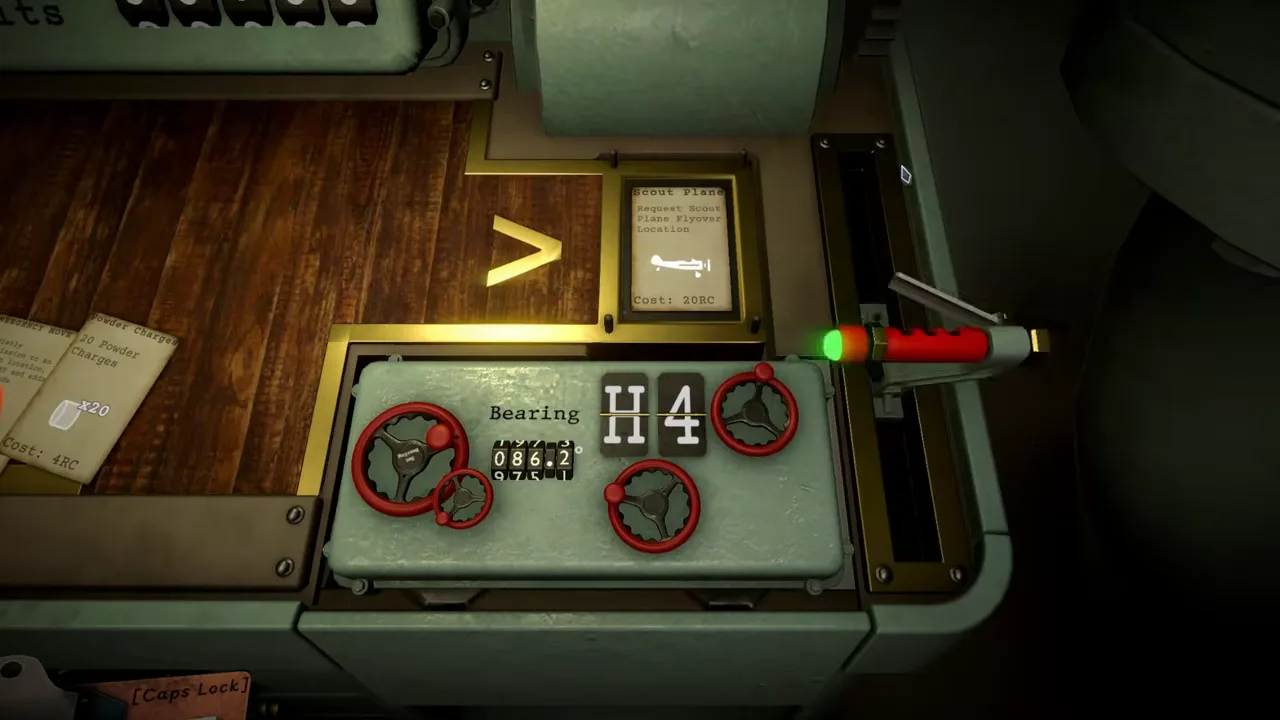
IRON NEST presents a manual chain: reports arrive, information is mapped, trajectory is calculated, ammunition and gun settings are chosen, the turret is operated and aerial photographs show consequences. That chain gives players many things they may want to understand. Does a map interpretation match the report? Did a selected configuration correspond to the visible outcome? Did an interaction fail because of context, input or mission state? The answer should not come from one hurried attempt and an invented explanation. It should come from a controlled test.
A controlled test is a simple discipline. Define one question, hold as much relevant context steady as practical, record the starting state, change one factor and describe the visible result. It is not a scientific claim about an inaccessible codebase. It is a better way to learn from a game that explicitly links source-aware information, map work, ballistics and physical controls. It also protects a wiki from turning a plausible observation into a universal rule.
Ask one answerable question
Begin with a narrow question phrased in terms of visible behavior. “Does this map mark correspond to this reported location in this mission?” is answerable. “What is the entire hidden targeting system?” is not. “Does this control respond when this station is active?” is answerable. “Is the input system broken?” is a conclusion that needs evidence.
The official Steam listing is useful for setting the scope of a question. It confirms two teleprinter sources, an interactive map, a ballistic calculator, ammunition choice, charges, elevation, heavy turret movement and aerial photographs. It does not publish a complete target model, every shell stat or every interaction rule. Design your test around what the current interface lets you observe rather than around a mechanic the public sources never claim exists.
Good questions identify a single relationship. A target-placement test asks about map interpretation. A configuration test asks whether a selected shell, charge, elevation and direction remained matched. A control test asks whether an interaction responds in a named context. A performance test asks how one settings change affects a repeatable scene. Keep categories separate so the result stays interpretable.
Establish a baseline first
Before changing anything, record the starting conditions. For a fire-control test, note the current objective, report source, target mark, turret position or orientation if visible, ammunition choice and relevant calculator or gun settings. For an input test, note platform, device, station, prompt and exact interaction. For a demo test, label it as demo evidence and record the downloaded build or date when possible.
The baseline is not busywork. Without it, a later difference has no reference point. If a second shot lands elsewhere, was it because the changed shell mattered, because the target moved, because the turret was not in the same state or because the first note was incomplete? A baseline does not solve every uncertainty, but it keeps the uncertainty visible.
Use screenshots or short clips only when they help preserve a key state. Remove personal notifications or account information before sharing. A concise text note is often enough: “objective text unchanged, frontline report used, marker placed at X relative to landmark, shell A, displayed charge/elevation B, visible result C.”
Change one relevant variable
The rule of a controlled test is not “change only one thing in the entire game.” It is “change one factor relevant to the question while avoiding unrelated changes.” If testing whether a map interpretation needs correction, keep the shell and physical setup stable where practical. If testing a shell label, keep the target and solution stable enough that the result can be compared. If testing an input prompt, keep the station and device unchanged while repeating the same interaction.
Do not change target, range, charge, elevation, shell and orientation in the same retest, then claim that one of them caused the difference. That may be an exciting second attempt, but it is not evidence about a single factor. When time pressure makes a perfect retest impossible, record that limitation. “Several conditions changed due to the mission state” is more honest and more useful than a false comparison.
The current build is always authoritative for the available controls and mission conditions. A testing method should adapt to it rather than force an old checklist onto it.
Separate observation from interpretation
After the attempt, write the result in two parts. First, state what was visible: a marker appeared or did not appear; a gun setting displayed a value; an aerial photo showed an impact in a particular relation to the planned area; objective text changed or remained unchanged. Second, state the interpretation: the map mark may need revision; the shell may be associated with a different effect; the input may require another context.
This separation is vital because the game’s official listing advertises aerial photographs and persistent scars, not a public explanation for every consequence. An image can show an outcome. It may not reveal whether range, bearing, target identity, ammunition, readiness or an unseen current objective condition caused it. A good test uses the observation to decide what one thing to examine next.
Use confidence labels when useful. Confirmed can mean current explicit game text supports the claim. Observed can mean this result occurred under the recorded conditions. Inferred can mean the result suggests a hypothesis. The labels prevent a single successful or failed test from becoming misinformation.
Repeat when the claim matters
Not every personal learning question needs multiple trials. If the goal is simply to understand one prompt, a careful successful interaction may be enough. If the goal is a wiki recommendation, a troubleshooting diagnosis or a claimed system rule, repeat it when the mission state allows. Try to recreate the baseline and see whether the visible behavior remains consistent.
Repetition is especially important for observations affected by procedural objectives. The Steam page confirms a handcrafted story alongside procedurally generated objectives, but does not expose the complete generation logic. A behavior in one objective may not define every future mission. Record the mission context and avoid wording a local observation as a global rule.
When a result does not repeat, do not discard it. Update the record: “Observed once under these conditions; not reproduced after a clean restart,” or “the target state differed in the second attempt.” That is valuable evidence about uncertainty.
Use the demo responsibly
The demo’s separate Steam listing makes it a useful low-risk test environment for controls, performance and the central operator loop. Use it to establish what your current demo session can show. Do not use the absence of a feature in a demo session as proof that the full release lacks it. The current full-product listing advertises broader story, objective, region, challenge, medal and progression context.
Likewise, do not assume a demo result survives unchanged into every full-release patch. Label the environment. A small note such as “demo build, accessed on this date” protects the value of your result without overstating its scope.
Turn a result into a useful next action
The outcome of a test should decide the next smallest check. If a target relationship remains uncertain, return to report provenance and map placement. If the map is secure but the configuration was mixed, rebuild the calculator and gun state. If a control did not respond, verify the current station and prompt before filing a defect report. If an issue persists after a documented clean retest, preserve the steps, environment and evidence for a reproducible report.
This is where controlled testing saves time. It avoids resetting every variable after every surprise. It makes progress possible even when the game does not publish an exact rule for the thing being tested.
A dependable test card
For each test, write: question; current build or environment; baseline; one changed factor; visible outcome; interpretation; next check. Keep the card with any supporting screenshot. This structure fits a single mission attempt and leaves a future reader enough information to repeat it.
IRON NEST rewards attention because its official systems connect message, map, calculation, machine and aftermath. A controlled test respects that connection. It does not eliminate uncertainty; it turns uncertainty into a sequence of learnable, source-aware questions.
Frequently asked questions
What is a controlled test in IRON NEST?
A repeatable attempt in which the player records the target, configuration and visible outcome, then deliberately changes only one relevant factor in the next attempt.
Can one test reveal every hidden rule?
No. One outcome can support an observation; repeated current-build tests and explicit game text are needed before making a broad mechanic claim.