IRON NEST vs UBOAT: Heavy Station Work vs Submarine Command
A source-led comparison of IRON NEST and UBOAT for players who want a tense military machine simulator, separating their shared operational pressure from their very different scope, crew and campaign models.
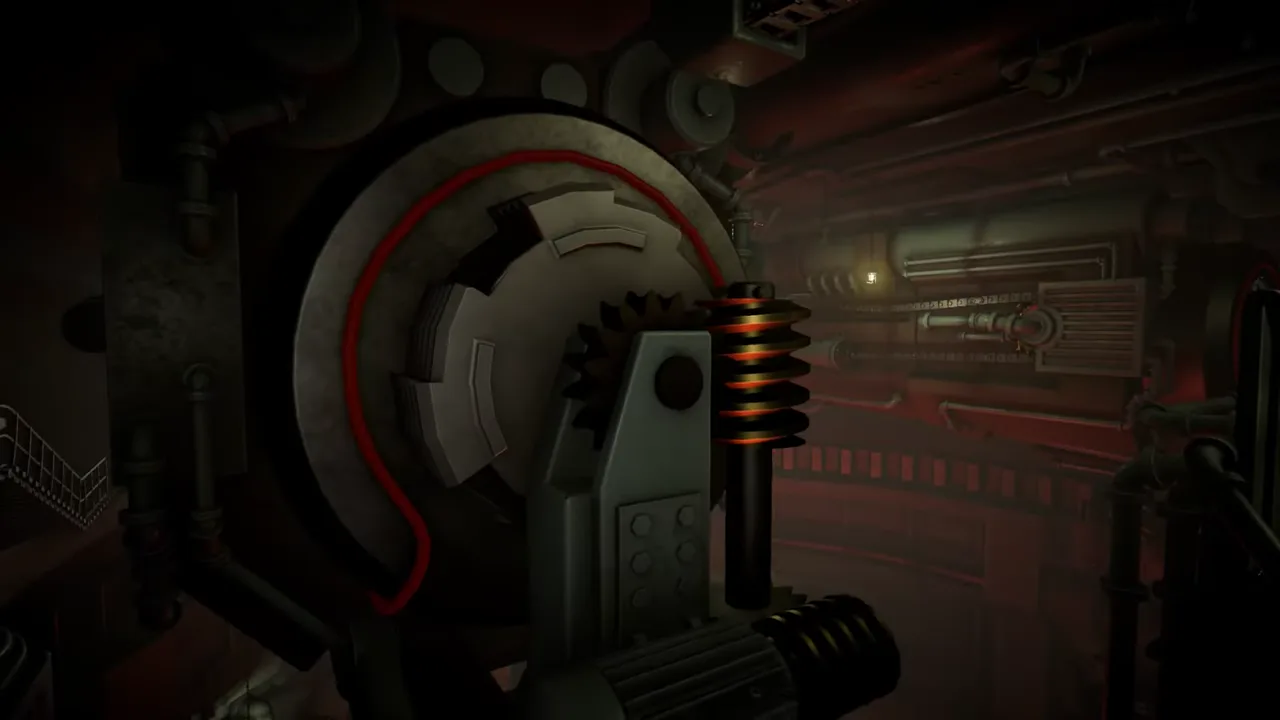
IRON NEST and UBOAT appeal to some of the same instincts. Both put the player inside a constrained military machine. Both ask for attention, planning and calm under pressure rather than treating combat as a purely reflexive shooting gallery. Both use the vessel or installation as a lived-in space instead of a detached vehicle icon.
They are not the same kind of simulator. IRON NEST is a single-player heavy-artillery game built around one Operator’s manual information and fire-control loop in an alternate-history late-1920s Spain. UBOAT is a World War II submarine survival sandbox whose official description centers crew management, resources, open-sea travel and a career structure. The overlap is the pleasure of operating a difficult machine; the difference is where the game places responsibility.
The shared attraction: a machine is a workplace
IRON NEST’s official material presents a 5,000-ton heavy turret with teleprinters, an interactive map, a ballistic calculator, charges, elevation wheels and heavy traverse. The player transforms intelligence reports into a firing solution, executes the controls and reviews outcomes through aerial evidence. The machine is a workspace with several physical stations.
UBOAT’s official description presents the submarine as the crew’s home and a potential grave. It says the player controls the crew in order to control the boat, manages physical and mental health, deals with damage and survival pressure, and can personally take stations such as periscope, hydrophone or deck gun. Its machine is a workplace as well, but it is also a moving habitat and a social system.
If you like games because they make an object feel large, temperamental and inhabited, both are plausible fits. If you want that feeling to come from dense individual procedure, IRON NEST is closer. If you want it to come from managing people, stores and a long voyage, UBOAT is closer.
One Operator versus a crew
This is the most important distinction. IRON NEST’s official page repeatedly addresses “Operator” and focuses on the chain of command ending at the player’s fingertips. It describes reports, calculations, shell choice, movement of the turret and consequences of fire. The reviewed public materials do not advertise assigning work to a crew, monitoring individual health, morale or bunk space, or managing named officers.
UBOAT explicitly does. Its Steam page says the player controls the crew, looks after physical and mental health and uses officers to assign work and speed activity. It describes hunger, fatigue, morale, damage control and resource decisions. The ship’s mechanical state is inseparable from the people living inside it.
Do not buy IRON NEST expecting a UBOAT-style personnel simulator. Do not buy UBOAT expecting to manually solve every artillery target through a separate map-calculator-gun chain. Both offer responsibility, but they make that responsibility legible in different units: a firing solution in one, a crew and voyage in the other.
Static fire control versus navigation and survival
IRON NEST’s core spatial problem is local fire control. Reports identify a situation; the map establishes a target; range and bearing are derived from the current turret position; charge and elevation prepare the guns. The official listing emphasizes target measurement, artillery operation, aerial outcome photos and persistent scars. Its campaign is structured around a handcrafted story, procedurally generated objectives, challenge modes, leaderboards, medals and regions.
UBOAT’s core spatial problem is navigation through an open-sea campaign. Its official page calls it a survival sandbox and describes resource management, travel, recovery from damage, assignments from headquarters, boat upgrades and a non-linear career. It has tactical action, but that action lives inside a larger logistics loop.
This changes the rhythm. In IRON NEST, the question is often “what is the right solution for this firing problem now?” In UBOAT, the question can be “what can this boat and crew sustain over the next leg of the patrol?” A player who wants intense, bounded operations may prefer the former; a player who wants a long emergent voyage may prefer the latter.
Information pressure in both games
Both games use incomplete information and instrument reading to create tension. IRON NEST gives separate High Command and frontline report channels and asks the player to preserve source provenance on the tactical map. A number must be understood in relation to its observer and then converted into gun-relative geometry.
UBOAT asks players to use submarine stations, crew assignments and a simulation of a vessel operating at sea. Its official description mentions periscope, hydrophone, deck gun, navigation, resources and damage. The player similarly benefits from not acting on a partial impression.
The key difference is what the information is for. IRON NEST concentrates information toward one artillery decision. UBOAT distributes information across navigation, detection, crew, supplies, threats and a campaign. The first rewards a precise chain of transformations; the second rewards prioritization over time.
Tone and historical frame
IRON NEST is alternate history. The official setting is late-1920s Spain where the monarchy remains in power as a republican uprising spreads. Its dieselpunk language mixes massive fictional machinery, propaganda, black humor and consequence. The player operates a fictional heavy spider-turret rather than a historical vehicle.
UBOAT explicitly frames itself as a World War II-era submarine simulator with German sailors as its primary theme. Its historical setting and survival language are central to the published description. The games can both feel grim, but they do not make the same claims about history or representation.
This matters for expectations. IRON NEST is better approached as a stylized operator drama with historical echoes. UBOAT is better approached as a submarine career and survival sandbox. Neither page should be used to claim that the other game shares its setting, politics or factual historical scope.
Progression and replay structure
IRON NEST advertises a handcrafted story alongside procedurally generated objectives, two challenge modes, leaderboards, 15 regions, more than 100 medals and a combined set of 30 ammunition types and abilities. It does not publish a full progression chart, and its individual unlocks should be checked in the current build.
UBOAT advertises a career with headquarters assignments, budget/reputation, boat upgrades and equipment such as torpedo types and decoys. Its Steam page also describes a modifiable/sandbox-oriented structure and Steam Workshop support. These are fundamentally different expansion directions: IRON NEST broadens one artillery station through missions and recognition; UBOAT broadens one submarine through campaign resource and crew development.
If progression is your main reason to play, decide whether you want new operational contexts and firing problems or an evolving vessel and crew economy. The two games can complement each other rather than replace each other.
Which should you choose?
Choose IRON NEST if you want a single-player, physically staged fire-control puzzle; prefer reading reports and plotting geometry to supervising personnel; enjoy a concentrated mechanical loop; and are interested in an alternate-history dieselpunk setting with deliberate propaganda and consequence framing.
Choose UBOAT if you want World War II submarine life, crew management, open-sea survival, resource decisions, a longer non-linear career and the ability to divide tasks between officers and direct control stations.
Play both if you enjoy the broader genre of “machine as workplace.” Start with IRON NEST when you want a contained operation whose pressure comes from getting one chain of evidence and controls right. Start with UBOAT when you want the same tension stretched across a crew, a vessel and a voyage.
The dependable conclusion
IRON NEST and UBOAT share an appreciation for complex military machines and deliberate work. Their official descriptions diverge sharply after that. IRON NEST is a one-Operator heavy-turret fire-control game; UBOAT is a WWII submarine survival sandbox with explicit crew management and campaign logistics.
The right choice is not about which is “more realistic.” It is about the responsibility you want to inhabit: one carefully constructed shot and its consequences, or one submarine crew’s survival across an evolving patrol.
Frequently asked questions
Are IRON NEST and UBOAT both military simulators?
Yes, but their official descriptions emphasize different structures: IRON NEST is a single-player manual heavy-turret experience, while UBOAT is a WWII submarine survival sandbox with crew management.
Which has crew management?
UBOAT explicitly advertises crew management. IRON NEST's public listing centers one Operator working the turret and does not advertise a crew-management system.