IRON NEST vs Tank Mechanic Simulator: Operating a Weapon or Restoring One
A source-led comparison of IRON NEST and Tank Mechanic Simulator for players interested in detailed military machinery, hands-on tools and deliberate technical work.
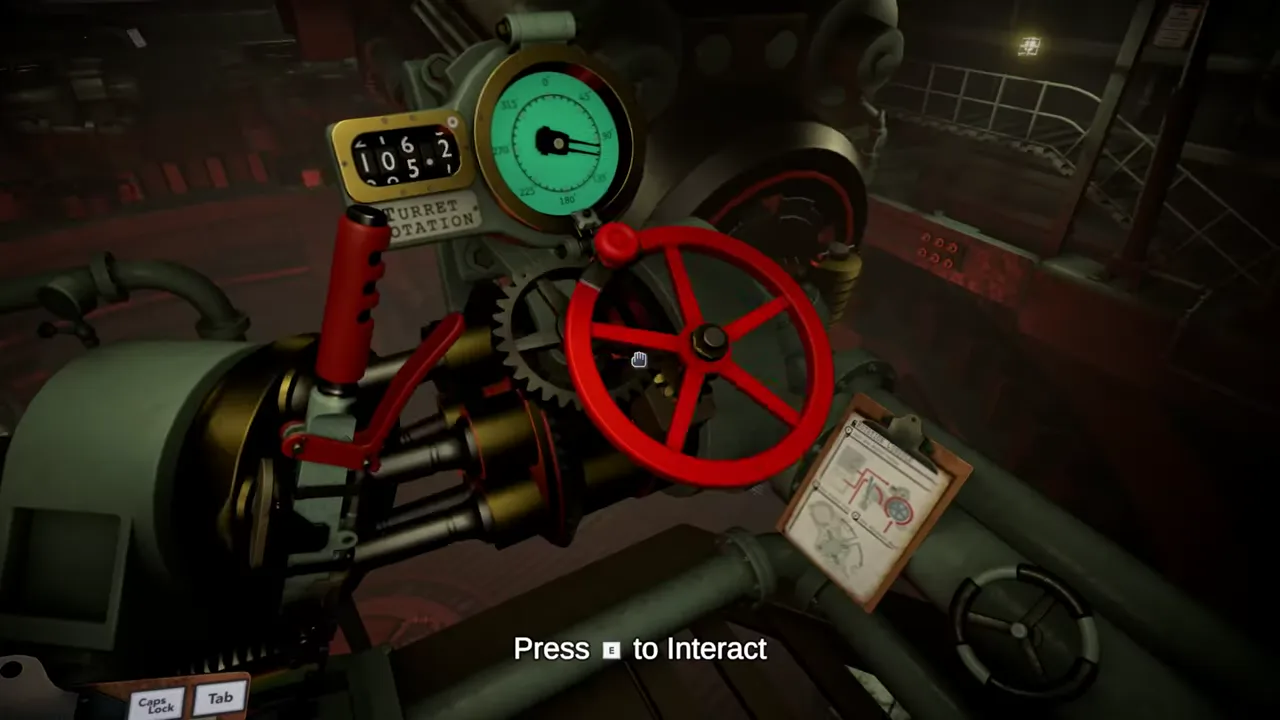
IRON NEST and Tank Mechanic Simulator are natural neighbors for anyone who enjoys spending time with complicated metal objects. Both make machinery legible through parts, controls and methodical action. Both reward a player who slows down long enough to understand what a component or station is for. Both use military hardware as something more interesting than scenery. Yet they build that fascination around opposite moments in a machine’s life.
IRON NEST asks the player to operate a vast fictional heavy turret in the middle of an alternate-history conflict. Its official page describes teleprinter reports, map plotting, ballistics, ammunition, charges, elevation, traverse, aerial reconnaissance and the possibility of mechanical failures. Tank Mechanic Simulator asks the player to find, extract, dismantle, clean, repair, paint and test World War II tanks and related vehicles. Its official description names restoration tools, engine and drivetrain work, museum or sale outcomes, a training ground and a shooting range. One game is about making a weapon function under operational pressure. The other is about returning a damaged vehicle to working condition.
That difference should guide a purchase. The games share patience and physicality, but their goals, pacing and emotional temperature are not interchangeable.
Operating under pressure versus restoring at a bench
IRON NEST turns the heavy turret into a workplace during an active campaign. According to its published description, the Operator receives reports through separate teleprinters, plots information on a tactical map, uses a ballistic calculator and then handles shell selection, charge, elevation and heavy traverse. The player is not restoring a relic at leisure; the machine is a live system whose output has consequences on an evolving battlefield. The listing also notes that mechanisms may fail, making readiness and recovery part of the operational problem.
Tank Mechanic Simulator starts from a different relation to machinery. Its official Steam description says the player finds abandoned and destroyed World War II tanks, extracts them from battlefields, and takes them through cleaning, rust removal, sandblasting, primer, painting and assembly. It specifically names tools such as a rust removal tool, sand blaster, paint gun, hammer, grinder and wrench tool. The work is a restoration sequence: identify the state of a vehicle, expose its parts, correct its damage and turn it into an object that can be tested, sold or displayed.
The shared satisfaction is seeing a complex object respond to informed attention. In IRON NEST, that response is a well-executed firing solution at the right time. In Tank Mechanic Simulator, it is an engine starting, a drivetrain working or a vehicle returning to presentable condition. Choose based on whether you want your machine knowledge directed toward immediate operation or careful rehabilitation.
The unit of detail is different
IRON NEST uses detail to make a connected decision chain credible. Its teleprinters, map, calculator and gun controls represent stages in a single action. The page emphasizes source provenance and aerial photos, so information must remain meaningful as it moves from message to mark to calculation to shell impact. A player benefits from understanding the relationship among stations, but the public description does not promise a bolt-by-bolt disassembly simulation or a workshop inventory of every internal part.
Tank Mechanic Simulator advertises precisely that kind of component attention. Its official page says players can take tanks apart from exterior parts and tracks through the turret, gun, barrel and cradle, and also work on interiors including crew space, engine, fuel system, gearbox and drive components. It says that a tank must have its engine, gearbox and fuel system repaired, assembled and supplied with necessary fluids before a test. The focus is on the material anatomy of a vehicle.
This is not a question of realism rankings. Both games select details in service of their intended activity. IRON NEST abstracts or concentrates details needed for responsible artillery operation. Tank Mechanic Simulator concentrates details needed for restoration and mechanical inspection. A player who wants to learn a repeatable shop-like sequence will get a clearer fit from the latter. A player who wants several interfaces to converge on one tense firing decision will get a clearer fit from the former.
Combat consequences and post-restoration testing
IRON NEST places the player in conflict. The official listing describes an alternate-history uprising, orders, artillery targets and aerial evidence of strikes. It also says battlefield scars persist. That gives every firing decision a before-and-after relationship: an operator acts on a report, observes the outcome and then continues in a changed situation. The game includes a handcrafted story, procedural objectives, challenge modes and leaderboards, all of which support a campaign-orientated structure.
Tank Mechanic Simulator does let the player operate renovated vehicles, but in a different context. Its official page says players can test a tank on a training ground, drive it after repair and take it to a shooting range. Those features verify the restoration work and provide a way to enjoy a working vehicle. The page does not describe teleprinter intelligence, target provenance, artillery campaign objectives or persistent combat consequences comparable to IRON NEST.
This prevents a common category error. A tank game with a gun is not necessarily a combat-operations game. Tank Mechanic Simulator treats testing and firing as the payoff for repair. IRON NEST treats machinery as the means to interpret orders and act during a mission. If the prospect of a proof-of-work test excites you, pick the restoration game. If the prospect of acting on uncertain intelligence excites you, pick IRON NEST.
Historical frame and fictional frame
Tank Mechanic Simulator explicitly describes World War II German, United States and Soviet vehicles, and says its tanks and vehicles are based on construction documents, expert opinions and museum insights. It also lists a collection of vehicles and frames the player as building a repair service and museum. Its interest is in recognizable historical hardware and the restoration fantasy around it.
IRON NEST is a fictional dieselpunk scenario. The official setting is late-1920s Spain where the monarchy remains in power during a republican uprising, and the central machine is a 5,000-ton spider-turret. Its political imagery, black humor and technical language are part of an invented alternate history. It should not be treated as a technical restoration guide to a real artillery platform.
For some players, this is the entire choice. Tank Mechanic Simulator is suited to curiosity about historical vehicle construction and workshop process. IRON NEST is suited to players who want a stylized fictional institution, in which machinery, messages and propaganda combine into an operational drama. The titles can complement one another, but they fulfill different historical appetites.
Pacing and progression
Tank Mechanic Simulator describes a loop with clear stages: locate a buried vehicle, extract it, clean and renovate it, test it, then sell it or place it in a museum to gain money and reputation. It also advertises customization through paint, camouflage, colors and decals. That is a project rhythm: one object becomes more complete as the player works through its condition.
IRON NEST advertises fifteen regions, over one hundred medals, two challenge modes with leaderboards and a combined thirty ammunition types and abilities. It also describes a handcrafted story plus procedural objectives. Its progression is more about handling varied operational demands and receiving campaign recognition. Specific progression rules should be checked in the current build; the public listing does not publish a complete unlock table.
If you enjoy settling into a long restoration project, Tank Mechanic Simulator offers the more direct loop. If you enjoy returning to a demanding decision system under changing mission conditions, IRON NEST is the more appropriate option. Both give a sense of accumulating competence, but one is competence in repair and the other is competence in fire control.
Which should you choose?
Choose IRON NEST if you want active heavy-artillery procedure: reading orders, preserving uncertainty, plotting targets, calculating and firing from a fictional turret in a campaign context. Its mechanical failures are part of an immediate operational challenge.
Choose Tank Mechanic Simulator if you want to dismantle and restore historically framed tanks, use shop tools, work with engines and fluids, personalize finished vehicles and test them after the job is done. Its published loop is restoration first, operation second.
Play both if detailed machines are the attraction. Start with Tank Mechanic Simulator when you want a patient, object-centered workshop project. Start with IRON NEST when you want the same fascination with levers, instruments and systems to carry the urgency of reports and consequences.
The dependable conclusion
IRON NEST and Tank Mechanic Simulator both honor the texture of mechanical work, but they are not variants of the same simulation. IRON NEST is about operating a fictional artillery system when information and time are imperfect. Tank Mechanic Simulator is about restoring historical-style vehicles until they can run, drive and be tested again.
The best shorthand is simple: choose IRON NEST to work a weapon during the operation; choose Tank Mechanic Simulator to rebuild the weapon before it ever returns to use.
Frequently asked questions
Are both games about interacting with military vehicles?
Yes, but IRON NEST centers operating one fictional heavy artillery installation during missions, while Tank Mechanic Simulator centers finding, dismantling, restoring and testing World War II vehicles.
Does Tank Mechanic Simulator focus on firing missions?
Its official page focuses on restoration, testing and a shooting range after renovation; it does not present a report-to-ballistics combat campaign like IRON NEST.