IRON NEST vs Nauticrawl: Learned Procedure or Experimental Escape
A source-led comparison of IRON NEST and Nauticrawl for players who enjoy opaque machinery, tactile controls and figuring out how a dangerous machine works.
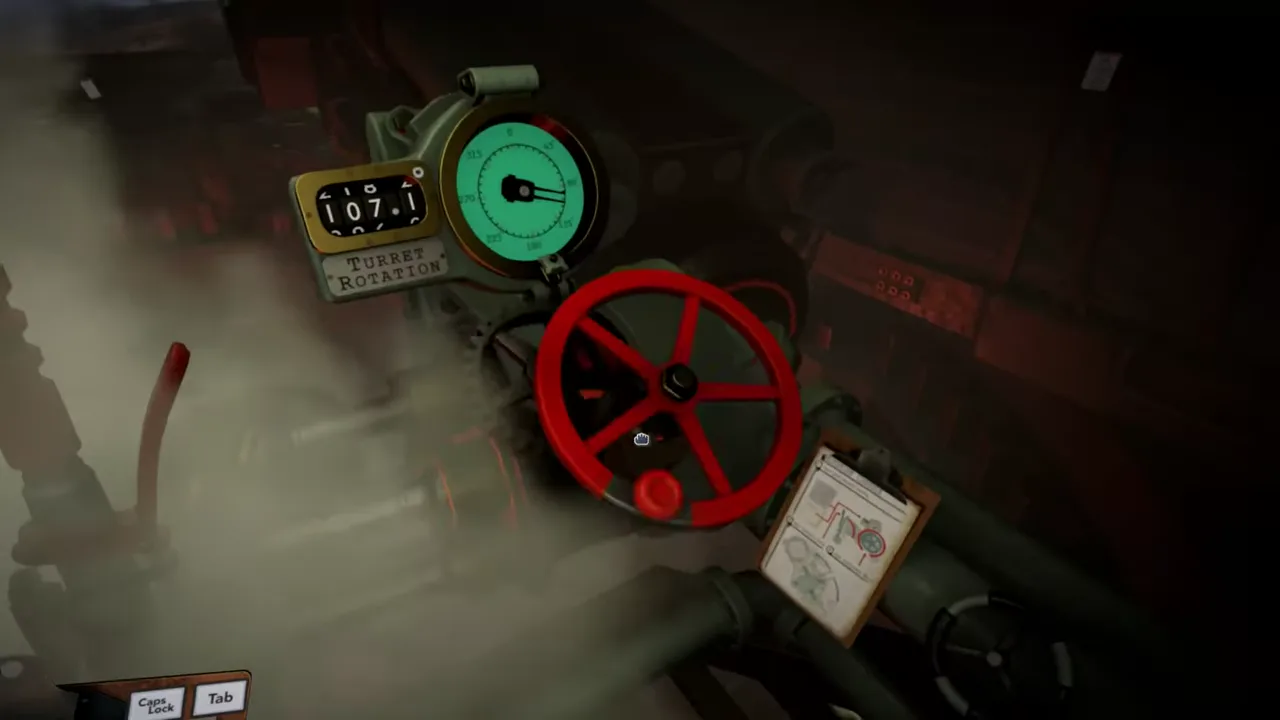
IRON NEST and Nauticrawl make an unusually persuasive case for the humble lever, dial and unlabeled panel. Both ask players to work through a machine instead of receiving a neat abstraction of what the machine does. Both make a control room feel consequential: a misplaced setting, an unconsidered signal or an untested assumption can change what happens next. For a player attracted to physical-looking interfaces and the satisfaction of acquiring operational confidence, the two games may seem like close relatives.
Their core questions are opposite. IRON NEST is a single-player heavy-turret game whose official page describes an Operator using teleprinter reports, a map, a ballistic calculator, ammunition controls and gun settings to act in an alternate-history military campaign. Nauticrawl is a science-fiction escape adventure about stealing an enigmatic vehicle on a hostile planet, then experimenting with its levers, power routing and devices until the player can pilot it to freedom. IRON NEST gives the player a difficult procedure to execute responsibly. Nauticrawl gives the player a dangerous procedure to discover.
This difference makes them complementary rather than interchangeable. One rewards careful application of information to a published operational loop. The other rewards curiosity, experimentation and learning through failure.
The machine as a workplace and the machine as a mystery
IRON NEST’s official description gives the Operator an intelligible job. High Command and frontline reports arrive through two teleprinters. The player records their source, marks intelligence on an interactive map, calculates range and bearing, selects ammunition and charges, sets elevation, traverses the heavy turret and reviews results through aerial photographs. There are unknowns in the incoming intelligence and in the current mission, but the purpose of each stage is clear: turn a defensible understanding of a target into a controlled artillery action.
Nauticrawl begins from a different kind of uncertainty. Its official Steam page says that the player has stolen a machine designed for ruling elites and may not know how to move it. The player checks radar, turns knobs, presses buttons, pulls levers, redirects power, hacks devices and uncovers communications while trying to escape. The purpose of the console is itself a puzzle. The game explicitly encourages mistakes and experimentation, and describes turn-based exploration in which every new run begins anew but knowledge carries forward.
Both games value attention, yet they use it differently. IRON NEST wants the player to preserve enough information to avoid a bad firing decision. Nauticrawl wants the player to form and test hypotheses about unfamiliar mechanisms. If you want to feel like a trained operator dealing with imperfect orders, choose IRON NEST. If you want to feel like an outsider reverse-engineering a vehicle under threat, choose Nauticrawl.
Known procedure versus discovery through trial
In IRON NEST, the public materials provide a chain of dependencies. A report must be understood before a target can be plotted. A target position must be related to the turret before a ballistic calculation can be used. A solution must match shell, charge, elevation and traverse before firing. The tension comes from doing these connected tasks accurately while mission conditions and possible mechanical issues intrude. The game may leave individual mission details for players to learn, but the basic role is legible.
Nauticrawl instead makes legibility a reward. Its page describes a vehicle whose consoles are gradually understood as the story unfolds. It does not advertise a formal artillery calculation, source-provenance map or a predefined sequence of gun controls. It says that exploration is turn-based and players should think, make mistakes and experiment. The system is not merely an obstacle around the story; discovering how systems fit together is the story’s practical core.
This changes the player’s relationship to failure. A flawed IRON NEST solution should be diagnosed: was the report misread, target plotted incorrectly, input stale or gun state mismatched? A Nauticrawl mistake can be part of the learning model itself, revealing what a switch or power path does. Players who find trial and error satisfying will likely prefer Nauticrawl. Players who prefer a mistake to have an identifiable procedural cause will likely prefer IRON NEST.
Stakes and pacing
IRON NEST is framed as operational artillery work within a campaign. The official listing describes an alternate-history Spain with a monarchy still in power as a republican uprising spreads. It pairs a handcrafted story with procedural objectives, fifteen regions, two challenge modes, leaderboards, over one hundred medals, and a combined thirty ammunition types and abilities. The player faces the consequences of firing through aerial evidence and persistent battlefield scars. Its pressure is about turning information into action before the situation changes.
Nauticrawl frames its pressure as escape. The official description says hostile forces, a crushing atmosphere and the vehicle itself can kill the player. This is not a comparison that should turn genre mood into a factual claim about identical failure systems; the two games do not publish the same mechanics. The dependable difference is that Nauticrawl’s stated goal is getting off a hostile planet, while IRON NEST’s stated goal is carrying out artillery work across a campaign structure.
The pacing follows. IRON NEST can feel urgent even while the player measures and calculates because a mission requires an action with consequences. Nauticrawl uses turn-based exploration, allowing the player to examine a problem, form a plan and test it. Both can create suspense, but one makes urgency operational and the other makes it exploratory.
Physical controls, information and feedback
IRON NEST emphasizes the traceability of a decision. Two message channels, an interactive map, a calculator and aerial photos create checkpoints at which the Operator can compare intent with outcome. The game asks not only “did a shot land?” but also “what information led to this solution, and what can the result tell us?” Its published references to persistent scars give that feedback a continuing setting.
Nauticrawl emphasizes feedback from the console and environment. The player uses radar, controls, communications and power redirection, then observes whether the escape machine becomes more usable or more dangerous. Its store description suggests that the player learns the vehicle by trying things, rather than by receiving a complete briefing. The two games therefore share a feedback loop without sharing the same evidence standard. IRON NEST promotes verification before and after a fire mission. Nauticrawl promotes exploration of what a control might do.
This is a useful distinction for accessibility of expectations. A player looking for an explicit operational framework can start with IRON NEST’s known stations and build confidence through repeated practice. A player looking for the delight of not knowing what a lever does can start with Nauticrawl. Neither choice is more intellectual; they reward distinct types of curiosity.
Setting and tone
IRON NEST uses dieselpunk alternate history, propaganda and dark humor around a fictional 5,000-ton spider-turret. Its late-1920s Spanish setting gives its machinery a political and industrial tone. The game is not a claim that such a vehicle existed; its public page presents a fictional world that borrows historical visual and political echoes.
Nauticrawl uses science fiction, a hostile planet and an escape machine controlled by elites. Its official language suggests an atmosphere of oppression and desperation, but it is not an alternate-history war game. The shared visual appeal of machinery should not flatten their stories. One is about an Operator inside an institutional war machine. The other is about an escapee trying to understand an instrument of control well enough to survive.
Choose with mood in mind. IRON NEST is suited to players who want reports, artillery and political atmosphere. Nauticrawl is suited to players who want an intimate, strange survival puzzle inside a stolen vehicle.
Which should you choose?
Choose IRON NEST if you want structured but demanding fire-control work, separate information and gun stations, campaign objectives and the satisfaction of executing a verified solution. It is a game about operating a known machine under uncertain conditions.
Choose Nauticrawl if you want a turn-based experimental puzzle about escape, unfamiliar controls, redirected power and gradually learned systems. It is a game about discovering what an unknown machine can do before it destroys you.
Play both if tactile interfaces are the attraction. Start with IRON NEST when you want competence through practice. Start with Nauticrawl when you want discovery through experiment.
The dependable conclusion
IRON NEST and Nauticrawl both make machinery feel dangerous and intimate, but their official designs answer opposite player fantasies. IRON NEST makes you a responsible Operator applying a complex known procedure. Nauticrawl makes you an improviser uncovering an unknown procedure.
The choice is therefore not simply military versus science fiction. It is whether you want the satisfaction of performing a difficult job correctly, or the thrill of figuring out what the job even is.
Frequently asked questions
Do both games ask players to learn a machine?
Yes, but the public descriptions frame the learning differently. IRON NEST teaches a known artillery workflow, while Nauticrawl makes experimentation with an initially unfamiliar escape machine the central puzzle.
Is Nauticrawl a military campaign simulator?
No. Its official description presents a turn-based science-fiction escape adventure about piloting a stolen machine, not a campaign about artillery orders and targets.