IRON NEST vs My Summer Car: Manual Machine Work, Different Lives
A source-led comparison for players who enjoy physical, painstaking simulation: IRON NEST's focused artillery operations versus My Summer Car's open-world car-building and survival sandbox.
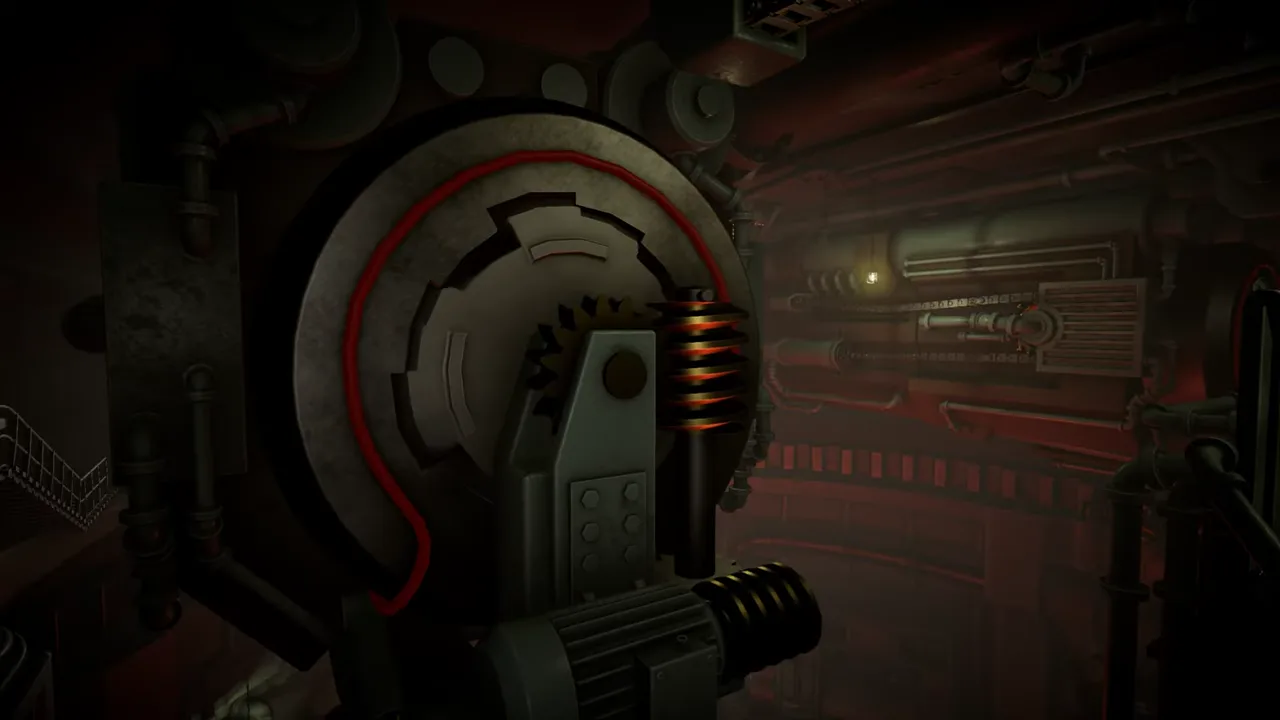
IRON NEST and My Summer Car make a similar promise in very different voices: the machine will not do the interesting part for you. Both games ask the player to understand a physical system, move through a first-person space, notice small state changes and find satisfaction in a process that could look like tedious labor from the outside.
The similarity ends there. IRON NEST is a single-player alternate-history heavy-artillery game whose official loop runs from reports and map work to calculation, manual gunlaying and visible battlefield consequence. My Summer Car is a 1990s Finnish open-world life survival simulator about assembling, maintaining and tuning a car while managing personal needs, random jobs, vehicles and permanent death. If one game makes mechanical work feel like a military operation, the other makes it feel like an unruly life project.
The shared pleasure: doing the work yourself
IRON NEST’s store page is explicit that every lever, dial and shot is under the Operator’s control. The player reads teleprinters, makes map measurements, sets charges and elevation, rotates the heavy turret and fires. Its systems are distributed through a physical interior, making the path between idea and action part of the experience.
My Summer Car’s official description likewise foregrounds manual labor. The player begins with hundreds of loose parts and assembles a car and engine, then maintains, fixes, tunes and uses it. Its page calls the game an automobile/life survival simulator and emphasizes that the player must also take care of themselves.
In both games, competence is experiential. You learn not merely which button creates a result but how a chain of states comes together. An object feels valuable because you understand what it took to make it work. A small error can matter because you have enough context to trace it.
A firing solution is not a car build
IRON NEST structures manual work around an operation. Intelligence reports point toward a target. The tactical map turns information into a plan. A ballistic calculator relates range, charges and elevation. The gun controls apply bearing and elevation. Aerial evidence shows what happened. This is a concentrated cycle with a clear before, during and after.
My Summer Car structures manual work around an ongoing project. The official page describes car assembly, engine simulation, maintenance, driving, tuning, repair and eventual inspection. It also describes personal survival, food, drink, sleep, money from random jobs and multiple vehicles. A car can remain imperfect for a long time; the player can set their own priorities in a broad countryside context.
That difference changes what “mistake” means. In IRON NEST, an error is often a bad information handoff, measurement or physical setting inside a mission. In My Summer Car, an error can be a missing part, mechanical oversight, financial decision, route choice or survival problem that accumulates over hours. One is operational precision; the other is project persistence.
Information and uncertainty
IRON NEST makes information provenance a core mechanic. A bearing or distance must be placed from the correct source on the map. The player distinguishes High Command directives from frontline calls, builds a target point and then measures from the turret. Uncertainty is resolved through geometry and current mission evidence.
My Summer Car’s official page emphasizes mechanical assembly, driving and open-world survival rather than report triangulation. Its challenge is not primarily to turn an observer’s bearing into artillery geometry. It is to understand a car, maintain a self-sufficient life and respond to the practical consequences of a sandbox.
Players who enjoy notes, grid work and a clearly bounded decision loop should lean toward IRON NEST. Players who enjoy discovering a system through experimentation, living with rough edges and making long-term personal plans should lean toward My Summer Car. Both reward patience; the source of uncertainty is different.
Pressure and consequence
IRON NEST’s official presentation is militarized and morally heavy. It describes High Command, frontline reports, map scars, aerial aftermath and the consequence of firing a colossal weapon. Its alternate-history setting, propaganda language and dark humor frame the operator’s labor as part of a conflict rather than a neutral machine hobby.
My Summer Car’s official page frames pressure through survival and everyday risk. It advertises permadeath, personal needs, random jobs, road travel, police inspection and the possibility of making a car into a rally vehicle or a loud customization project. Its humor is domestic, chaotic and often embarrassing rather than institutional or militaristic.
Neither game should be reduced to “a simulator where you fix things.” The emotional meaning of the work matters. IRON NEST asks what it means to make a complex weapon function under orders. My Summer Car asks what it means to keep a personal, unstable project and its owner alive in a messy countryside summer.
Scope and rhythm
IRON NEST advertises a handcrafted story, procedurally generated objectives, two challenge modes, leaderboards, 15 regions, more than 100 medals and a combined set of 30 ammunition types and abilities. Its replay structure expands the artillery operator role through missions, objectives and recognition. The game does not advertise an open-world vehicle ownership sandbox or a needs-management economy.
My Summer Car advertises dozens of kilometres of roads, AI traffic, various vehicles, random paid jobs, rally participation, tuning and survival mechanics. Its rhythm allows self-directed detours: repair the car, earn money, buy parts, manage food or take a vehicle somewhere else. The official page also warns that the game is not for the faint-hearted because of its meticulous car-building approach.
Choose based on the kind of pacing you want. IRON NEST is better when you want a contained operation with a beginning, intelligence problem, physical execution and consequence. My Summer Car is better when you want a sprawling personal routine where many small systems can interrupt or redirect a goal.
Interface and learning curve
Both games benefit from learning by subsystem. In IRON NEST, the useful order is reports, map, calculator, ammunition, traverse/elevation and after-action review. Each station’s output becomes the next station’s input. The interface makes the handoffs explicit.
In My Summer Car, the useful order comes from the project itself: identify parts, assemble and maintain the car, learn driving and then handle the wider life-simulation demands. The official page does not market a separate tactical map or report-derived calculator workflow. It markets a car and engine construction problem inside an open world.
If you enjoy the feeling of a manual but want clearer, mission-specific objective context, IRON NEST is likely the gentler conceptual fit. If you want the freedom to make your own mistakes in a large, weirdly domestic sandbox, My Summer Car offers the broader canvas.
Which should you choose?
Choose IRON NEST if you want a first-person military machine experience centered on careful information transformation, manually operated artillery and a focused alternate-history campaign. It is for players who find methodical fire control, physical state verification and high-stakes outcomes satisfying.
Choose My Summer Car if you want an open-world car-building, maintenance and life-survival sandbox. It is for players who enjoy assembling a project from loose parts, handling everyday needs and accepting that a self-directed journey can go sideways in funny or disastrous ways.
Play both if your favorite simulation feeling is not realism in the abstract but ownership of a process. They demonstrate two compelling answers to the same design question: what happens when the player must learn the machine instead of asking the machine to disappear?
The dependable conclusion
IRON NEST and My Summer Car share the tactile satisfaction of hands-on mechanical work. Their official descriptions make clear that they organize that work differently: IRON NEST is a heavy-turret fire-control game shaped by reports, calculation and mission consequence; My Summer Car is a car-building, maintenance and survival sandbox shaped by open-world life.
Pick IRON NEST for deliberate operations and a weapon-system workflow. Pick My Summer Car for a long, personal mechanical project. Their common patience requirement is real; their worlds and goals are not interchangeable.
Frequently asked questions
Why compare a turret simulator with a car game?
Both official descriptions make manual interaction with a complicated machine central to play. Their goals, setting and consequence structures are otherwise very different.
Which one is an open-world survival sandbox?
My Summer Car explicitly describes itself as a car-owning, building, fixing, tuning, maintenance and permadeath life survival simulator. IRON NEST does not advertise that model.