IRON NEST vs Bomber Crew: One Gun Station or a Whole Aircrew
A source-led comparison of IRON NEST and Bomber Crew for players choosing between a manual heavy-turret operation and a strategic bomber-and-crew survival simulation.
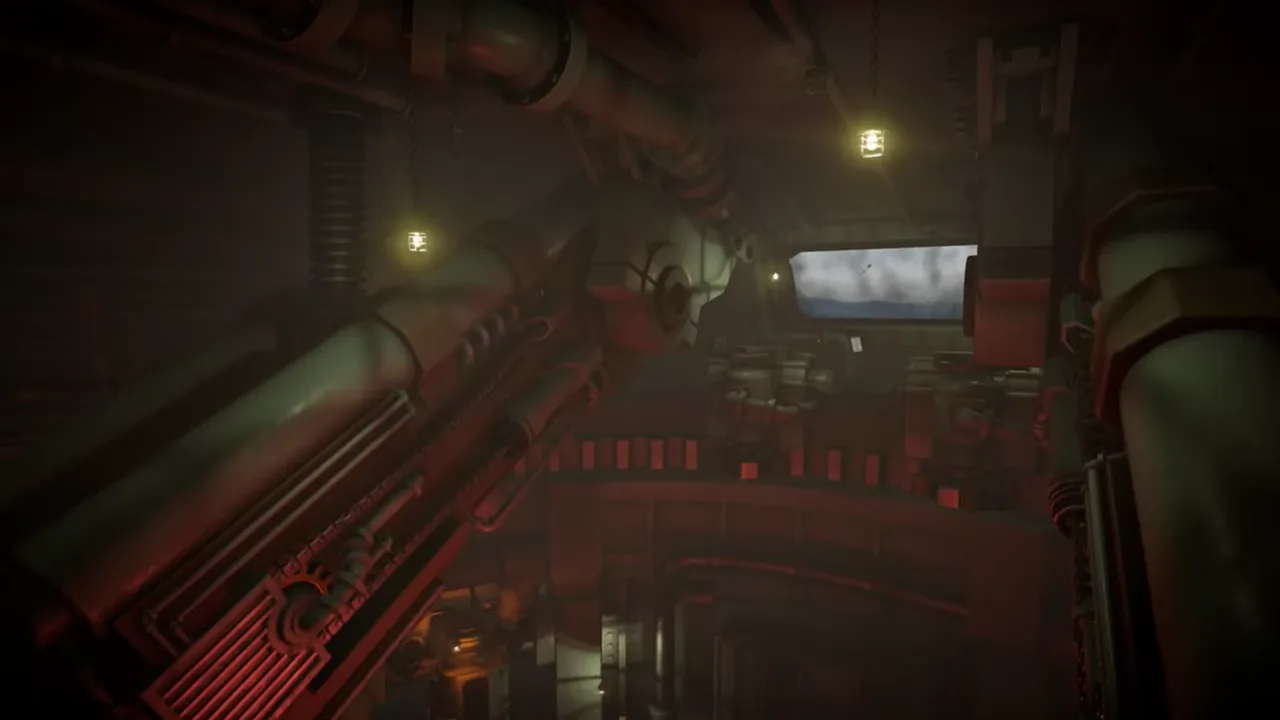
IRON NEST and Bomber Crew both make a combat vehicle feel like a place of work. Neither is primarily about pointing a reticle at a target and moving on. Each turns pressure into a sequence of jobs: understand what is happening, choose a response, use a machine correctly, and live with the cost of being late or wrong. That shared attitude makes Bomber Crew a sensible comparison for someone who likes the idea of an embattled mechanical workplace.
The games place responsibility in very different hands. IRON NEST is a single-player heavy-turret simulator set in an alternate-history late-1920s Spain. Its official Steam description emphasizes one Operator moving through a 5,000-ton turret, reading two teleprinter feeds, using a tactical map and ballistic calculator, choosing ammunition, setting charges and elevation, traversing the turret, and inspecting results through aerial photographs. Bomber Crew is a strategic survival simulation about preparing and directing a World War II bomber crew while managing the aircraft itself. Its official page stresses procedurally generated crew names, skills and backstories, permanent death, fuel, ammunition, hydraulics, weather and threats from all directions.
So the useful question is not which game is more demanding. It is which kind of demand you want. IRON NEST concentrates a chain of decisions into one operator and one artillery installation. Bomber Crew spreads urgent work across people, aircraft systems and a mission in flight.
The common ground: a machine is more than a weapon
Both games treat their headline vehicle as a system that needs attention. IRON NEST makes the turret a physical workplace. Public materials describe separate controls and information sources rather than a single abstract command screen. A report arrives from High Command or the frontline, the player marks and measures on a map, works out a firing solution, chooses a shell and charge, then commits to a shot. The game also advertises mechanical failure, persistent battlefield scars, and aerial photographs that let the player review consequences.
Bomber Crew similarly frames the bomber as a fragile operational system. Its official description names fuel, ammunition and hydraulics as resources the player must manage, while enemy fighters, flak, low oxygen and poor weather can complicate a mission. The aircraft is not simply transport between encounters. It is the thing that can fail, require attention and take the whole plan down with it.
That resemblance is valuable for players who enjoy reading an instrument panel as a problem rather than decoration. In both games, calm preparation is part of the action. The distinction is the direction of attention. IRON NEST makes the operator leave or rotate among stations to assemble one artillery response. Bomber Crew makes the player assign and redirect several people as an airborne situation changes.
One Operator versus a selected crew
This is the clearest dividing line. IRON NEST publicly presents the player as “the Operator.” The advertised fantasy is embodied station work: your own hands move from message to map to calculator to firing controls. The listing speaks about a cat companion and operational warhorn, but it does not promise a roster of specialists, personal character progression, crew loadouts or personnel management. A careful buyer should therefore not assume those systems exist merely because the turret is vast.
Bomber Crew makes crew selection a stated feature. According to its Steam page, players train and personalize a bomber crew whose names, skills and backstories are procedurally generated. It also explicitly warns that death is permanent. Roles matter because the bomber needs people to perform different tasks under threat. The management layer is not optional flavor around the flight; it is a central part of what makes a mission succeed or collapse.
That creates different emotional stakes. In IRON NEST, a bad decision is principally a failure in evidence handling, geometry, timing or machine operation. In Bomber Crew, a bad decision can also be a failure to prepare the right people, protect a vulnerable role or recover a damaged aircraft quickly enough. Players who form attachments to named units and enjoy weighing crew risk will find Bomber Crew closer to that desire. Players who prefer to personally perform each stage of one dense procedure should look first at IRON NEST.
Fire-control procedure versus real-time delegation
IRON NEST is built around transforming information. The official description says the player receives reports through two teleprinters, keeps track of who provided a report, marks intelligence on an interactive map, uses a ballistic calculator and operates the gun controls. That is a deliberately narrow but deep loop: evidence becomes a plotted position, a plotted position becomes a calculated firing solution, and a firing solution becomes a physical shot. The player is expected to notice uncertainty before it becomes irreversible action.
Bomber Crew is more explicitly a fast-paced strategy game. Its store description advises players to tag enemy fighters, mark destinations and ensure that the right team is ready, while multiple dangers arrive during a flight. The public page does not describe a map-to-calculator artillery chain comparable to IRON NEST. Instead, its pressure comes from deciding what the crew needs to do next while flight conditions and threats compete for attention.
Neither structure is inherently slower. A short Bomber Crew crisis can demand rapid reprioritization, while an IRON NEST firing sequence can become urgent when reports conflict and mechanisms resist. Their pacing feels different because one asks for careful serial work and the other asks for concurrent oversight. If you like pausing mentally at every handoff and validating a number, IRON NEST is the more direct fit. If you like scanning a team and choosing the next rescue, repair or defense priority, Bomber Crew is the stronger match.
Campaign shape and replayability
IRON NEST advertises a handcrafted story alongside procedurally generated objectives, 15 regions, two challenge modes with leaderboards, more than 100 medals, and a combined thirty ammunition types and abilities. Those published features point toward repeatable artillery problems within a campaign framework. They do not, by themselves, document every mission type, unlock condition or individual ability; those details should be checked in the live game and patch notes.
Bomber Crew advertises missions where preparation, the right team and aircraft survival are decisive. Its procedurally generated crew identities and permanent-death wording suggest that different rosters can make runs feel different, but it is still wise not to invent a deeper campaign structure than its page publishes. The secure comparison is that Bomber Crew foregrounds survival of an evolving crew and aircraft, while IRON NEST foregrounds varied fire-control situations, campaign objectives, medals and challenge records.
This is a useful purchasing distinction. Choose IRON NEST if your idea of replay value is becoming more reliable at a specialized procedure, trying different operational conditions and earning recognition for disciplined work. Choose Bomber Crew if you want each mission to be colored by who is aboard, what the plane has endured and whether the team can get home.
Historical tone and presentation
IRON NEST is not presented as a reconstruction of a specific historical artillery unit. Its official setting is an alternate-history Spain in the late 1920s, with a monarchy still in power and a republican uprising spreading. The enormous spider-turret, propaganda framing and dark humor are part of that fictional dieselpunk premise. The game is therefore best read as an invented operational drama that uses historical echoes rather than as a factual military simulation.
Bomber Crew explicitly uses a World War II bomber setting and calls itself a strategic survival simulation. Its official page focuses on the risks of a bomber mission: fighters, flak, weather, oxygen and the need for every crew role. That makes the comparison a difference in fantasy as much as mechanics. One offers stylized alternate-history industrial absurdity; the other offers a more recognizable wartime aircrew scenario with a deliberately accessible visual presentation.
Players sensitive to tone should not flatten that difference into “both are war games.” IRON NEST puts the player inside a fictional political and propagandistic machine. Bomber Crew puts the player in charge of a bomber crew facing survival risks. The shared workplace tension does not mean the games tell the same kind of story.
Which one should you choose?
Choose IRON NEST if you want to inhabit a single heavy-turret control space, enjoy working from reports through map measurement and ballistics, prefer manual station handoffs over personnel management, and want an alternate-history dieselpunk campaign with persistent consequences and challenge structure.
Choose Bomber Crew if you want named, trainable crew members, permanent-death pressure, aircraft resource management and real-time strategic prioritization in a World War II bomber mission. Its official page is especially clear about the importance of crew choice and keeping the bomber operational.
Try both if the phrase “machine as workplace” is what attracts you. They answer that idea from opposite directions. IRON NEST asks, “Can one operator make a defensible artillery decision and execute it accurately?” Bomber Crew asks, “Can this crew and aircraft survive a dangerous mission together?”
The dependable conclusion
The games overlap in their love of vulnerable, complicated war machinery. Their published designs diverge at the point of responsibility. IRON NEST is a hands-on fire-control simulation focused on one Operator, information provenance and a heavy turret. Bomber Crew is a strategic bomber survival game focused on selecting, training and directing a crew while keeping an aircraft alive.
For a player deciding between them, do not use genre labels alone. Pick IRON NEST for concentrated manual procedure and the satisfaction of closing one evidence-to-shot loop. Pick Bomber Crew for crew stories, airborne crisis management and the risk that a familiar team may not return.
Frequently asked questions
Do IRON NEST and Bomber Crew both involve multiple combat jobs?
Yes, but in different ways. IRON NEST asks one Operator to physically work linked artillery stations, while Bomber Crew has the player choose, train and direct a bomber crew.
Does IRON NEST have Bomber Crew style named crew management?
The published IRON NEST listing centers one Operator and does not advertise named crew training, individual crew skills or permanent crew death.